

15 Best Team Building Activities in Los Angeles (2026)
Compare 15 Los Angeles team-building activities by goal, group size, energy and logistics, plus when Camp Pendleton is worth the trip south.
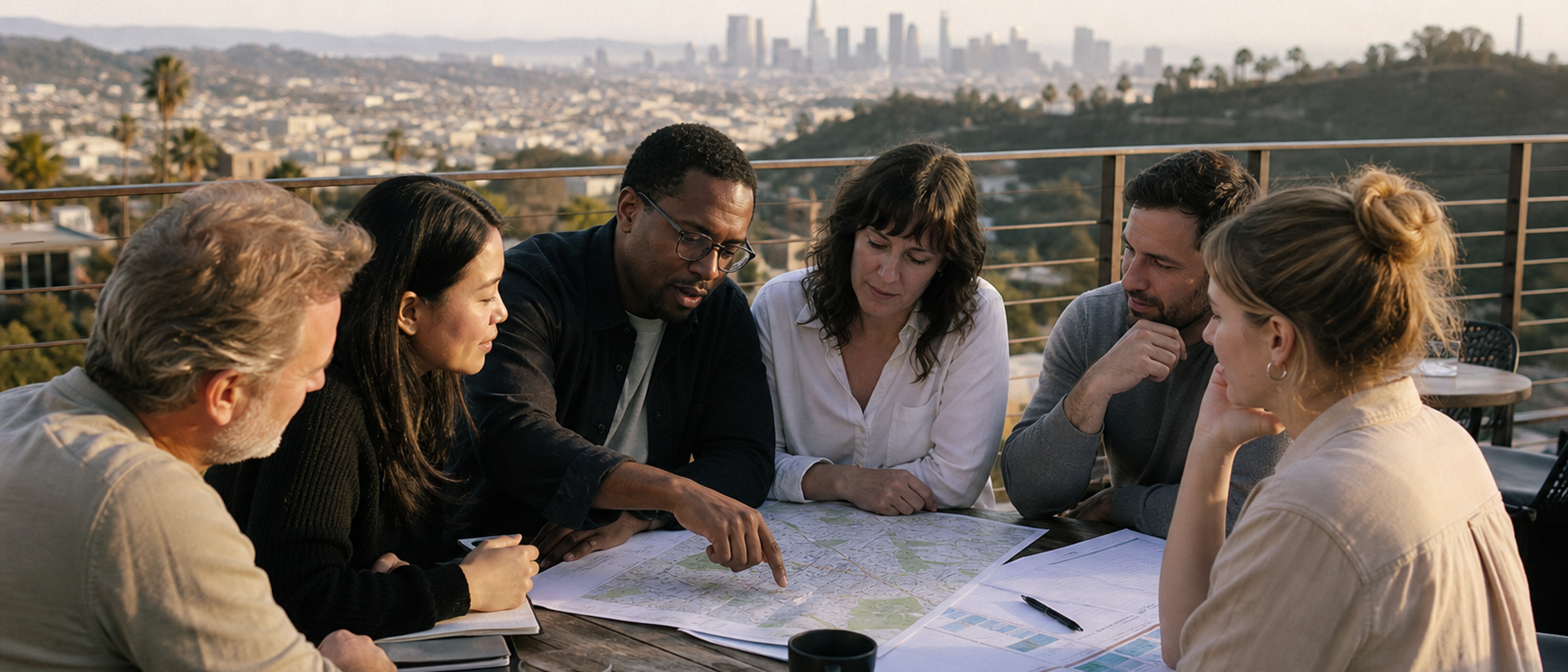
Los Angeles gives corporate teams almost too much choice. A planner can put colleagues on a studio-style production set, a beach, a stadium tour, a hiking trail, a volunteer project or in a recording room without leaving the county. The difficult part is not finding an activity. It is choosing one that produces the right kind of interaction without losing half the day to traffic, waiting or unclear instructions.
This guide compares 15 team building activities in Los Angeles by outcome, energy, group fit and planning load. It also explains when a destination experience at Camp Pendleton—south of Los Angeles in Oceanside—is worth the additional travel because the team needs a complete offsite, not another two-hour diversion.
TL;DR
Choose one Los Angeles area first, then match the activity to one outcome. Film, music and improv suit creative collaboration; beach, hiking and stadium formats add energy; food and game formats make social connection easier; Habitat LA and environmental service add purpose. For a deeper leadership day with history, facilitated challenge and hospitality, consider Experience Camp Pendleton as a destination offsite.
Table of contents
- How to choose a Los Angeles team activity
- 15 activities at a glance
- Only-in-LA creative experiences
- Outdoor and high-energy activities
- Collaborative and social formats
- Purpose-driven team building
- When Camp Pendleton is the stronger choice
- Los Angeles planning checklist
How to choose a Los Angeles team activity
Start with the change you want to see after the event. “Something fun” is not specific enough to guide a useful decision. Pick one primary outcome and let that narrow the field:
- Connection: help colleagues have longer, more natural conversations outside their usual circles.
- Communication: make listening, handoffs and assumptions visible.
- Creative confidence: give people permission to offer an unfinished idea and improve it together.
- Decision-making: create a bounded problem with incomplete information, time pressure and shared consequences.
- Recognition: give the team a well-earned experience without turning appreciation into compulsory self-improvement.
- Purpose: do work that a community partner actually needs, with the partner—not the company photo—at the center.
Then make the Los Angeles decision that prevents most avoidable problems: choose the geography before the activity. LA is not one compact event district. A Santa Monica morning, a Mid-Wilshire museum stop and a Downtown dinner may look close on a map while creating an exhausting day in practice. Keep the programme within one area where possible, or charter transport and treat the transfer as part of the run of show.
Finally, ask how the experience is facilitated. A good setting does not automatically create team building. The organiser should be able to explain how people are grouped, what each person does, how waiting is controlled, how different mobility and sensory needs are supported, and what happens after the main task. If the answer is simply “everyone will have fun,” you are still buying an outing, not a designed team experience.
15 team building activities in Los Angeles at a glance
The group-fit column below is an editorial guide, not a provider capacity promise. Confirm current headcount limits, accessibility, availability and pricing directly with each operator.
| Activity | LA area | Best for | Energy | Group fit | Planning load |
|---|---|---|---|---|---|
| Short-film production challenge | Culver City, Hollywood or your venue | Creative roles and fast decisions | Moderate | Small to large | High |
| Team songwriting session | Studio or hotel meeting room | Listening and shared identity | Flexible | Small to very large | Medium |
| SoFi Stadium group tour and debrief | Inglewood | Recognition and cross-functional conversation | Low–moderate | Medium to large | Medium |
| Petersen design quest | Mid-Wilshire | Innovation and customer thinking | Low–moderate | Small to large | Medium |
| DTLA scavenger hunt | Downtown Los Angeles | Observation and informal mixing | Moderate | Small to large | Medium–high |
| Santa Monica beach challenge | Santa Monica | Communication and playful competition | Flexible | Medium to large | High |
| Griffith Park navigation and picnic | Griffith Park | Planning and low-tech connection | Moderate | Small to large | Medium–high |
| Group surf lesson | Santa Monica or Venice | Confidence and mutual encouragement | Active | Small to medium | High |
| Sailing, kayak or paddleboard session | Marina del Rey or LA coast | Coordination and shared rhythm | Active | Small to medium | High |
| Indoor skydiving session | Universal City | Energy and encouragement | Active | Small to medium | Medium |
| Neighborhood food tour or cooking challenge | DTLA or another single neighborhood | Conversation and culture | Low–moderate | Small to large | Medium |
| Improv and storytelling workshop | Studio or your venue | Listening and adaptability | Flexible | Small to large | Low–medium |
| Game-show or escape-room tournament | Multiple areas | Problem-solving and friendly competition | Moderate | Small to large | Medium |
| Habitat LA team build | Greater Los Angeles | Purpose and practical collaboration | Active | Small to large | High |
| Environmental or custom service day | Across Los Angeles | Purpose and local connection | Flexible | Small to very large | High |
Only-in-LA creative experiences
Los Angeles is at its best when the activity uses the city’s creative infrastructure instead of importing a generic exercise into a hotel ballroom. These formats give the team a concrete thing to make, edit or interpret together.
1. Make a short film or music video
Divide the group into small production teams and give each one the same brief: make a 60- to 90-second scene that communicates a company value, a customer problem or a fictional product launch. Participants choose roles such as director, performer, writer, camera operator, producer and editor, so contribution is not limited to people who enjoy being on screen.
This format works when the goal is creative confidence and fast role clarity. The deadline forces teams to decide what “good enough” means, while playback gives everyone an immediate, shared result. The official Los Angeles Tourism guide identifies local programmes that produce movie, music-video and customized scavenger formats for groups. Ask how much production support is included, who owns the footage and whether editing happens during the session or later.

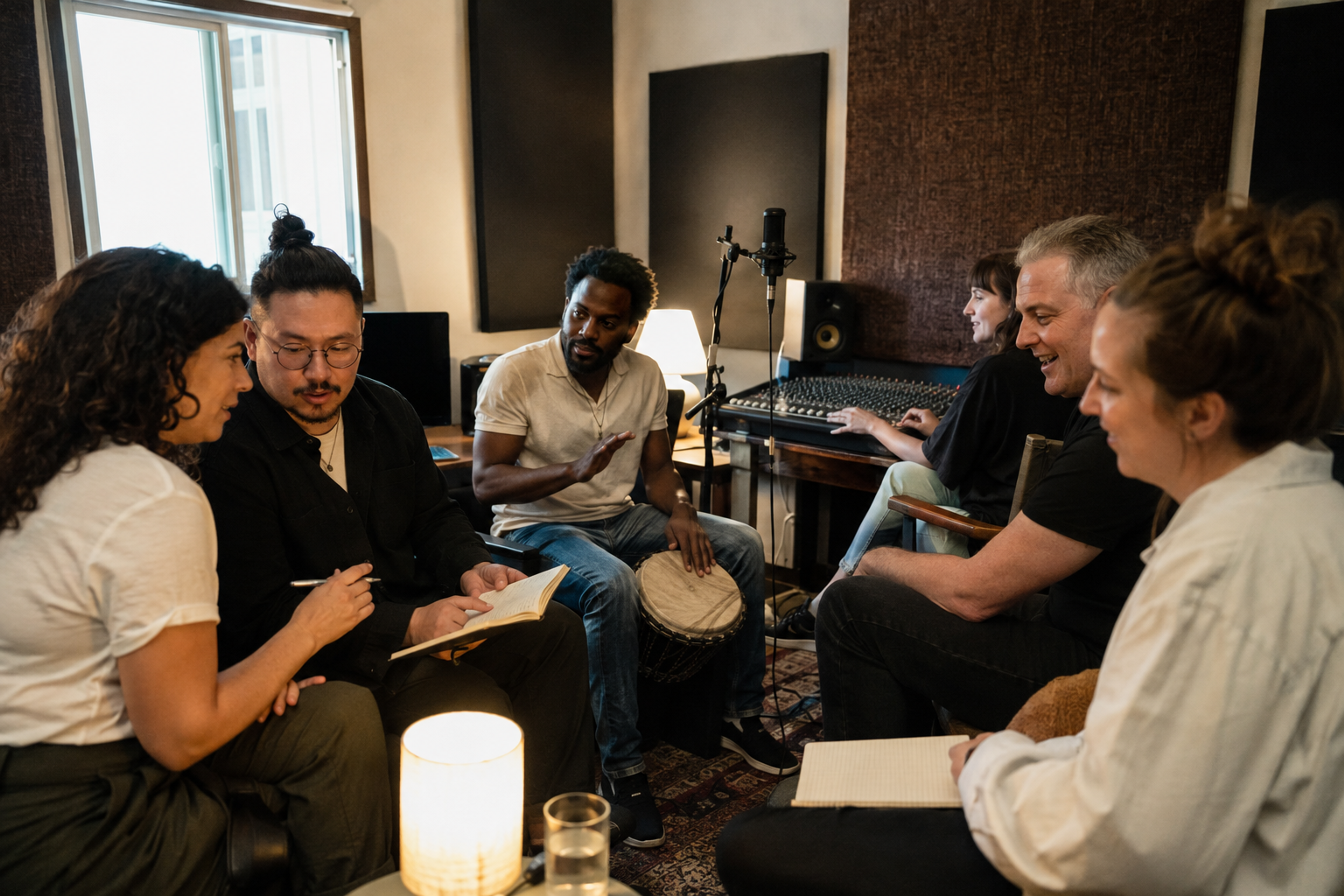
2. Write and record a team song
A songwriting session sounds exposed until it is designed properly. Strong facilitators begin with stories and phrases from the group, then help participants turn them into lyrics, rhythm and a chorus. Musical ability should not be a prerequisite: people can contribute language, structure, percussion, performance, production or simply a decisive edit.
The format is particularly good for a team after a merger, a leadership transition or a difficult year because it asks, “What are we trying to say together?” rather than “Who can sing?” Los Angeles Tourism lists team-song programmes serving groups from five to thousands, including conference-sized sessions. Confirm whether the session is private, what recording deliverable is included and how facilitators protect participants from forced solo performance.
3. Pair a SoFi Stadium group tour with a team debrief
SoFi Stadium offers private guided group tours for 20 or more guests, with options that can pair a tour with dining or a meeting. The setting naturally opens conversations about operations, fan experience, technology, premium service and what it takes for many specialist teams to deliver one visible result.
The tour itself is recognition or entertainment. To make it team building, add a short facilitated brief before entry: each small group observes one aspect of the operating system—wayfinding, hospitality, risk, communications or customer experience—then shares one lesson applicable to your own organisation. Tour routes and field access can change, so build the value around observation and discussion rather than a single promised photo location.
4. Run a design-and-customer-experience quest at the Petersen
The Petersen Automotive Museum gives product, engineering, sales and design teams a useful shared subject: how function, story and identity meet in a physical object. Send small groups through the galleries with different lenses. One studies how an exhibit explains innovation; another looks for trade-offs; another identifies the clearest example of a product built for a specific user.
Bring the teams together afterward to redesign one customer touchpoint from your own business. This turns a museum visit into a practical creative session without requiring the venue to claim it is a formal team-building provider. The Petersen publishes group and private-event options, with spaces ranging from an intimate boardroom to much larger floors. Confirm which galleries are open, whether facilitated activity is permitted and what meeting space is available on your date.
5. Build a neighborhood scavenger hunt in Downtown LA
A good downtown scavenger hunt is not a race to photograph landmarks. It is a sequence of observation, interpretation and choice: find a visual detail that represents reinvention, ask a vendor an approved question, decode a clue using public art, or make a two-minute case for the next stop. Grand Central Market, the Historic Core and nearby civic or arts spaces can create a compact route if the day is designed around walking rather than vehicle transfers.
Use teams of five to seven, stagger their routes and score the quality of reasoning as well as speed. Include an indoor base for the briefing and debrief, a clear accessibility alternative and a protocol for public interaction. Grand Central Market lists event spaces suitable for corporate events and offsites, which can give the experience a reliable start and finish rather than asking everyone to meet on a sidewalk.
Outdoor and high-energy activities
Outdoor activities can change the social temperature quickly, but only when participation is flexible and the operating plan is serious. Shade, water, restrooms, permits, weather, waivers and non-physical roles are part of the experience—not administrative footnotes.
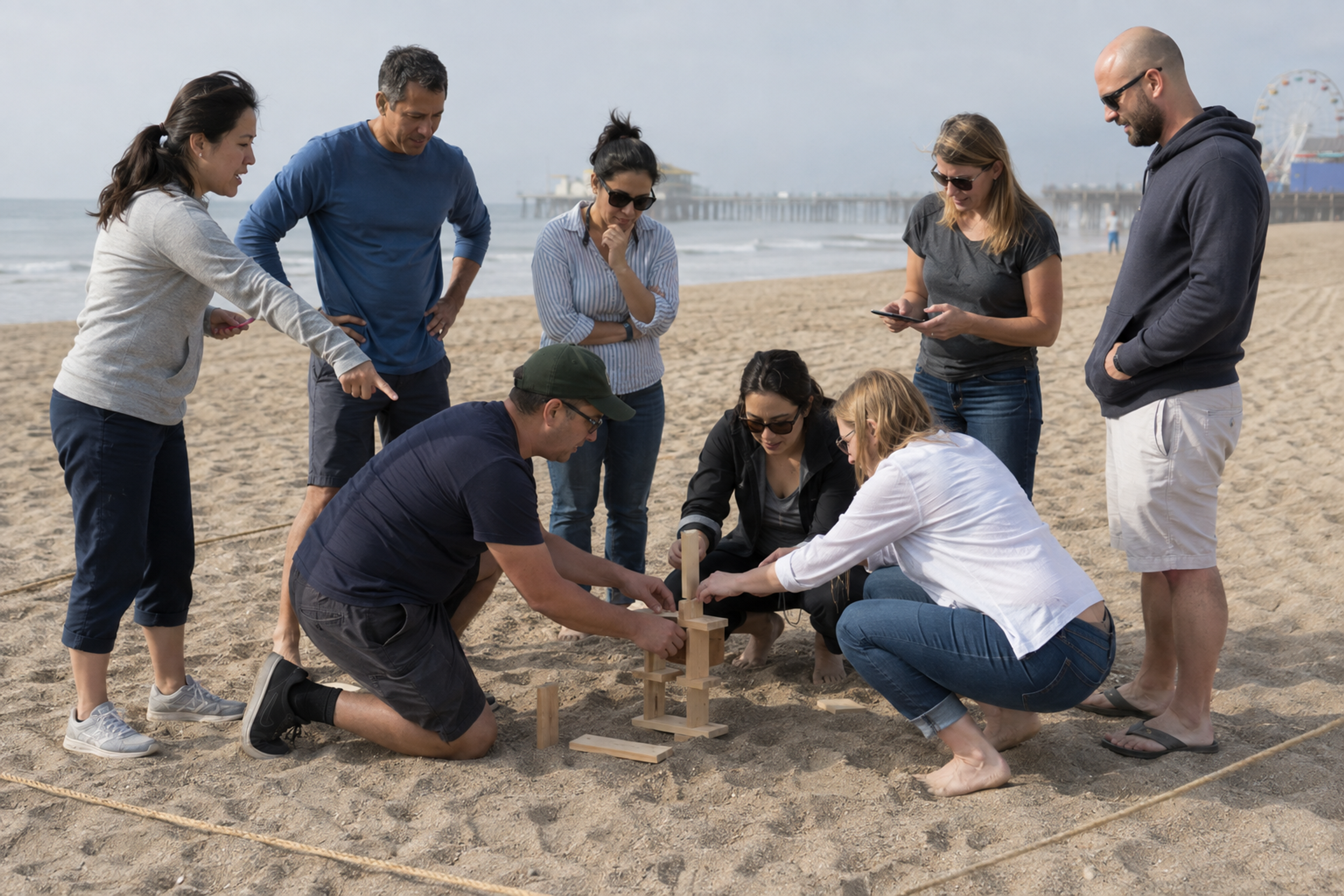
6. Facilitate a Santa Monica beach challenge
Use parallel stations rather than one long relay. A communication station might require a team to reproduce a simple structure from verbal instructions. A planning station can ask groups to allocate limited equipment. A low-impact station can focus on observation and problem-solving. People should be able to rotate through active, strategic and support roles without being singled out.
Santa Monica requires a Group Beach Activity Permit for groups larger than 20 and smaller than 150; groups above that threshold need a Community Event Permit. The city advises allowing seven to ten business days for review, but a corporate planner should confirm the current process early, especially when equipment, vendors or amplified sound are involved. A permit is not the same as reserved exclusivity, so ask how the facilitator will manage a public beach environment.
7. Plan a Griffith Park navigation-and-picnic day
Give each small team a mapped route, decision points and observation tasks, then reunite at a permitted picnic area for lunch and a debrief. The useful learning is not who walked fastest. It is how the group handled ambiguous directions, changing pace, incomplete information and members who noticed different things.
Choose a route for the least-mobile participant, offer an equivalent non-hiking role, and avoid building the event around heat or endurance. Los Angeles Recreation and Parks publishes event and picnic-permit information for Griffith Park, including group and company picnic arrangements. Confirm the correct permit, current trail conditions, emergency plan, shade and transport before treating a public park as an event venue.
8. Book a beginner-friendly group surf lesson
Surfing creates visible moments of encouragement, patience and recovery, which makes it attractive for teams that already have trust and want a shared stretch. Keep the learning goal modest: safe participation, trying something unfamiliar and supporting one another. Nobody needs to “conquer” the ocean for the session to work.
Ask about instructor ratios, water-safety credentials, wetsuits, storage, changing facilities, beach permissions, weather policy and a shore-based role for anyone who cannot or does not want to enter the water. Los Angeles Tourism identifies operators that run corporate surf events at a range of group sizes, but the quality of your day will depend on the plan for your specific headcount and conditions—not the largest event a provider has hosted.
9. Use sailing, kayaking or paddleboarding for shared rhythm
Water activities work best when every participant has a consequential role. On a sailboat, that may mean observing, communicating, trimming or navigating under crew direction. In tandem kayaks or on paddleboards, it may mean setting pace, watching conditions and helping a partner recover from small mistakes.
The planning questions are practical: vessel or craft capacity, instructor and guide ratios, swimming expectations, personal flotation devices, weather and cancellation rules, transfer time, restrooms, dry storage and an equivalent land-based option. Keep the group within one coastal area. A Marina del Rey morning followed by a Downtown afternoon can turn an otherwise good session into a transport exercise.
10. Try indoor skydiving for high-energy recognition
Indoor skydiving gives a team a controlled, weather-independent challenge with a strong spectator element. It can work well as a reward, as an energizer during a longer meeting, or for a smaller group that enjoys individual turns and collective encouragement. Los Angeles Tourism highlights iFLY Hollywood as a group option with instructors and meeting support.
It is less effective when the stated goal is deep collaboration because participants enter the flight chamber individually. If you choose it, add a team prediction, coaching or reflection element and check how much time will be spent in instruction, equipment fitting and waiting. Confirm health restrictions and design a meaningful alternative for anyone who does not fly; cheering from the side should be a choice, not a consolation prize.
Collaborative and social formats
These options lower the physical barrier and usually work in a shorter window. Their strength is conversation. Their weakness is that they can become passive unless the design gives everyone a role and creates some movement between familiar groups.
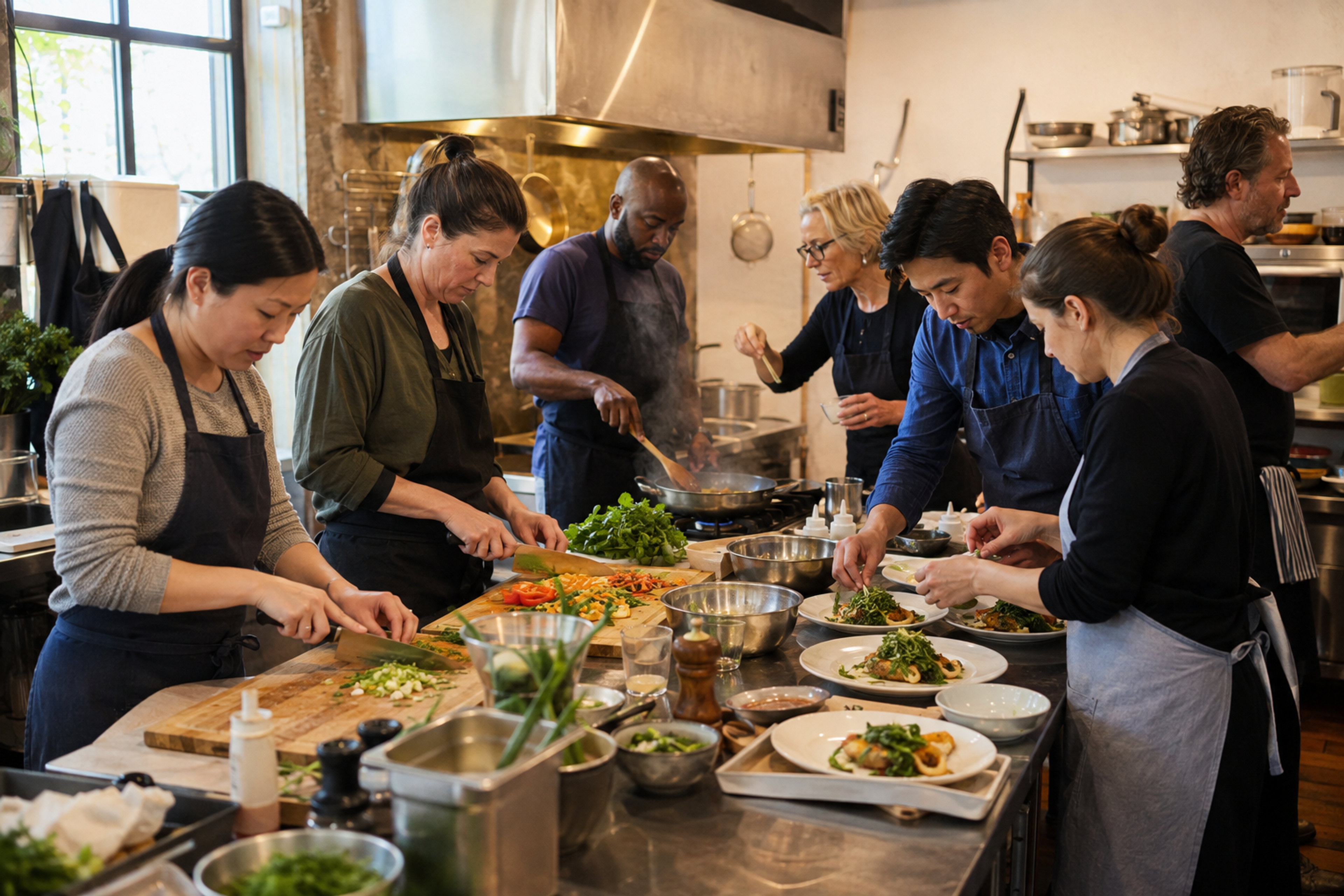
11. Choose a neighborhood food tour or cooking challenge
A food tour works when the priority is connection and cultural context. Keep the route within one walkable neighborhood and assign small prompts that move the conversation beyond tasting notes: what did this business need to understand about its customer, what operational choice is visible, or which detail would you borrow for your own work?
A cooking challenge creates more interdependence. Teams plan, divide roles, adjust to constraints and present something together. Both formats require early dietary and accessibility planning. Los Angeles Tourism lists group food experiences ranging from multi-stop neighborhood tours to hands-on cooking and tastings. Ask whether the group stays together, how dietary needs are handled, whether alcohol is optional and how much of the advertised duration is transit.
12. Use improv to practise listening and adaptability
Workplace improv should not be a sequence of surprise performances. A skilled facilitator uses short, low-stakes exercises to practise noticing, building on another person’s idea and recovering when the plan changes. Begin in pairs or small groups, explain the purpose of each exercise and never make public embarrassment the mechanism.
This format suits teams working through change, cross-functional friction or cautious meeting culture. It can run in a hotel meeting room, studio or office, which keeps the logistics light. Ask the facilitator how they adapt for introverts, neurodivergent participants, mobility needs and people using English as an additional language. The debrief should connect one or two observed behaviours to real meetings—not claim that a 90-minute workshop transformed the culture.
13. Run a game-show or escape-room tournament
Game-show formats scale well because multiple tables can play at once, and the questions can mix company knowledge, local culture and neutral puzzles. Escape rooms are better for smaller teams but can become a tournament when several rooms or timed puzzle stations run in parallel. Both formats make information-sharing and decision speed visible without requiring athletic participation.
Prevent the loudest participant from owning the experience by rotating the answer role, giving some clues to specific people and scoring collaboration as well as completion. Confirm private space, room capacity, reset time, accessibility, audiovisual requirements and whether custom content has been tested. If teams spend more time waiting for their turn than solving, the provider’s total capacity is not the same as a workable event design.
Purpose-driven team building
Service can create stronger connection than entertainment, but only when the nonprofit defines the work and the company respects the operational reality. Choose a project because it is useful, not because it creates a particular photograph.
14. Join a Habitat LA team build
Habitat for Humanity of Greater Los Angeles offers construction team builds, playhouse builds and ReStore opportunities. Its published guidance says construction builds generally accommodate up to 15 participants per team, while larger groups may be supported through additional sponsorships or multiple builds. Playhouse builds can be brought to a suitable site, and ReStore options suit smaller groups.
The work is concrete and roles are visible, which makes it strong for practical collaboration and shared purpose. It also needs more lead time than a casual outing: Habitat LA advises groups to make contact months ahead when possible and explains that some formats require sponsorship. Confirm age, physical-demand, waiver, clothing, food and accessibility requirements, then let the organisation lead the day.
15. Organize an environmental or custom service day
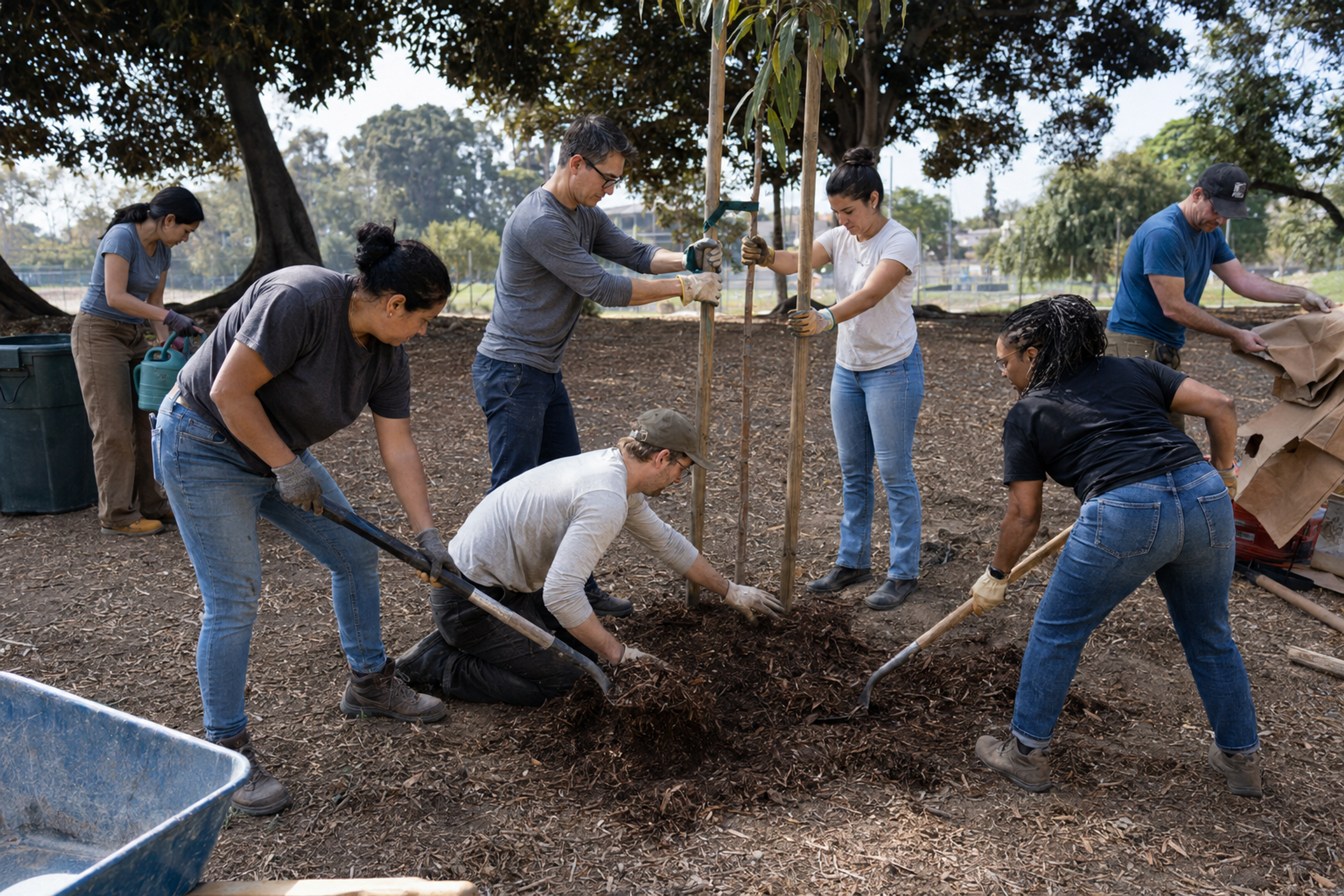
Tree care, restoration, food sorting and customized community projects can fit teams that want local impact without a construction brief. TreePeople lists corporate “Teams for Trees” contacts and group-volunteer support, while Los Angeles Tourism connects meeting planners with corporate-social-responsibility programmes and community partners. The Los Angeles Regional Food Bank also welcomes group and corporate volunteers at current distribution or partner locations.
Ask the partner what work is genuinely needed on your date, how many people it can use well, what donation or sponsorship supports the programme, and what participation alternatives exist. Build the agenda around the service shift rather than squeezing it between a long arrival and an elaborate branded lunch. A short reflection afterward—what the partner taught us, and what responsible follow-through looks like—is more useful than a forced business analogy.
When is Experience Camp Pendleton the stronger choice?
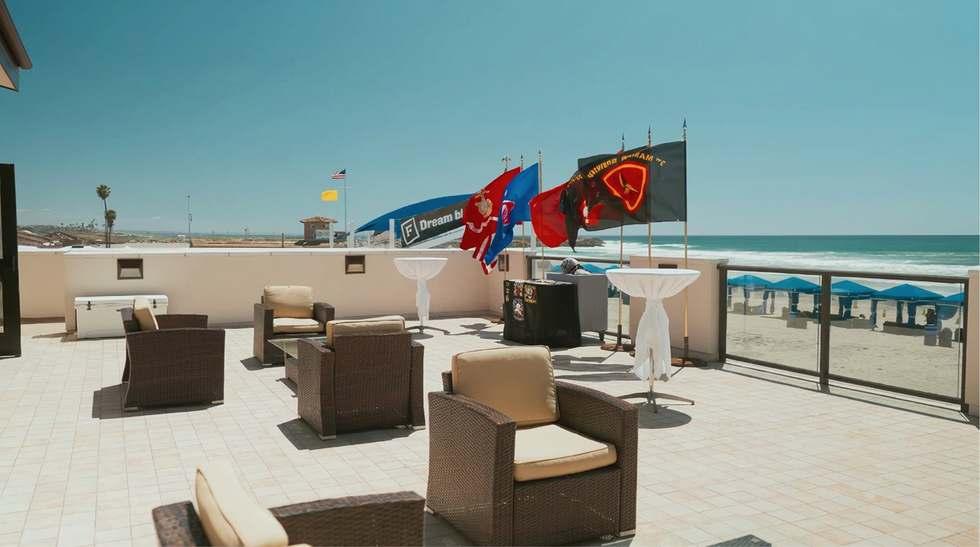
Choose a Los Angeles activity when you need a convenient two- or three-hour connection point near an office, hotel or conference. Choose Experience Camp Pendleton when the event itself needs to be the destination: a half-day or full day that connects the setting, the history, facilitated team work, leadership content and hospitality into one narrative.
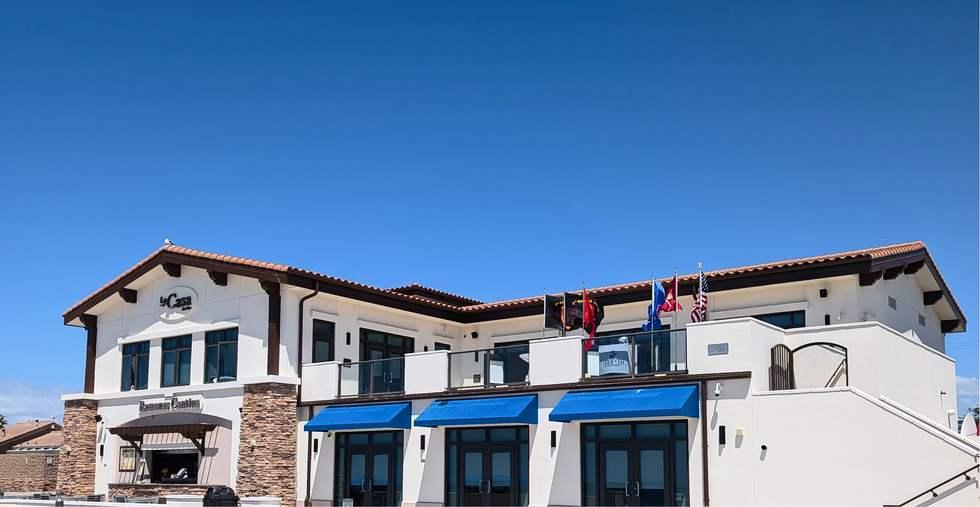
The programme takes place at Camp Pendleton in Oceanside, south of Los Angeles. It is not a casual add-on to a Downtown LA meeting. It makes more sense for a leadership retreat, annual gathering, regional team or incentive day where the organisation is willing to protect the schedule and travel together. A coach can become part of the transition: people leave the office context at the same time, arrive as one group and return with a shared reference point.
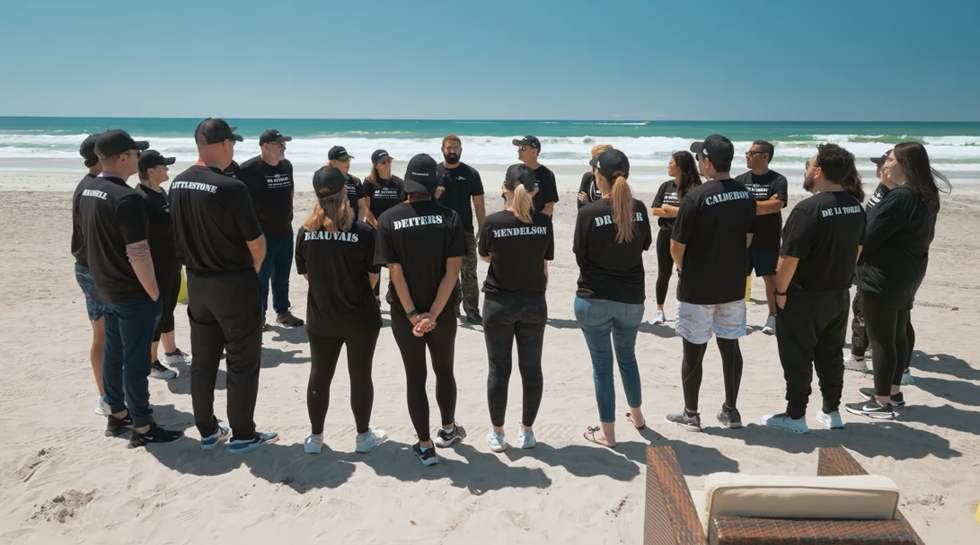
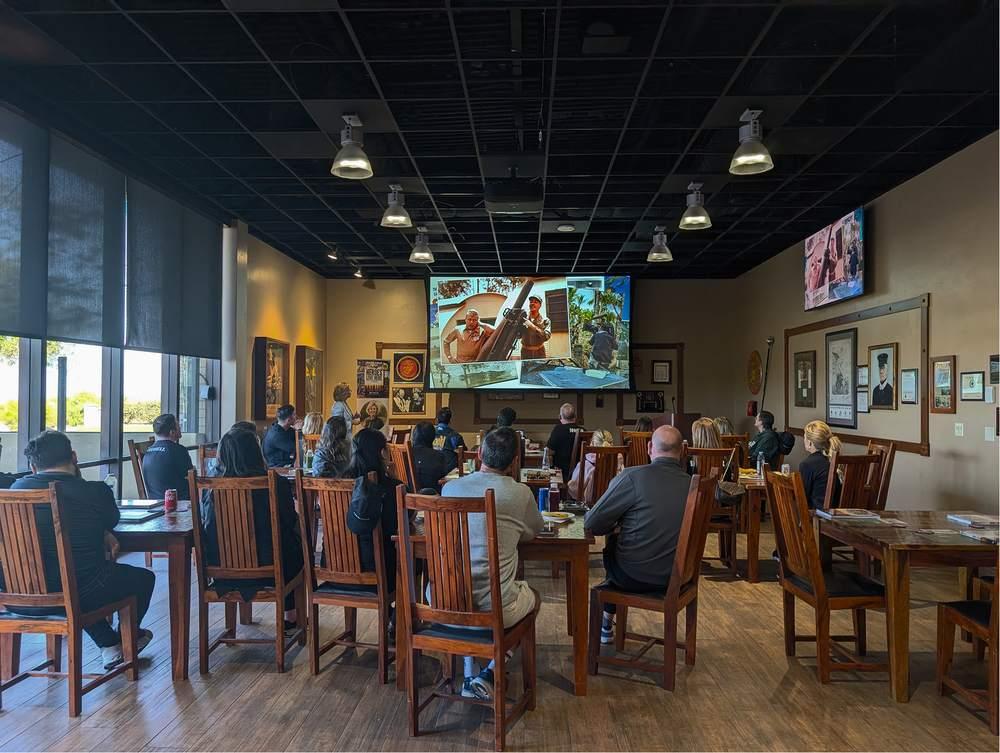
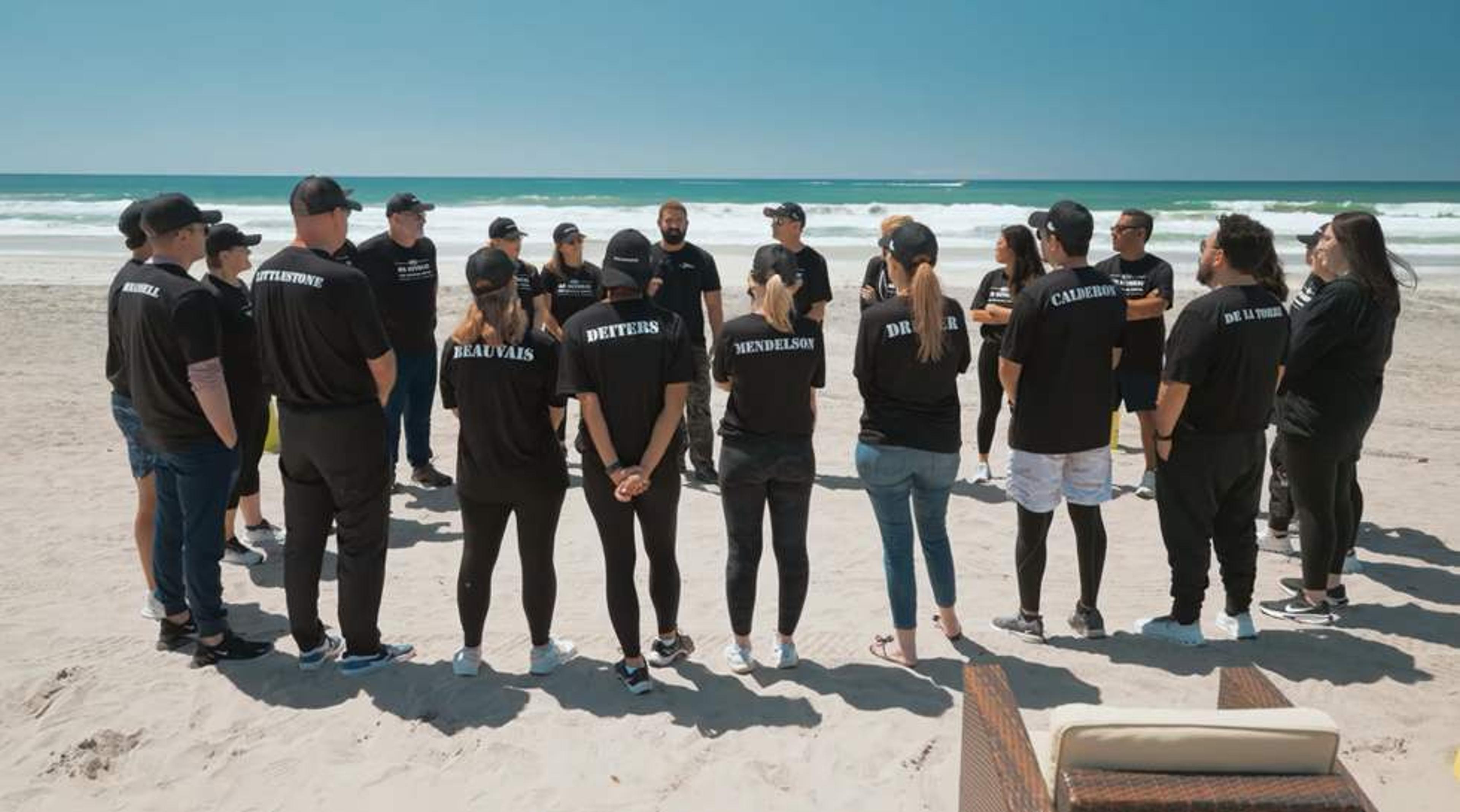
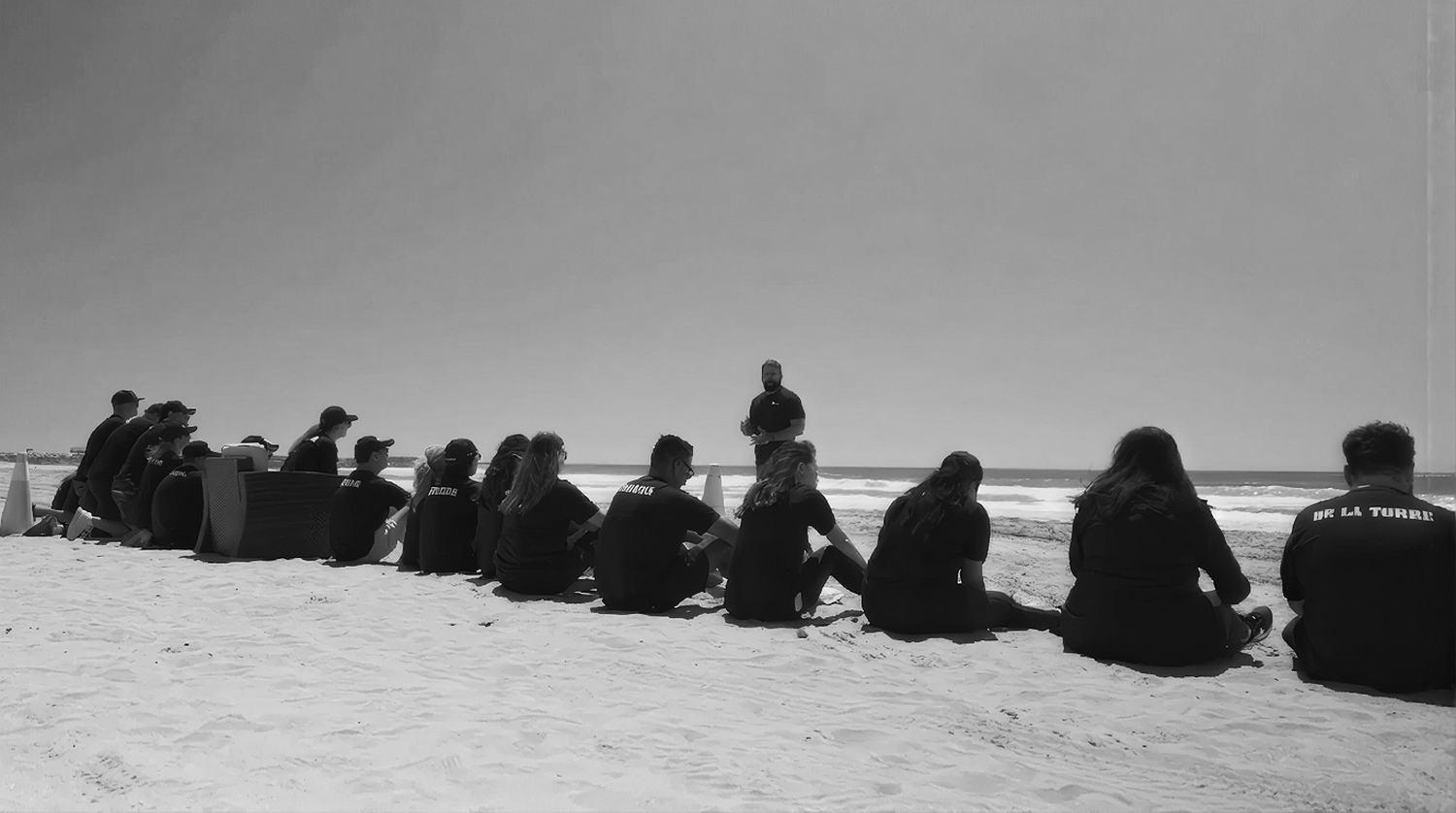
Prime Hall, a former Marine Raider, water-survival instructor and combat veteran, leads the beach work around communication and decision-making under pressure. The session is not a boot camp; programmes can include non-physical roles and be adapted to different fitness levels. Amy Forsythe, a Marine combat correspondent and author with 30 years across the Marine Corps and Navy, gives the history of the base. Together, they make the place part of the learning rather than a backdrop.
| Programme | Duration | Published capacity | Best fit | Core shape |
|---|---|---|---|---|
| Recruit | 3 hours | Up to 50 | Boards, mixed-mobility teams and a focused history/leadership session | Indoor history, light hospitality and a correspondent keynote; no beach session |
| Leatherneck | 4 hours | Up to 100 | A conference group adding a distinctive half day | History, 90-minute beach session and a keynote, with light snacks |
| Devil Dog | 5 hours | Up to 100 | Teams wanting the beach work and a proper meal without a full-day reception | History, two-hour beach session and sit-down lunch |
| Semper Fi | 8 hours | Up to 100 | A leadership offsite or annual gathering where the day is the event | Two venues, history, beach work, lunch, keynote and reception |
Compare the Recruit, Leatherneck, Devil Dog and Semper Fi package pages for the current programme shape and inclusions.
Access is coordinated in advance and remains controlled by the installation. Never promise entry before current requirements and the group roster have been confirmed. The Camp Pendleton visitor-pass guide explains the planning questions, while the San Diego corporate retreat cost guide helps build a complete budget beyond the activity fee.
If the team only needs light social time, stay in Los Angeles. If it needs a designed progression—from context, to challenge, to reflection, to hospitality—book a short planning call and ask which package fits the group. A credible organiser should also tell you when the programme is not the right fit.
Los Angeles team building planning checklist
Keep the day inside one geography
Choose Downtown, Hollywood, Mid-Wilshire, the Westside, the Beach Cities, Inglewood or another practical hub before signing activity contracts. Map the hotel, office, activity, meal and departure point at the actual day and time you expect to travel. If the group crosses zones, charter transport and add a realistic buffer rather than relying on everyone to arrive separately.
Write an outcome brief
State one primary outcome, one secondary outcome and the behaviour you want the experience to make visible. “Improve communication” becomes useful when the provider knows whether the issue is handoffs, candour, listening, decision speed or cross-functional trust. For more detail, use the eight-week company-offsite playbook before requesting proposals.
Audit participation before choosing the format
Collect mobility, sensory, dietary, religious, medical and language needs privately. Ask the provider what an equivalent role looks like—not merely whether someone can sit out. Confirm restrooms, shade, seating, sound level, transit distance, footwear, changing space and recovery time. The large-group team-building guide covers the facilitation questions that matter once headcount grows.
Compare the total operating cost
Request an itemized estimate covering facilitation, venue, staffing, food, transport, parking, permits, insurance, equipment, audiovisual support, taxes or service charges, overtime and cancellation terms. A low activity price can still create an expensive day if the group waits, travels twice or needs several vendors to make the experience work. Use the one-day retreat guide to compare complete event shapes rather than isolated activity prices.
Confirm the weather and cancellation path
For beach, park and water formats, define the decision-maker, decision time, backup venue, transport change and financial consequences before the forecast becomes urgent. “Weather permitting” is not a contingency plan. Indoor alternatives should preserve the event objective, not simply keep people dry.
End with a short, useful debrief
Ask three questions: What did we notice? Where does that pattern appear at work? What is one behaviour we will test next? Ten focused minutes is often enough. Avoid asking the activity to carry a culture problem it cannot solve. The event should create evidence and language for the next conversation—not pretend to finish it.
Frequently asked questions
The answers below cover the questions Los Angeles planners most often need to settle before requesting proposals.
Experience Camp Pendleton is a commercial service operated by Urban Kitchen Hospitality / Mid Coast Supply Inc. It is not affiliated with, endorsed by, or sponsored by the United States Department of Defense, the United States Marine Corps, or Marine Corps Community Services. Installation access is controlled by the installation; confirm current requirements before travel.
Before you ask
Common questions
What are the best team building activities in Los Angeles?
The best option depends on the outcome. Short-film, songwriting and improv sessions support creative collaboration; Santa Monica beach work, Griffith Park navigation and water activities add energy; food tours, cooking and game formats help colleagues connect; and Habitat LA or an environmental service project adds purpose. For a complete destination offsite rather than a short local activity, consider Experience Camp Pendleton south of Los Angeles.
How much do team building activities in Los Angeles cost?
Prices vary by headcount, duration, venue, exclusivity, facilitation, transport and food. Compare the total event cost rather than the advertised activity price. Ask for an itemized estimate covering space, staff, equipment, permits, insurance, parking or coaches, catering, taxes or service charges, overtime and cancellation terms.
What works for a large corporate group in Los Angeles?
Parallel film teams, team songwriting, customized game shows, beach stations and scalable service projects can work for large groups when facilitation and movement are designed well. Ask how participants are divided, how instructions are delivered, how many facilitators are present, how waiting is controlled and how everyone contributes. Published capacity alone does not guarantee a good experience.
What are good indoor team building activities in Los Angeles?
Film production, songwriting, museum-based design work, improv, cooking, game shows, escape-room tournaments and indoor skydiving are useful indoor or weather-resistant options. Match the activity to the goal: creative formats suit ideation and listening, games reveal problem-solving, cooking encourages conversation and indoor skydiving is strongest as high-energy recognition.
Do we need a permit for team building on a Los Angeles beach or in a park?
Possibly. Requirements depend on the jurisdiction, site, headcount, vendors, equipment and activity. Santa Monica requires a Group Beach Activity Permit for groups larger than 20 and smaller than 150, while larger groups use its community-event process. Griffith Park publishes separate event and picnic-permit guidance. Confirm current requirements directly with the authority controlling the exact location.
How far in advance should we book a Los Angeles team event?
Book early for fixed dates, large groups, public-space permits, water activities, private venue buyouts, nonprofit projects or custom facilitation. Some service organisations schedule months ahead, and outdoor permits add their own review time. Ask each provider for decision deadlines covering the venue hold, permits, waivers, final headcount, transport, catering and cancellation terms.
Is Experience Camp Pendleton in Los Angeles?
No. Experience Camp Pendleton takes place at Camp Pendleton in Oceanside, south of Los Angeles in North County San Diego. It is relevant for Los Angeles organisations willing to travel for a half-day or full-day destination offsite combining history, Marine-led facilitation, optional beach teamwork, leadership content and hospitality.
Can people with different fitness levels participate at Experience Camp Pendleton?
Yes. The programme is not a boot camp, and physical elements can be adapted or skipped. Non-physical roles can be built into exercises, and the Recruit package has no beach session. Share participation needs early so the organiser can plan equivalent roles, venue movement, shade, rest and timing. Final programme details and access requirements should be confirmed for the event date.
Written by
Rene Diaz
President
Four packages
Bring your
team here.
Half a day to a full day, from a history session and lunch to both venues, beach team building and a reception on the deck.