

How to Plan a Company Offsite: 8-Week Playbook (2026)
Plan a company offsite in eight weeks with a practical timeline, owner map, agenda template, proposal checklist and safeguards for access, inclusion and day-of delivery.

Most company offsites do not fail because the planner forgot an activity. They fail because the purpose stayed vague, decisions had no owner or logistics were treated as details until the week of the event.
Eight weeks is enough time to plan a strong local offsite if the date, budget ceiling and decision-maker are real. It is not generous. A controlled-access venue, a large group, a complex dietary profile or executive calendars can consume that margin quickly. The value of an eight-week plan is not the number of weeks; it is the order in which uncertainty is removed.
TL;DR: Define the outcome, owner, guest list and budget ceiling eight weeks out. Contract the core venue and programme by week six, freeze the agenda by week three, and confirm headcount and access by week two. In the final week, stop adding scope and focus on delivery.
Table of contents
- How long does it take to plan a company offsite?
- Decide the outcome before choosing the activity
- The eight-week company offsite planning timeline
- Choose the right company offsite format
- Build a company offsite agenda with an arc
- Compare proposals by all-in scope, not the headline
- Give the planning team clear decision rights
- Plan inclusion, privacy and participation as operations
- Build a risk register that leads to decisions
- Planning an Experience Camp Pendleton offsite
- The final 48 hours—and the 48 hours after
How long does it take to plan a company offsite?
Allow at least eight weeks for a local one-day company offsite. Use 10–16 weeks when the event involves flights, hotel rooms, more than 100 participants, several venues, specialist production or access to a controlled location.
A small leadership session in a hotel meeting room can be assembled faster, but speed changes the purchase. The best date may be gone, the most capable facilitator may be booked and every exception becomes an expensive rush request. An event can still happen in four weeks; it simply needs fewer moving parts and faster decisions.
The lead time should be measured from the first decision, not the first vendor email. A planner who spends three weeks collecting attractive ideas before confirming the purpose has not gained three weeks of research. They have lost three weeks of leverage.
Use this test:
- Eight weeks: local day, one primary venue or integrated programme, 25–100 people and decisive leadership.
- Twelve weeks: overnight stay, flights, several vendors, senior speakers or a date with limited flexibility.
- Sixteen weeks or more: international attendees, 100+ people, multiple hotels, extensive production or a high-security location.
If your event is already inside these windows, reduce complexity before reducing planning discipline.
Decide the outcome before choosing the activity
“Team building” is not yet an outcome. Neither is “culture,” “connection” or “reward.” Those words describe a territory. The planner still needs to know what should be different when people return to work.
A useful event brief fits on one page and answers six questions:
- What must the group do, decide or understand together?
- Why can this not be accomplished in the normal meeting rhythm?
- Who needs to be in the room for that outcome?
- What should participants remember three months later?
- What is the maximum approved spend, including tax, service and contingency?
- Who can make the final call when priorities conflict?
Turn the broad ambition into an observable sentence. “Improve collaboration” might become “The product and commercial teams will agree three handoff rules and name an owner for each.” “Celebrate the year” might become “Every team will hear what its contribution changed, then receive protected time together without another presentation.”

That sentence is the filter for the agenda. If an idea is enjoyable but does not help the group reach the outcome, it may still belong in the social time. It should not consume the part of the day reserved for the work.
The eight-week company offsite planning timeline
The sequence below assumes a local day. For overnight or international programmes, move contracting, travel and attendee-data deadlines earlier.
| Week | Critical decision | Primary owner | Finished when |
|---|---|---|---|
| 8 | Purpose, date, group, ceiling | Executive sponsor | One-page brief approved |
| 7 | Format and shortlist | Event lead | Two viable options compared |
| 6 | Contract and access track | Event lead + legal | Core scope signed |
| 5 | Agenda and facilitation | Programme owner | Every block has a purpose |
| 4 | Participant needs | People lead | Needs and exceptions logged |
| 3 | Production and transport | Operations lead | Run of show version one |
| 2 | Counts and contingencies | Event lead | Final decisions documented |
| 1 | Reconfirm and brief | All owners | No unresolved critical item |
Week 8: write the brief and decision rules
Name one accountable event lead and one executive sponsor. The sponsor owns the business reason and approval ceiling. The event lead owns the plan, deadlines and recommendations. A committee can advise; it cannot be the final decision-maker.
Set the invite logic before estimating headcount. Is this the whole company, a function, a leadership group or the people required for one decision? Add a working attendance range and the date on which the minimum guaranteed count becomes binding.
Create three decision rules. For example: the event happens during paid time; nobody is required to drink or complete a physical challenge; and the team will use one venue rather than losing ninety minutes to city transfers. Rules stop the plan being redesigned every time someone finds a new idea.
Week 7: choose the shape, then shortlist locations
Decide whether this is primarily a working session, a shared experience, a recognition event or a combination. A combination still needs a dominant purpose. When every objective is equal, the agenda becomes a sampler and none receives enough time.
Send the same brief to each shortlisted provider. Ask for an all-in scope, not a headline price. Compare capacity, private space, food, facilitation, A/V, transport, accessibility, weather backup, access coordination, staffing, taxes, service charges and cancellation terms.
Limit the shortlist to two or three viable options. Five proposals create the appearance of rigor while making the comparison less consistent. Eliminate any option that cannot meet a non-negotiable requirement before scoring aesthetics.
Week 6: contract the core experience and open the access track
By the end of week six, the core venue and programme should be contracted or at final legal review. Confirm what the deposit holds, when the guaranteed count is due, which changes trigger fees and who owns safety, permits and weather decisions.
If the venue has controlled access, treat access as a separate workstream. Do not wait for the final attendee count before learning what information is required, how it must be transferred, how foreign nationals are handled and which transport providers may enter. The Camp Pendleton visitor-pass guide shows why this needs its own timetable.
Decide where participant information will live, who can see it and when it will be deleted. A shared spreadsheet open to a large planning committee is not a data plan.
Week 5: build an agenda around energy and decisions
Start with the two or three blocks that create the outcome. Put high-concentration work before lunch, movement after long seated periods and reflection before the close. Protect transition time. A ten-minute walk, restroom break or room reset does not become instantaneous because it is missing from the agenda.
Brief facilitators on the group, not only the topic. They need to know reporting relationships, recent changes, conflicts that should not be turned into public theatre, accessibility needs and what leaders are prepared to decide in the room.
Keep executive presentations short. An offsite is one of the few chances for people to interact across normal boundaries; spending the morning reproducing an all-hands call is a poor use of the location.
Week 4: confirm needs without making people negotiate publicly
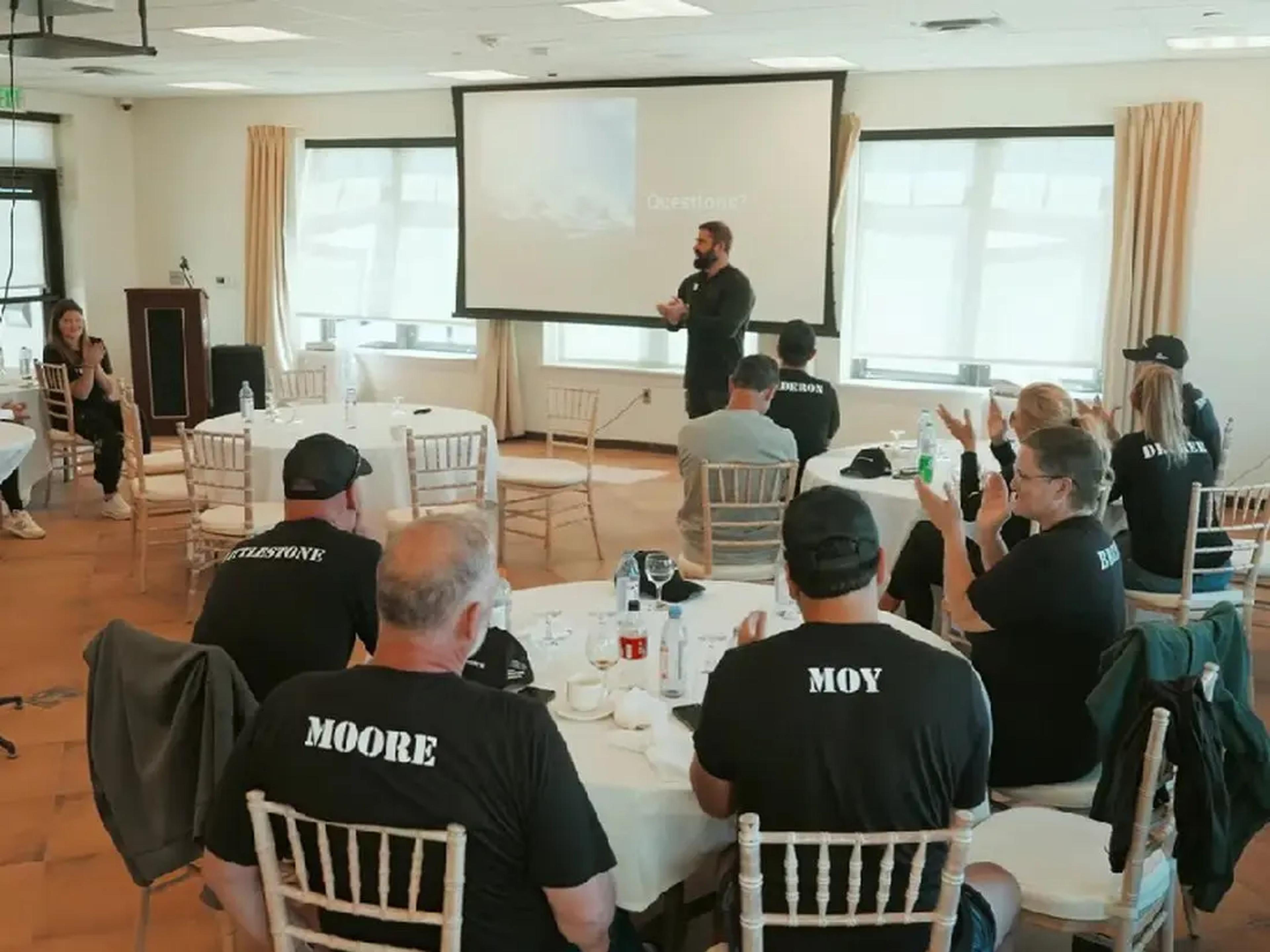
Send one concise participant form. Collect attendance, dietary needs, mobility or sensory accommodations, travel origin, emergency contact process and any information specifically required for venue access. Explain why each field is needed and who receives it.
Offer private ways to discuss accommodations. Do not ask an employee to explain a disability in a team channel or make the non-physical role sound like a lesser version of the day. For outdoor programmes, publish the actual surfaces, distance, shade, seating and clothing guidance rather than saying only “moderate activity.”
This is also the time to ask about public recognition, photography and alcohol preferences if those elements are planned. Consent is easier to design before the run of show is fixed.
Week 3: turn the agenda into an operating plan
The agenda tells participants what happens. The run of show tells the team how it happens.
For every block, record the start, finish, room, owner, speaker, equipment, catering cue, transport cue and recovery plan. Add contact details in the operational copy, not the participant version. Identify the person with authority to shorten a session when the day runs late.
Confirm vehicle capacities, loading locations, driver access, parking, A/V inputs, microphones, power, weather thresholds and medical response. If the programme crosses venues, walk the transfer or rehearse it on a map with real loading time.
Freeze new creative scope at the end of this week. From here, changes should remove risk or respond to participant needs—not add novelty.
Week 2: lock the count and make contingency decisions
Submit the guaranteed headcount and required rosters by the contractual deadline. Reconcile the attendee list with transport seats, meal counts and access records; these lists often drift apart because different people own them.
Hold a thirty-minute red-team review. Ask: what happens if the keynote is late, the wind makes beach audio unusable, a coach cannot enter, an attendee arrives without the required identification or lunch starts twenty minutes behind? Name the person who decides and the fallback that is already paid for.
Send participants one useful briefing rather than a series of fragments. It should include purpose, timing, departure point, clothing, food, accessibility contact, identification or access instructions, photography expectations and the number to call if they are delayed.
Week 1: reconfirm, brief and stop changing the event
Reconfirm every vendor in writing. Use the same current run of show and attendee count. Conduct a short owner briefing in which each person states their first action, critical handoff and fallback.
Prepare a compact control pack: run of show, key contacts, participant count, transport manifest, dietary summary, room plan and incident notes. Sensitive identity or access data should remain in the approved system, not be printed into every clipboard.
In the final 24 hours, communicate only information that changes participant behavior. The event does not need another inspirational email. It needs a clear departure time.
Choose the right company offsite format
The right format follows the business need and the energy of the group. A full-day shared experience can be powerful for a distributed team meeting once a year. It is excessive for six leaders who need to resolve a narrow operating issue.
| Business need | Strong format | Main trade-off |
|---|---|---|
| Make one hard decision | Half-day facilitated session | Limited social time |
| Reconnect a distributed team | Full-day shared experience | More logistics and spend |
| Recognize sustained work | Hosted appreciation day | Must include specific recognition |
| Reset leadership priorities | One-day working retreat | Requires prepared decisions |
| Integrate after a merger | Full day with structured dialogue | Avoid forced vulnerability |
| Build strategy and relationships | One- or two-night retreat | Travel expands cost and exclusion risk |
For more formats, compare one-day company retreat ideas and employee appreciation event ideas. If the group has 50–100+ people, start with activities designed for large teams because facilitation and movement change materially at that scale.
Build a company offsite agenda with an arc
A strong agenda has a beginning, a middle and a close. The beginning creates context and psychological safety. The middle does the difficult work or shared challenge. The close converts the experience into decisions, commitments or recognition.
This sample full-day arc is deliberately spacious:
| Time | Purpose | Format | Energy |
|---|---|---|---|
| 8:30 | Arrive and settle | Breakfast + informal welcome | Low |
| 9:00 | Establish the day | Sponsor brief + facilitator frame | Focused |
| 9:30 | Do the core work | Decision session or keynote | High focus |
| 11:00 | Change mode | Break + movement | Recovery |
| 11:30 | Work across teams | Facilitated small groups | Collaborative |
| 12:45 | Build relationships | Unhurried lunch | Social |
| 2:00 | Create shared experience | Team challenge or field activity | Active |
| 4:00 | Make meaning | Debrief + commitments | Reflective |
| 4:45 | Close intentionally | Recognition or reception | Warm |
Do not copy the times without copying the logic. A leadership retreat may need two work blocks and a walk. An appreciation day may need less formal work and a more deliberate recognition moment. The point is to alternate concentration, participation and recovery.
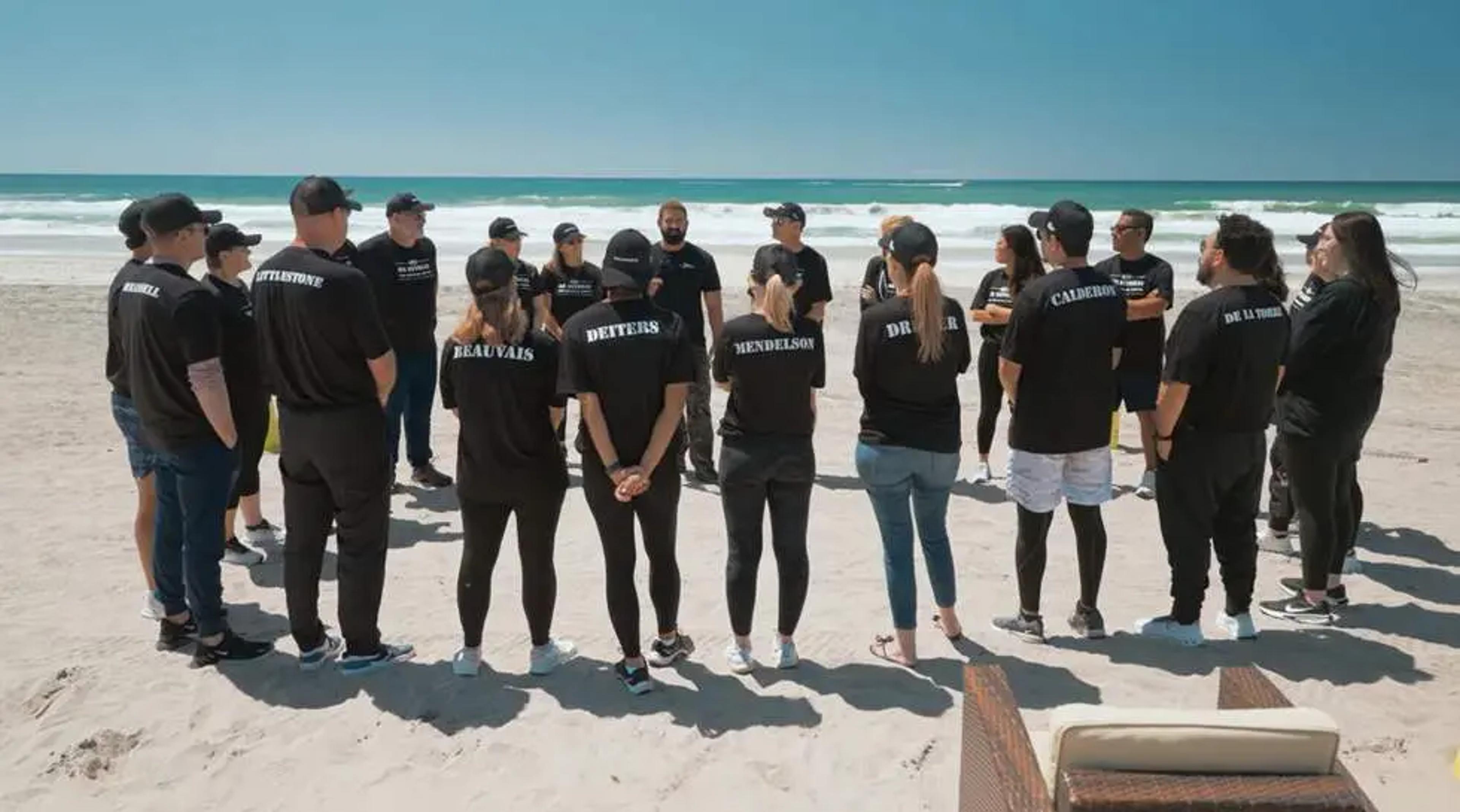
For outdoor programmes, give people a real role choice. Participation can include navigation, observation, timekeeping, communication or debrief—not only physical execution. The outdoor team-building guide explains how to avoid turning fitness into status.
Compare proposals by all-in scope, not the headline
Two proposals with the same per-person price may include different events. One may cover the room, food, facilitator, A/V and transport. Another may omit service charges, setup labor, weather backup or the vehicle required to reach the venue.

Use the San Diego corporate retreat cost guide to build the budget, then compare each proposal on the same lines.
| Cost line | Confirm | Common omission |
|---|---|---|
| Venue | Exclusive hours and setup | Early access and cleaning |
| Food | Meals, breaks and minimums | Tax, service and dietary upgrades |
| Programme | Design, staffing and materials | Prep calls and extra facilitators |
| Production | Screen, sound and technician | Outdoor audio and power |
| Transport | Vehicle, driver and wait time | Parking, overtime and access |
| Risk | Weather and cancellation terms | Backup space and rescheduling |
Keep total approved spend beside cost per guaranteed attendee. The total prevents budget creep; the per-person figure makes unlike formats easier to compare.
Give the planning team clear decision rights
An effective core team can be four people:
- Executive sponsor: owns the business outcome, political alignment and approval ceiling.
- Event lead: owns the workback plan, recommendations, contracts and final integration.
- Programme owner: owns agenda quality, speakers, facilitation and follow-through.
- Operations lead: owns venue, food, production, transport, access and day-of control.
Add people, finance, legal, security or communications specialists for defined decisions. Do not invite everyone to every meeting. The event lead should know who recommends, who approves, who executes and who only needs to be informed.
When leadership changes the goal, make the trade-off visible. “We can add a client panel, but it replaces the cross-team working block” is a useful decision. Quietly compressing every other session by ten minutes is not.
Plan inclusion, privacy and participation as operations
Inclusion is not a paragraph in the invitation. It is what the transport, schedule, food, surfaces, roles and information process allow people to do.
Build from these principles:
- Equal value: alternatives should feel like legitimate ways to participate, not exemptions.
- Useful specificity: describe distances, terrain, noise, seating and meal formats plainly.
- Private disclosure: give one named contact for needs and exceptions.
- Minimum data: collect only what the venue, travel plan or safety process genuinely requires.
- Controlled access: restrict sensitive roster data to the people and systems that need it.
- Paid participation: do not make employees give up personal time to receive the supposed benefit.
- Recovery time: account for travel and the workload waiting after the event.
Photograph consent deserves its own decision. If the company wants marketing content, say so before the day and provide a realistic opt-out that does not require someone to leave the activity.
Build a risk register that leads to decisions
A risk register is useful only when it changes the plan. Keep it short: risk, probability, impact, prevention, fallback, owner and decision deadline.
The highest-value risks are usually ordinary:
- The executive sponsor arrives late and the opening depends on them.
- The guaranteed count changes after catering is locked.
- One coach carries all participants and has no access contingency.
- Outdoor conditions change the safe or comfortable programme.
- A/V is described as “included” but no technician owns the microphones.
- Dietary information reaches the caterer but not the service team.
- The agenda runs late and the facilitator protects their session rather than the transport deadline.
Name the immovable points: gate slot, meal service, speaker departure, venue close and coach return. Flexible agenda blocks should bend around them.
Planning an Experience Camp Pendleton offsite
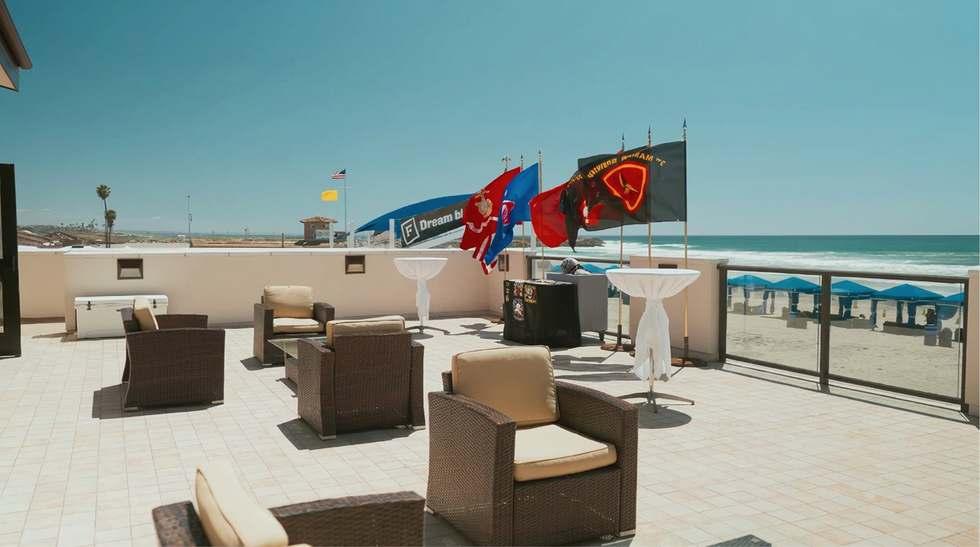
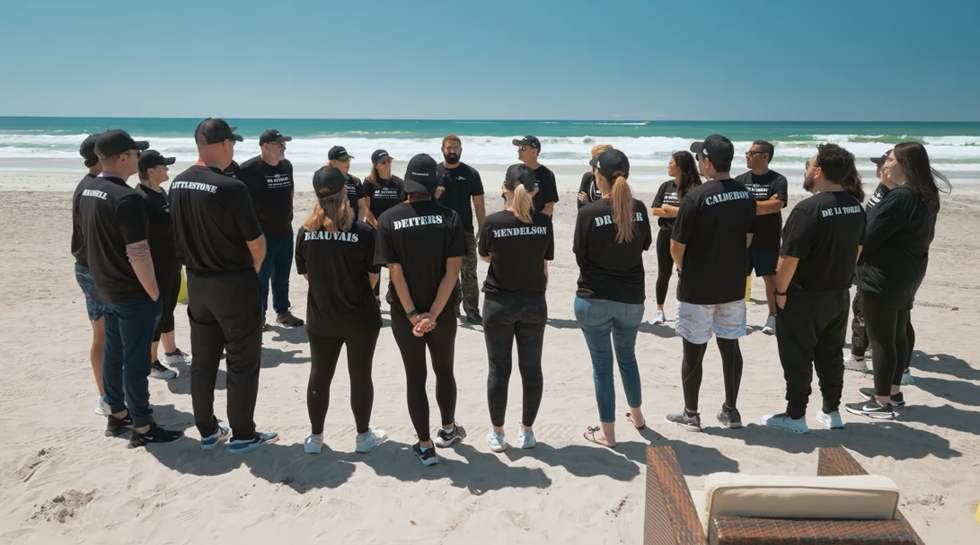
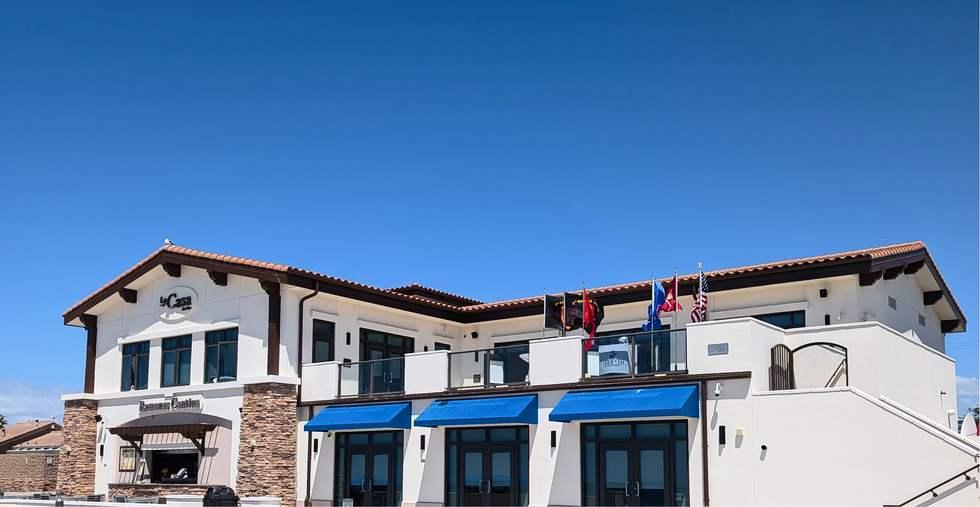
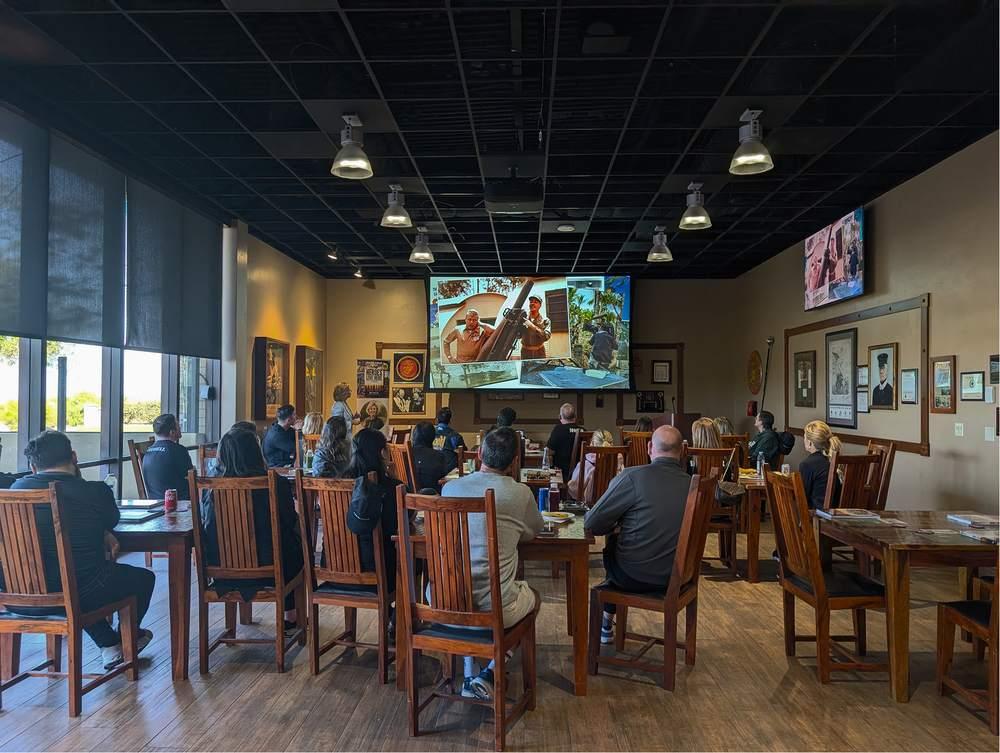
Experience Camp Pendleton offers three-, four-, five- and eight-hour programme shapes for groups up to 50 or 100 depending on the package. The full Semper Fi programme can combine Iron Mike’s, Del Mar Beach, facilitated team work, lunch, a keynote and a closing reception.

The operational difference is that the location is a secure military installation. The live package guidance says the attendee roster is cleared in advance, the installation sets the deadline and base coordination is included. The sample full-day itinerary also uses coordinated group transport and allows time at the security checkpoint.
That makes the planning order especially important:
1. Confirm the group, date range and business outcome.
2. Choose the package shape and obtain a complete proposal.
3. Open the roster and access workstream immediately.
4. Identify foreign-national, identification, mobility and transport questions early.
5. Build the agenda backwards from the confirmed access and departure times.
Do not promise attendees that access is automatic. Do not tell individuals to choose their own visitor process unless the programme coordinator instructs them to do so. Camp Pendleton controls entry and may change requirements. Check the official Base Access page during planning and again before travel.
For a broader market comparison, see the best team-building activities in San Diego. For the people leading the beach work, read about Prime Hall.
The final 48 hours—and the 48 hours after
In the final 48 hours, verify the facts that can stop the day:
- The current attendee and transport counts agree.
- Required access submissions are complete and any printed materials are ready.
- Drivers have the route, gate and contact instructions supplied by the coordinator.
- The venue, facilitator, caterer and A/V team share one run of show.
- Dietary and accessibility actions are assigned, not merely recorded.
- Weather, illness and speaker-delay decisions have named owners.
- Participants know the exact meeting time, identification requirement and late-arrival instruction.
Then leave the plan alone.
Within 48 hours after the offsite, send decisions, owners and deadlines while the shared context is fresh. Ask three short evaluation questions: What should we keep? What should we change? What will we do differently at work?
Do not use a satisfaction score as the only measure. A pleasant day can fail its business purpose; a demanding decision session can create lasting value. Revisit the original outcome after 30 days and check whether the agreed behavior, decision or relationship actually changed.
Before you ask
Common questions
What is the first step in planning a company offsite?
Write one observable outcome and name one accountable event lead. Do this before collecting venues or activities. The outcome determines who attends, how the agenda uses time and which proposal is genuinely suitable.
Is eight weeks enough to plan a corporate retreat?
Eight weeks is usually enough for a local one-day retreat with decisive leadership and a manageable group. Use more time for flights, rooms, groups over 100, controlled access, international attendees or several vendors. If less time is available, simplify the event rather than skipping contracts, participant needs or contingency planning.
What should a company offsite agenda include?
Include a clear opening, one or two outcome-producing work blocks, breaks, an unhurried meal, a shared experience or cross-team session, reflection and a close that records decisions or recognition. Add realistic movement and transition time between them.
Who should be on the offsite planning team?
A practical core team has an executive sponsor, event lead, programme owner and operations lead. Bring finance, legal, people, security or communications specialists into specific decisions. One person must retain responsibility for integrating the whole plan.
How should we compare company offsite proposals?
Compare the same all-in lines: venue hours, food, facilitation, materials, A/V, staffing, transport, access, taxes, service charges, weather backup and cancellation terms. Keep both total spend and cost per guaranteed attendee in the approval file.
How early should we plan an Experience Camp Pendleton event?
Start with at least eight weeks and ask for the current access deadline during the first conversation. The installation controls access and sets the applicable requirements, so roster, identification, citizenship and transport questions should be opened early rather than added after the agenda is finished. Experience Camp Pendleton is a commercial service operated by Urban Kitchen Hospitality / Mid Coast Supply Inc. It is not affiliated with, endorsed by or sponsored by the United States Department of Defense, the United States Marine Corps or Marine Corps Community Services. Access to Marine Corps Base Camp Pendleton is controlled by the installation and subject to change at any time. Confirm current requirements at pendleton.marines.mil before you travel.
Written by
Rene Diaz
President
Four packages
Bring your
team here.
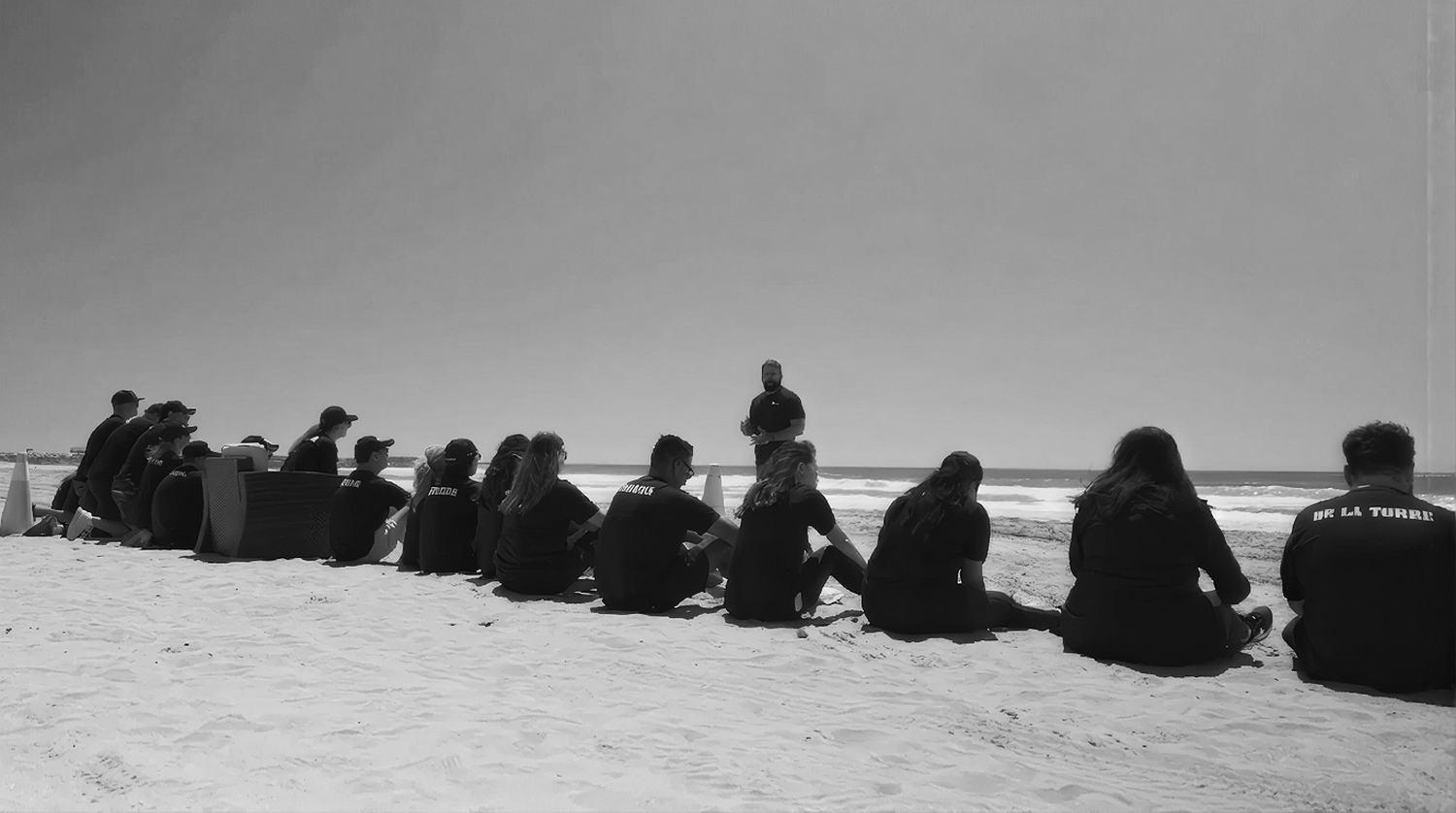
Half a day to a full day, from a history session and lunch to both venues, beach team building and a reception on the deck.