
15 Outdoor Team Building Activities for Adults (2026 Guide)
Fifteen outdoor team-building ideas designed for adult work teams, compared by group size, time, physical demand, equipment and accessibility.

The best outdoor team building activities for adults do not feel like children's games moved onto a lawn. They give coworkers a real problem, enough room to make decisions and several meaningful ways to contribute.
That can mean paddling a tandem kayak, navigating a route, building something that has to work or completing a facilitated challenge on the beach. It can also mean a low-physical-demand activity outdoors, provided the environment and the roles are designed for the people attending.
Quick answer: Strong outdoor team building for adults creates interdependence without making speed, fitness or public performance the only ways to succeed. Choose an activity with adjustable roles, a weather plan, clear safety ownership and time to debrief afterward.
Table of contents
- Quick picks
- What makes an outdoor team-building activity work for adults?
- 15 outdoor team building activities for adults
- Five outdoor team-building games with little or no equipment
- Outdoor event planning checklist
- Outdoor teamwork inside Camp Pendleton
This guide moves from selection criteria to full hosted experiences, then to short no-equipment openers and a practical planning checklist. Start with the outcome and participation needs; use the activity list only after those decisions are clear.
Quick picks
- Best memorable full-day option — facilitated beach teamwork at Experience Camp Pendleton.
- Best for small adventurous teams — guided tandem kayaking.
- Best for executive communication — sailing with rotating crew roles.
- Best for large groups — rotating outdoor challenge stations.
- Best low-physical-demand option — a documentary photo-story challenge or outdoor improv lab.
- Best purpose-led option — a nonprofit-designed cleanup, garden or habitat build.
- Best with little equipment — silent lineup, observation walk, story relay, role map or decision walk.
| Activity | Useful group size | Physical demand | Weather sensitivity | Best outcome |
|---|---|---|---|---|
| Experience Camp Pendleton beach teamwork | Up to 50 or 100 | Adjustable | Medium | Shared responsibility and reflection |
| Mission-based scavenger hunt | 12–200 | Light–moderate | Medium | Cross-team communication |
| Guided tandem kayaking | Small–medium | Moderate | High | Partner coordination |
| Sailing with crew roles | 6–30 | Light–moderate | High | Leadership and communication |
| Leadership walk | 6–40 | Light | Medium | Reflection and relationship-building |
| Outdoor cooking | 8–60 | Light | Medium | Role clarity and hospitality |
| Nonprofit cleanup | 10–200+ | Adjustable | Medium | Purpose and visible output |
| Low-ropes course | 10–80 | Adjustable | Medium | Problem-solving and trust |
| Orienteering | 12–150 | Moderate | High | Navigation and decision-making |
| Cardboard boat build | 12–80 | Moderate | High | Prototyping and iteration |
| Photo-story challenge | 8–100 | Light | Medium | Observation and storytelling |
| Engineering stations | 20–200 | Adjustable | Low–medium | Planning and experimentation |
| Lawn-game strategy league | 20–200 | Adjustable | Medium | Social mixing |
| Outdoor improv lab | 10–80 | Light | Medium | Listening and adaptability |
| Garden or habitat build | 10–150 | Adjustable | Medium | Service and coordination |
What makes an outdoor team-building activity work for adults?
Adults engage when the task respects their time and gives them a useful choice about how to participate. A good activity has a clear objective, limited rules and roles that depend on each other. A poor activity relies on embarrassment, forced vulnerability or a single athletic skill.
Before booking, ask five questions:
- What does the team need to do together that one person cannot complete alone?
- How can someone participate without running, lifting, kneeling or entering the water?
- Who owns safety, first aid, equipment and the weather decision?
- What happens while another team is taking its turn?
- How will the group reconnect and reflect at the end?
Now test the proposed activity against the actual team. A new cross-functional group may need structured roles and short rounds so people learn how colleagues communicate. A leadership team may get more from sailing or a decision walk, where the conversation is the work. A tired operations team may need a low-pressure service project and an unhurried meal—not another scored competition.
The decision becomes clearer when you write the trade-off explicitly:
- “We want a memorable coastal experience, and we accept a firmer weather and access plan.”
- “We need every participant active at once, so we will use parallel stations rather than one spectacular challenge.”
- “Our team includes several mobility and sensory needs, so role choice, surfaces and quiet space are selection criteria—not accommodations added later.”
- “We have only 90 minutes, so we will choose one simple task and a strong debrief instead of a miniature field day.”
This is the difference between selecting an activity and designing an experience. The first chooses what people see. The second decides what they can contribute and what the group learns.
15 outdoor team building activities for adults
1. Facilitated beach teamwork at Experience Camp Pendleton
Best for: teams that want an outdoor experience with a strong sense of place.
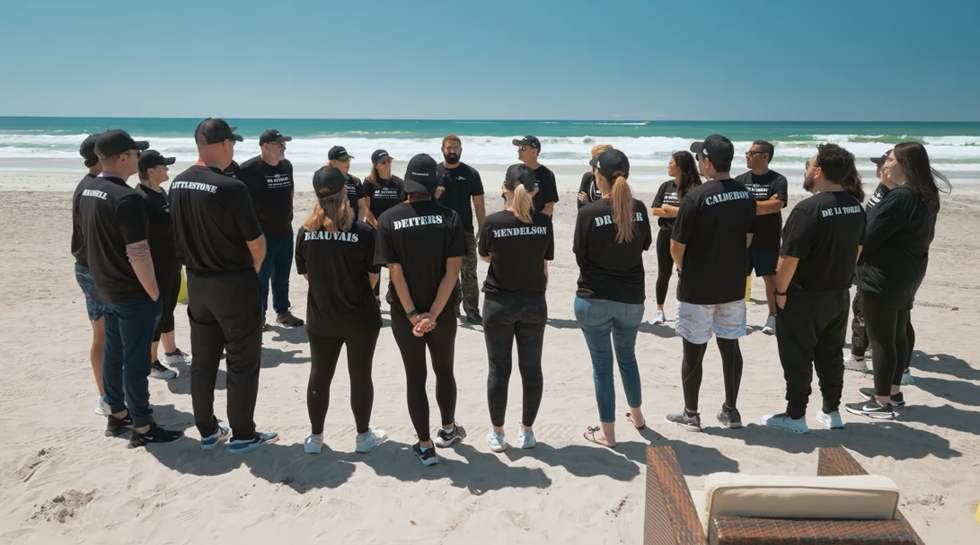
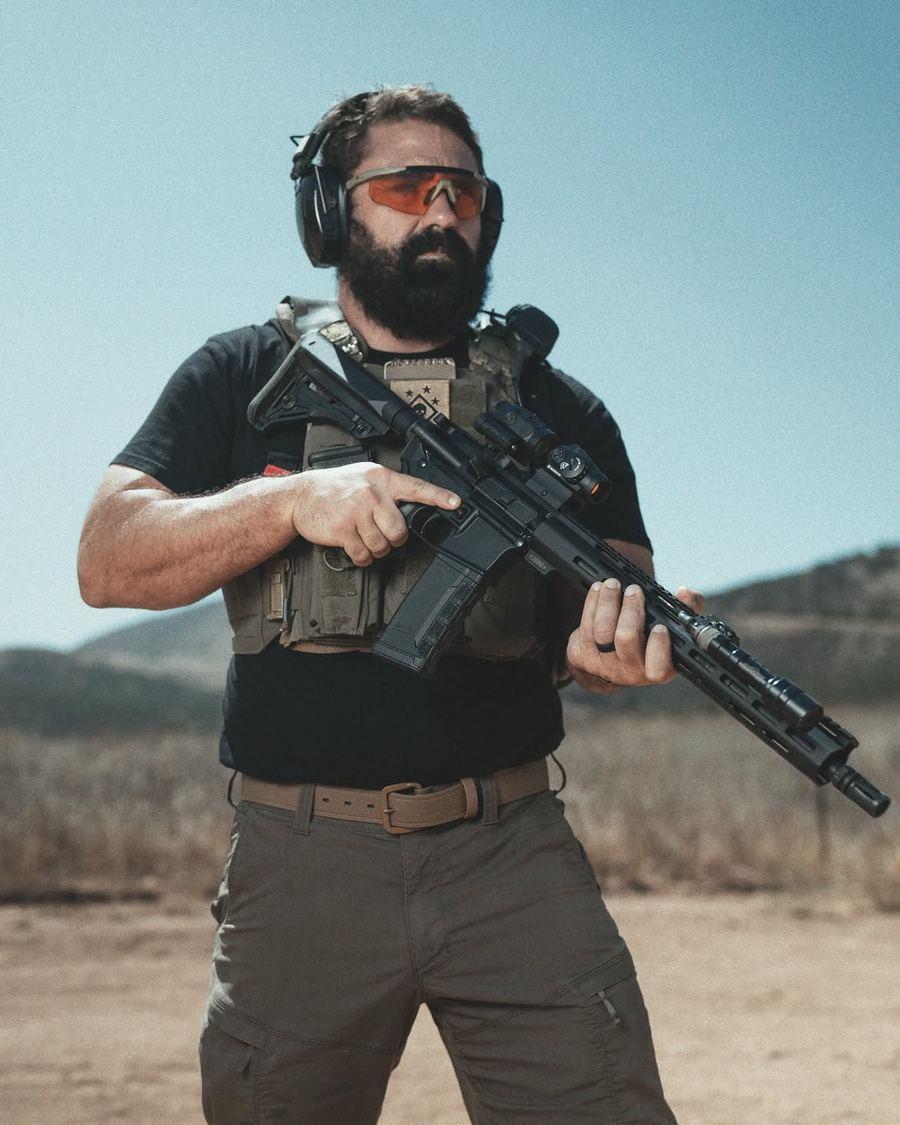
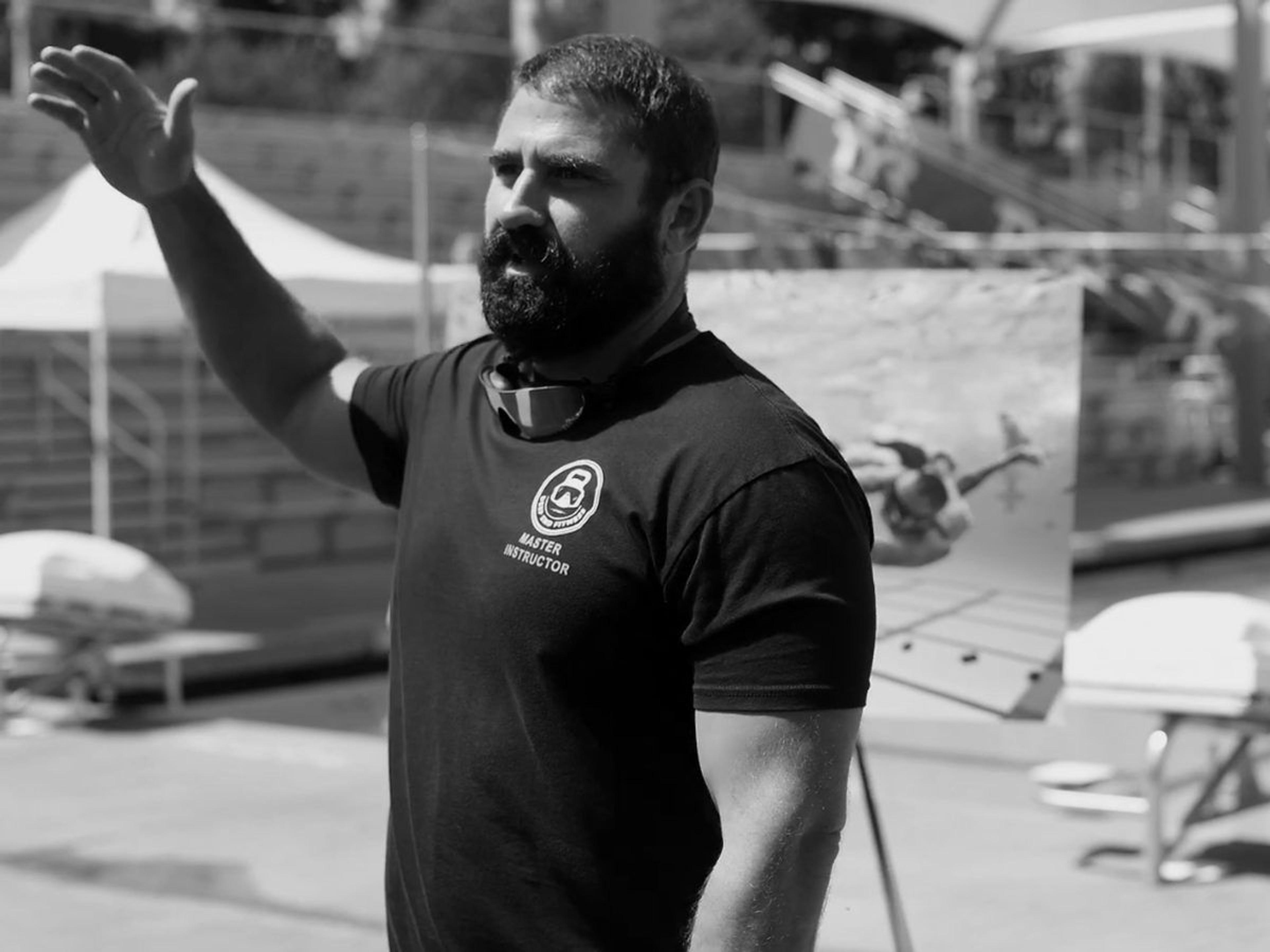
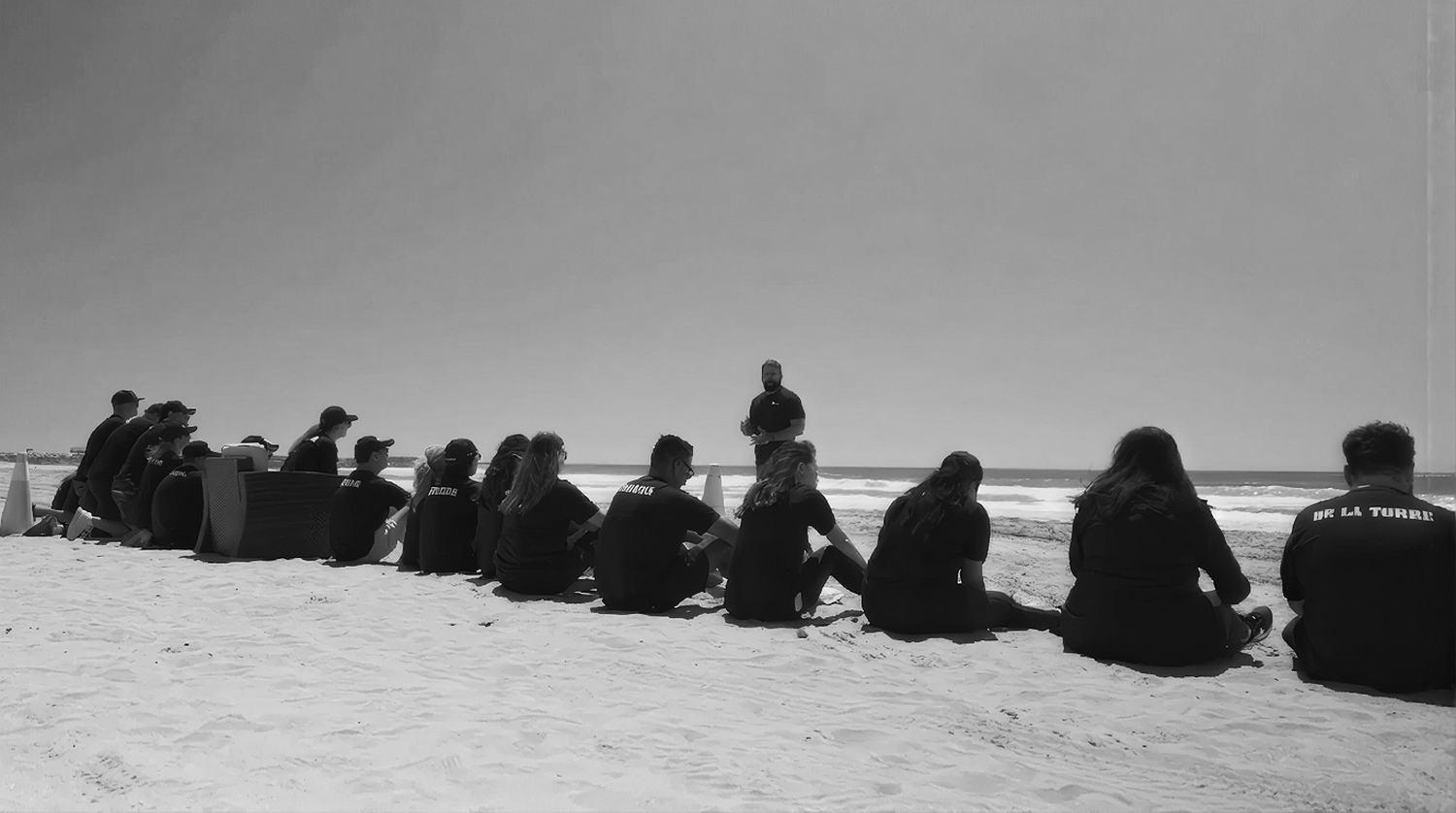
On the longer Experience Camp Pendleton programmes, Prime Hall—a former Marine Raider and water-survival instructor—leads 90 minutes of facilitated team work on the beach. The session sits inside a larger day that can include the history of Camp Pendleton, hospitality, lunch and a keynote.
This is not a boot camp. Exercises are scaled, physical participation is optional and non-physical roles are designed into the work. Depending on the package, the programme can accommodate up to 50 or 100 guests.
- Group size: package-dependent, up to 50 or 100.
- Time: 90-minute beach session inside a three- to eight-hour programme.
- Physical demand: adjustable.
- Equipment: provided as part of the facilitated experience.
- Planning note: access to the active installation, participant details and transport are coordinated in advance.
2. A mission-based city or park scavenger hunt
Best for: cross-functional teams that enjoy movement and observation.
Give each team a compact route with clues that require noticing, deciding and creating—not searching the internet. Assign or rotate navigation, documentation, timekeeping and accessibility roles so the quickest walker does not control the entire experience.
- Group size: 12–200, divided into teams of four to seven.
- Time: 90 minutes to three hours.
- Physical demand: light to moderate, route-dependent.
- Equipment: phones, clue cards and a central communication channel.
- Adaptation: provide a shorter accessible route with equal scoring potential.
3. Guided tandem kayaking
Best for: small teams comfortable around water.
Two people in one kayak have to coordinate pace, direction and decisions immediately. A qualified guide manages the route and conditions while partners learn how quickly mismatched instructions affect the boat.
- Group size: usually small to medium, often in waves.
- Time: allow half a day including briefing and changing.
- Physical demand: moderate, with balance and transfer considerations.
- Equipment: operator-provided kayaks, paddles and correctly fitted flotation devices.
- Adaptation: offer a genuinely equivalent shore-based option rather than asking non-paddlers to watch.
4. Sailing with rotating crew roles
Best for: leadership communication and role clarity.
Under a qualified crew, participants rotate through helm, lines, navigation and observation. The boat gives the team immediate feedback: vague instructions and late handoffs are visible without a facilitator manufacturing the lesson.
- Group size: 6–30; larger groups may need several boats.
- Time: half day.
- Physical demand: variable by boat and role.
- Equipment: vessel and safety equipment supplied by the operator.
- Adaptation: confirm step-free boarding, seated roles and weather limits before booking.
5. A leadership walk with rotating conversation pairs
Best for: small groups that need candid conversation more than competition.
Choose an accessible coastal, garden or park route. Give each pair one useful prompt, rotate partners at fixed points and regroup for a short facilitated close. The walk creates movement without making distance the achievement.
- Group size: 6–24.
- Time: 90 minutes to three hours.
- Physical demand: light to moderate.
- Equipment: route map, water and a clear turnaround plan.
- Adaptation: use a paved loop with seated regrouping points.

6. An outdoor cooking challenge
Best for: teams that like hands-on work but need varied roles.
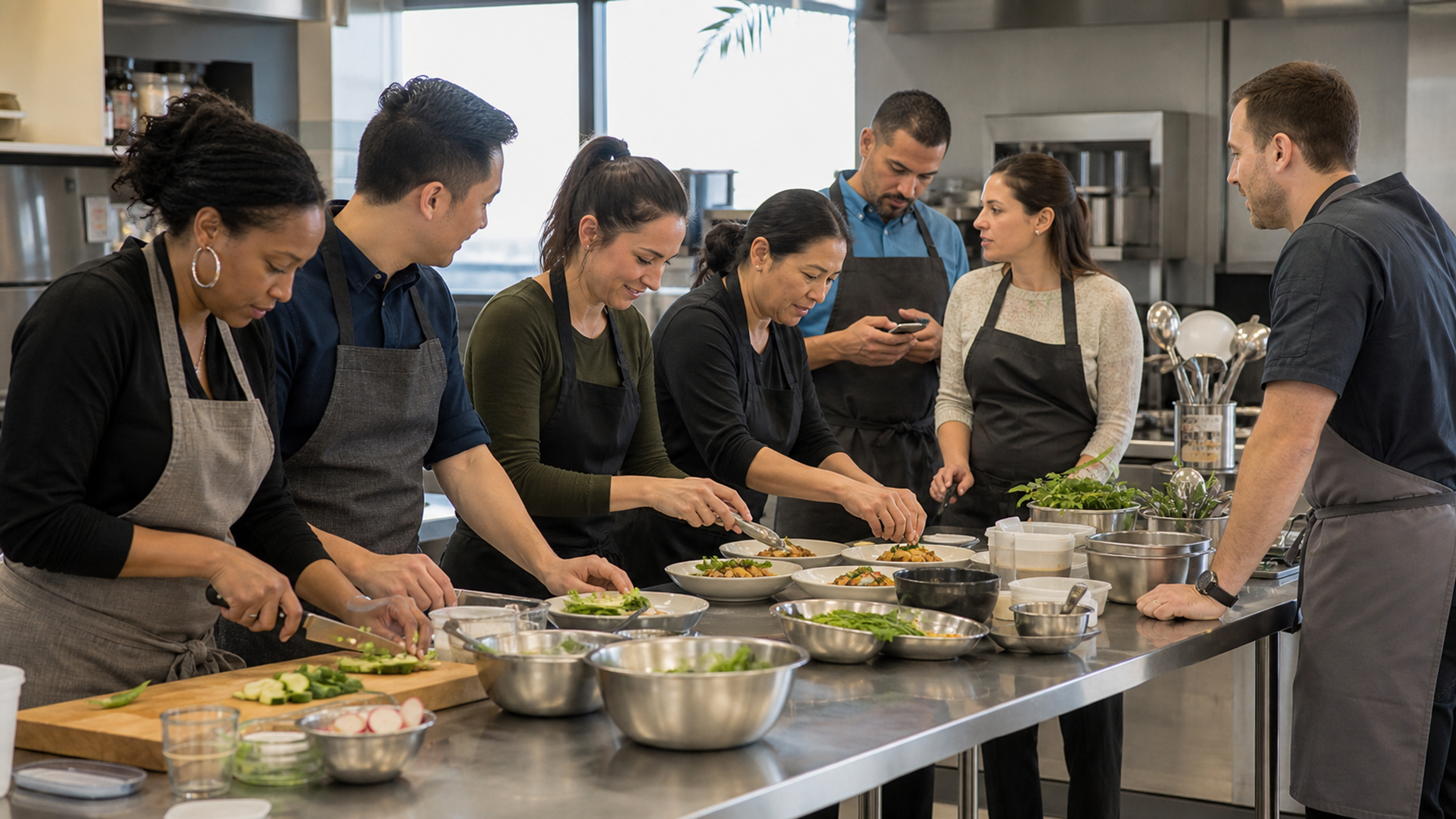
Teams plan and prepare a simple meal at safe outdoor stations, then eat together. Useful roles include menu decisions, preparation, heat management, service, timing and cleanup.
- Group size: 12–80, subject to venue and food-safety capacity.
- Time: three to five hours.
- Physical demand: light, with standing and heat considerations.
- Equipment: professional cooking stations, sanitation and cold storage.
- Adaptation: collect allergen and dietary information early and provide seated roles.
7. A conservation or beach cleanup designed with a nonprofit
Best for: purpose-led teams that want a visible result.
The partner should define the site, safe work, materials and disposal plan. Add small-team zones, an accurate count or audit and a closing explanation of what the work supports.
- Group size: 10–200 if the partner and site can use the capacity.
- Time: two to five hours.
- Physical demand: adjustable by role.
- Equipment: gloves, collection tools, sharps protocol, water and shade.
- Adaptation: include data logging, sorting, check-in and supply roles away from rough terrain.
8. A low-ropes problem-solving course
Best for: teams that want structured challenge without high climbing.
Low-ropes elements can create planning and communication work when the facilitator prioritizes choices over spectacle. No participant should be pressured to climb, balance or be touched.
- Group size: 8–60, divided into small teams.
- Time: three to five hours.
- Physical demand: moderate but adjustable.
- Equipment: professionally installed course and trained staff.
- Adaptation: ask the operator to explain non-physical roles for every element before contracting.
9. An orienteering and navigation challenge
Best for: teams that need planning, information sharing and role rotation.
Groups use a map and checkpoints to design a route under a fixed time limit. Score accuracy, planning and team decisions—not only distance covered.
- Group size: 12–120.
- Time: two to four hours.
- Physical demand: adjustable through route design.
- Equipment: maps, compasses or GPS devices, checkpoint system and radios for staff.
- Adaptation: create equal-value checkpoint clusters on accessible ground.
10. A cardboard boat build-and-test
Best for: creative teams that enjoy building and friendly competition.
Teams receive the same limited materials and must design, build and explain a small floating craft. A water test can be done with a weighted model rather than a person, which is safer and keeps the focus on design.
- Group size: 15–100.
- Time: two to four hours.
- Physical demand: light.
- Equipment: cardboard, tape, cutting tools, protective equipment and a controlled test area.
- Adaptation: use tabletop or shallow-tank model testing instead of requiring anyone to enter water.
11. A documentary photo-story challenge
Best for: low-physical-demand participation and creative communication.
Each team receives a short editorial brief and produces a five-image story about the place, the team or a shared theme. The task requires observation, interviewing, sequencing and presentation rather than speed.
- Group size: 8–100.
- Time: 90 minutes to three hours.
- Physical demand: light.
- Equipment: one phone or camera per team.
- Adaptation: keep the route compact and prohibit photographing members of the public without consent.
12. Build-and-test engineering stations
Best for: analytical teams and larger groups that need parallel activity.
Teams rotate through short design problems: move an object without touching it, build a freestanding structure or create a simple delivery system. Every station should reward planning, iteration and explanation.
- Group size: 20–200 with enough stations.
- Time: two to four hours.
- Physical demand: low.
- Equipment: inexpensive standardized kits and visible timing.
- Adaptation: use table-height work, large-print instructions and roles for planning, building, testing and reporting.

13. An accessible lawn-game strategy league
Best for: social teams that want light competition.
Choose games that can be learned quickly, then change the scoring so strategy, prediction and support matter alongside accuracy. Rotate participants through play, coaching, scoring and analysis.
- Group size: 12–150.
- Time: two to four hours.
- Physical demand: light and adjustable.
- Equipment: several matched game sets, scoreboards, shade and seating.
- Adaptation: provide seated play and avoid elimination formats.
14. An outdoor improv and communication lab
Best for: listening, adaptability and teams that do not need physical challenge.
A skilled facilitator uses short pair and small-group exercises outdoors. The goal is not comedy or performance; it is accepting information, building on an idea and responding clearly.
- Group size: 10–100.
- Time: 90 minutes to three hours.
- Physical demand: low.
- Equipment: portable voice amplification for larger groups.
- Adaptation: no forced solo performance, touch or personal disclosure.
15. A community garden or habitat build
Best for: teams that want practical work with a local partner.
The partner identifies the useful project, then the group divides into preparation, construction, planting, inventory and quality-check roles. The finished work should be maintainable after the company leaves.
- Group size: 10–100, depending on site and scope.
- Time: half day to full day.
- Physical demand: variable.
- Equipment: partner-approved tools, protective gear and materials.
- Adaptation: include assembly and coordination work at accessible stations.
Five outdoor team-building games with little or no equipment
These short activities work as openers or energizers. They are not a substitute for a well-designed full programme.
Silent lineup
Teams arrange themselves by birthday, tenure or another neutral fact without speaking. Allow writing or devices if silence creates an accessibility barrier.
Observation exchange
Pairs walk for five minutes, each noting three details the other missed. They combine their observations into one short account.
Decision walk
Mark three positions in an outdoor area. Read a work-related scenario, let people choose a position, then discuss in small groups before anyone reports out.
One-word story relay
Small teams build a story one word at a time. Run it seated if preferred, and stop while it is still energetic.
Resource map
Teams sketch the skills, relationships and information they would need to solve a realistic challenge. The only equipment is paper and a marker.
Outdoor event planning checklist
Decide the weather response before the forecast becomes emotionally expensive. A good backup protects the same outcome, headcount and perceived value.
| Condition | Decision trigger | Strong response | Weak response |
|---|---|---|---|
| Heat | Forecast or venue threshold agreed in advance | Earlier start, shade, water, shorter rounds, seated roles | Telling participants to hydrate |
| Rain | Contracted decision deadline | Sheltered equivalent programme with the same facilitator | Last-minute trivia in a hallway |
| Wind | Provider or safety-owner threshold | Change water/high-object activity; protect signage and equipment | Waiting until objects start moving |
| Poor air quality | Named official index and threshold | Move indoors or reschedule active exertion | Asking individuals to decide publicly |
| Cold or surf conditions | Qualified provider's call | Adjust route, equipment, exposure and timing | Treating discomfort as team spirit |
One person must own the decision and one message must reach attendees. If the venue, facilitator and corporate organizer each believe someone else will call the change, the group receives conflicting instructions and transport continues toward a programme that no longer exists.
- Confirm the weather decision deadline and who has authority to cancel or change the route.
- Provide shade, drinking water, restrooms and seated rest points.
- Collect mobility, health and dietary requirements privately.
- Explain clothing, footwear and sun protection before the event.
- Check permits, insurance, public-space rules and emergency access.
- Put non-physical roles into every activity plan.
- Avoid elimination, public weighing, forced touch and blindfolded movement.
- Plan transport, parking, equipment storage and the final regrouping point.
- Create an indoor or sheltered alternative with equal status.
For a broader local comparison, see 15 Best Team Building Activities in San Diego.
If you are building a complete agenda and budget, use the one-day company retreat guide. For 50 or more attendees, the large-group team-building guide explains pods, stations and staffing.
Outdoor teamwork inside Camp Pendleton
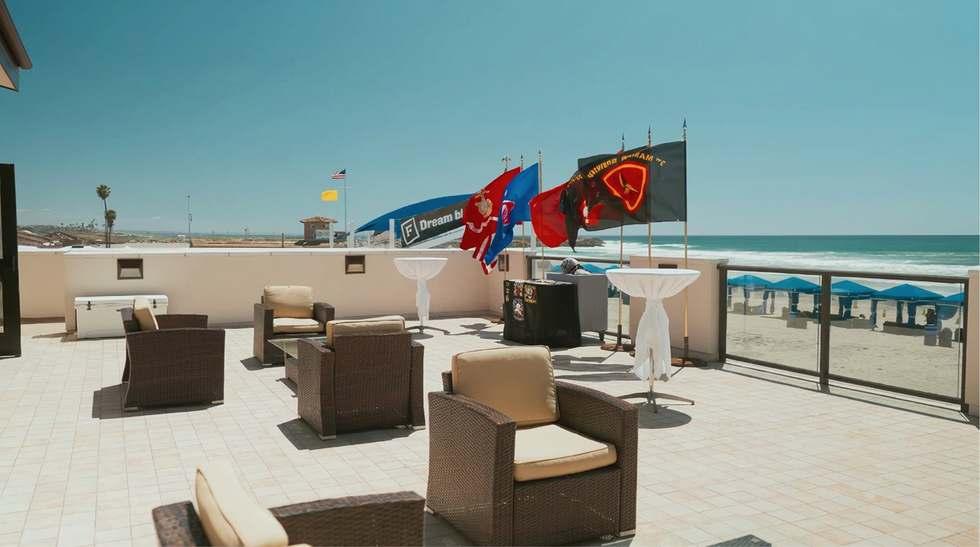
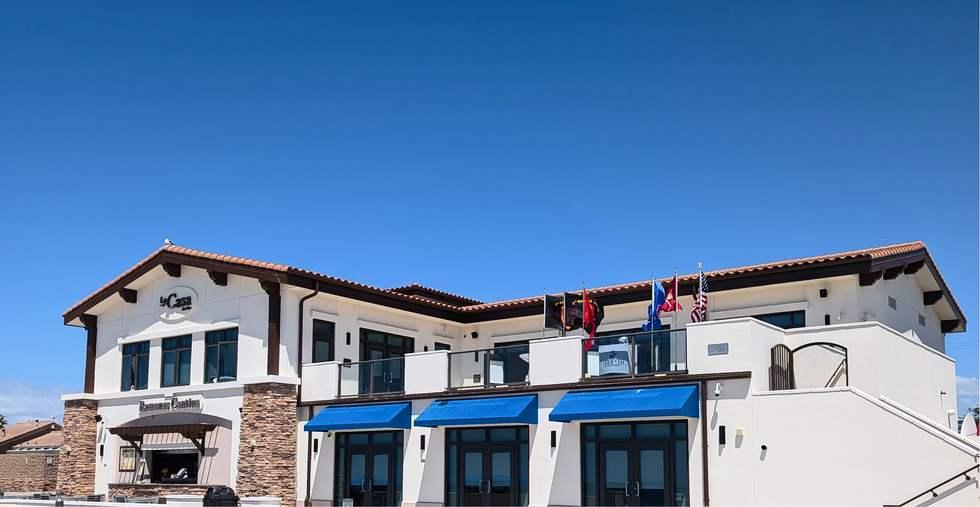
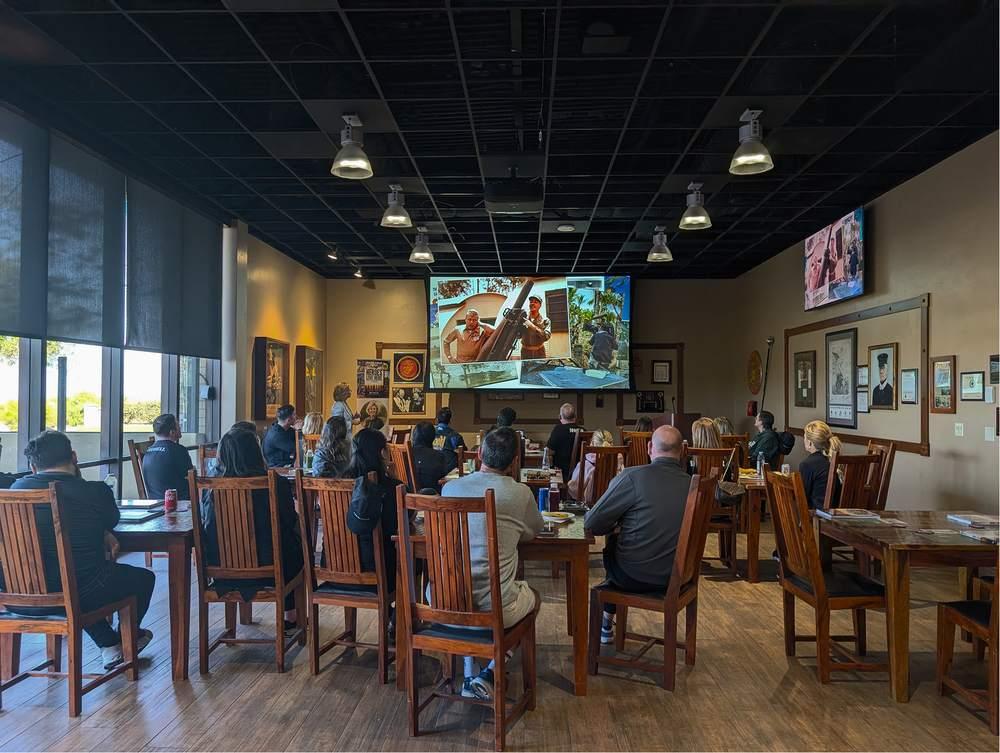
Experience Camp Pendleton combines facilitated beach work with the history and hospitality of the installation. Compare the four packages, which run from three to eight hours and accommodate up to 50 or 100 depending on the format. Begin access and transport planning before finalizing the participant invitation.
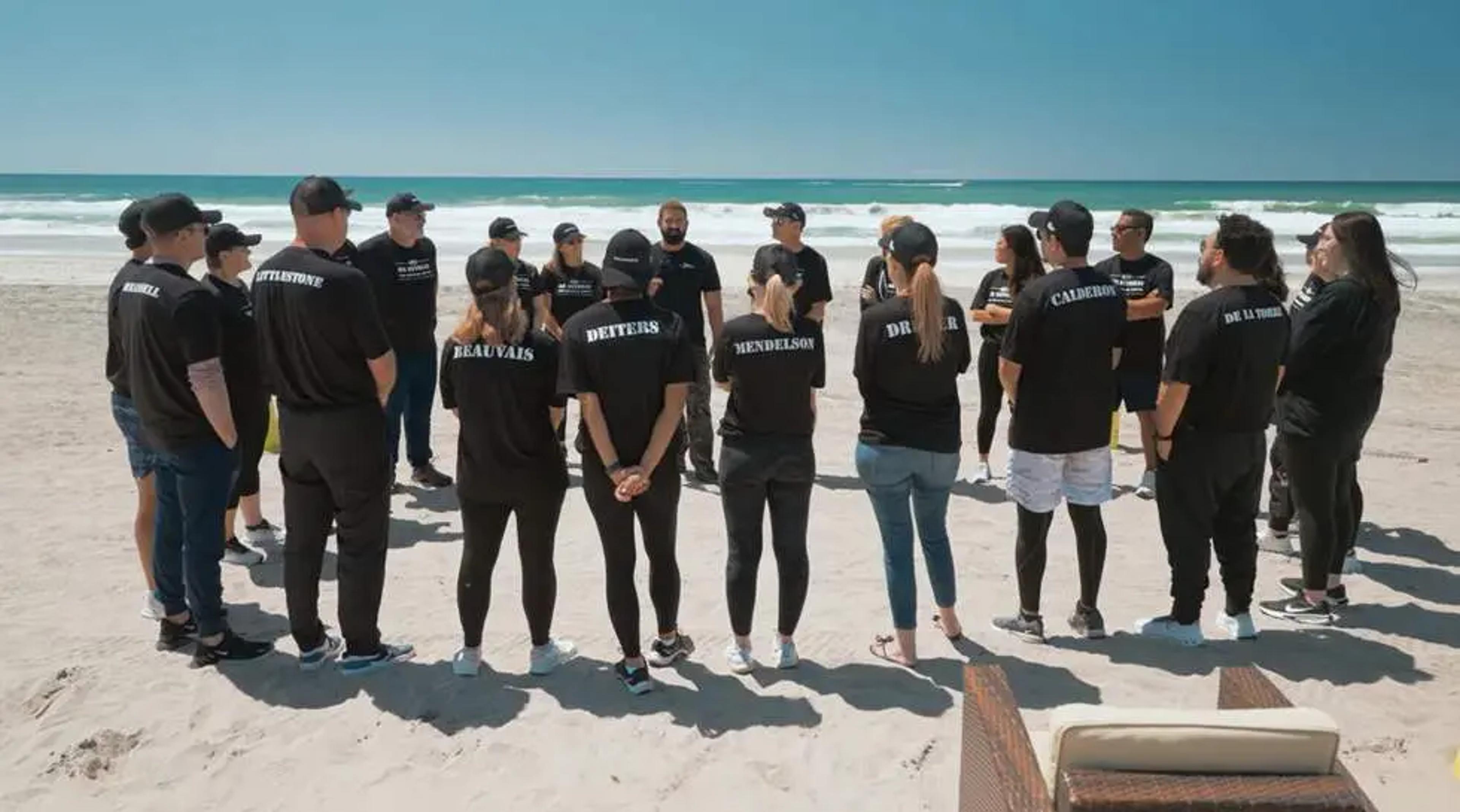
The outdoor component is a 90-minute facilitated beach session led by Prime Hall, a former Marine Raider and water-survival instructor. In the three longer package shapes, beach access and the team-building session are included; in the three-hour Recruit format they are optional. That distinction matters when comparing a complete outdoor team day with a shorter history-led programme.
| Package | Duration | Beach access | Facilitated beach teamwork | Useful when |
|---|---|---|---|---|
| Recruit | 3 hours | Optional | Optional | The group wants a short hosted programme |
| Leatherneck | 4 hours | Included | Included | The outdoor session is the main event |
| Devil Dog | 5 hours | Included | Included | The team also needs lunch and hospitality |
| Semper Fi | 8 hours | Included | Included | The company wants a full-day narrative with keynote and reception |
The location adds meaning, but the design principles remain the same: exercises are scaled, physical participation is optional and non-physical roles should contribute to the same objective. Ask how mobility, water confidence, sensory needs, heat exposure and rest will be handled for the confirmed group. Access to the installation is coordinated in advance and controlled by the installation; use the visitor-pass guide when building the attendee process.
Experience Camp Pendleton is a commercial service operated by Urban Kitchen Hospitality / Mid Coast Supply Inc. It is not affiliated with, endorsed by or sponsored by the United States Department of Defense, the United States Marine Corps or Marine Corps Community Services. Access is controlled by the installation and subject to change.
Before you ask
Common questions
What are five good outdoor team-building activities for adults?
Five strong options are a facilitated beach challenge, a mission-based scavenger hunt, tandem kayaking, an orienteering challenge and a nonprofit-designed service project. Choose based on group size, mobility, weather exposure and the workplace outcome—not novelty alone.
What outdoor team-building activities require no equipment?
Silent lineup, observation exchange, a decision walk, a one-word story relay and a resource-mapping discussion require little more than space, paper or a facilitator. They work best as 10- to 30-minute openers rather than the entire event.
Which outdoor activities work for large groups?
Rotating challenge stations, orienteering, accessible lawn-game leagues, cleanups and build-and-test engineering stations can work for large groups. Divide participants into small pods, give every station a trained owner and keep transitions short.
Do outdoor team-building activities need to be physically demanding?
No. Photography challenges, outdoor improv, observation walks, garden assembly and table-height build stations can all create useful teamwork with low physical demand. More active events should include meaningful non-physical roles from the start.
What should we do if bad weather is forecast?
Set a decision deadline and a named decision-maker in the contract. Use a sheltered or indoor programme with equal status, not a last-minute collection of filler games. Communicate the change, clothing needs and transport plan to participants in one clear update.
How much do outdoor team-building activities cost?
A simple self-run activity may cost under $50 per person when the company already has suitable space. Hosted local experiences often plan around $75–$250 per person, while water activities, exclusive venues, professional facilitation, transport or full-day hospitality can cost more. Compare the complete event scope, not only the activity ticket.
What should employees wear to an outdoor team-building event?
Send specific guidance based on the surface, weather and activity: closed-toe shoes or water footwear, layers, sun protection and any change of clothes. Avoid vague instructions such as “dress comfortably.” Tell participants what will happen, what is optional and where private changing or secure storage is available.
Written by
Rene Diaz
President
Four packages
Bring your
team here.
Half a day to a full day, from a history session and lunch to both venues, beach team building and a reception on the deck.