
12 Team Building Activities for Large Groups (50–100+, 2026)
Twelve team-building formats that scale to 50, 75 and 100+ people, with practical guidance on pods, stations, staffing, transitions and inclusion.

Team building for 60 or 100 people is not a small activity with more chairs. At that size, instructions, movement, sound, waiting time and group composition determine whether people participate or become spectators.
The format that scales best is simple: open together, do the real work in small pods, rotate or run in parallel, then close together. That gives the company one shared event without asking 100 people to solve one problem at once.
Quick answer: For 50–100+ attendees, use pods of five to eight people, give every pod an active task and assign a trained owner to each live station. Keep transitions short and visible; bring everyone together only for context, shared energy and the final debrief.
Table of contents
- How do you run team building for 50 to 100+ people?
- Quick comparison
- 12 team building activities for large groups
- What changes at 50, 75 and 100+ attendees?
- Large-group staffing and logistics checklist
- Common reasons large-group team building fails
- A large-group day inside Camp Pendleton
This guide starts with the operating model, then compares activities, adjusts the plan for 50, 75 and 100+ people, and finishes with staffing, failure points and a Camp Pendleton option.
How do you run team building for 50 to 100+ people?
Use a hub-and-spoke structure:
- Brief together — five to 12 minutes. Explain the purpose, safety rules, team assignments and where to go first.
- Work in pods — usually five to eight people. Everyone should have a role and enough space to contribute.
- Rotate or run in parallel — station instructions must be identical, visible and timed.
- Debrief together — 10 to 20 minutes. Share patterns and useful observations, not reports from every team.
At 50 people, seven to 10 pods are manageable with a clear plan. At 75, transitions and voice amplification become more important. At 100+, the event needs a lead facilitator, station owners, operational support, a communications channel and a written run of show.
| Headcount | Working pods | Live stations | Minimum event roles | What usually breaks first |
|---|---|---|---|---|
| 50 | 7–10 | 4–5 | Lead, station owners, operations support | Check-in or one slow station |
| 75 | 10–15 | 5–7 | Lead, station owners, producer, operations support | Transitions, sound and team assignment |
| 100 | 13–20 | 6–8 | Lead, producer, station owners, A/V, safety and logistics | Venue flow, transport and reset time |
| 150+ | 20+ | Parallel zones | Separate programme and operations leads plus zone owners | Communication between zones |
These are operating ranges, not universal staffing ratios. A table-team case sprint can serve hundreds with fewer activity owners because every table works simultaneously. A technical outdoor course needs more staff because movement, equipment and safety must be supervised at several points. Price the actual format before promising a ratio.
Quick comparison
| Format | Capacity | Best setting | Production level | Strongest use |
|---|---|---|---|---|
| Experience Camp Pendleton | Up to 50 or 100 | Hosted indoor + beach venues | High, integrated | Annual team day or leadership offsite |
| Rotating challenge stations | 40–200+ | Outdoor or large hall | Medium–high | Active problem-solving |
| Citywide scavenger hunt | 30–500 | Compact public district | High | Cross-department mixing |
| Charitable build | 40–500+ | Warehouse, ballroom or outdoors | Medium–high | Purpose and visible output |
| Table-team problem-solving | 30–1,000+ | Conference or ballroom | Medium | Indoor participation at scale |
| Cooking market | 30–150 | Purpose-built venue | High | Hands-on hospitality |
| Collaborative installation | 30–300 | Hall, terrace or studio | Medium | Creative cooperation |
| Rhythm session | 40–500+ | Stage-facing room | Medium–high | Energy and shared cues |
| Case sprint | 30–500+ | Existing meeting room | Low–medium | Real business decisions |
| Murder-mystery banquet | 40–300+ | Banquet room | High | Evening social event |
| Volunteer sorting event | 30–300+ | Partner facility or hall | Medium | Practical service |
| Navigation relay | 40–200 | Controlled outdoor course | High | Role rotation and accuracy |
12 team building activities for large groups
1. An Experience Camp Pendleton team day
Best for: annual gatherings and leadership offsites where the day is the event.
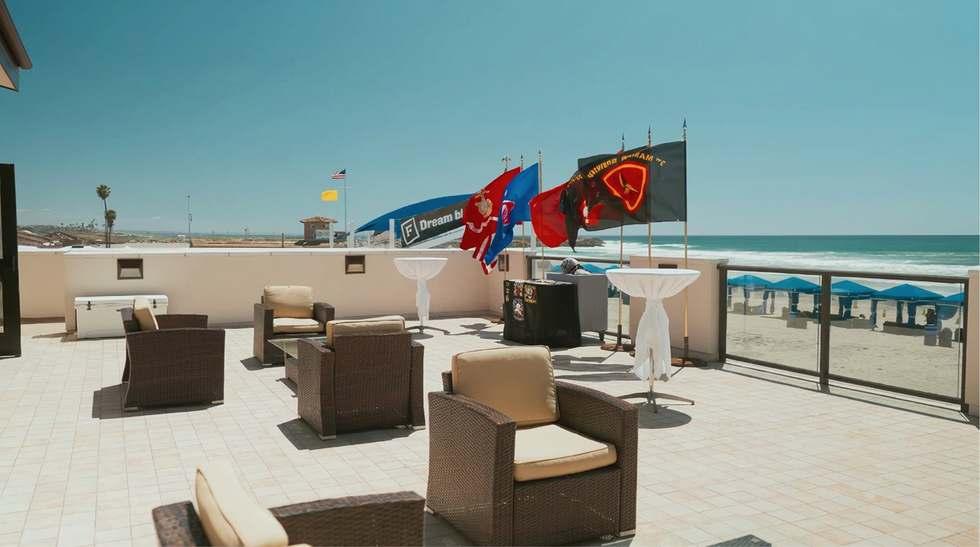
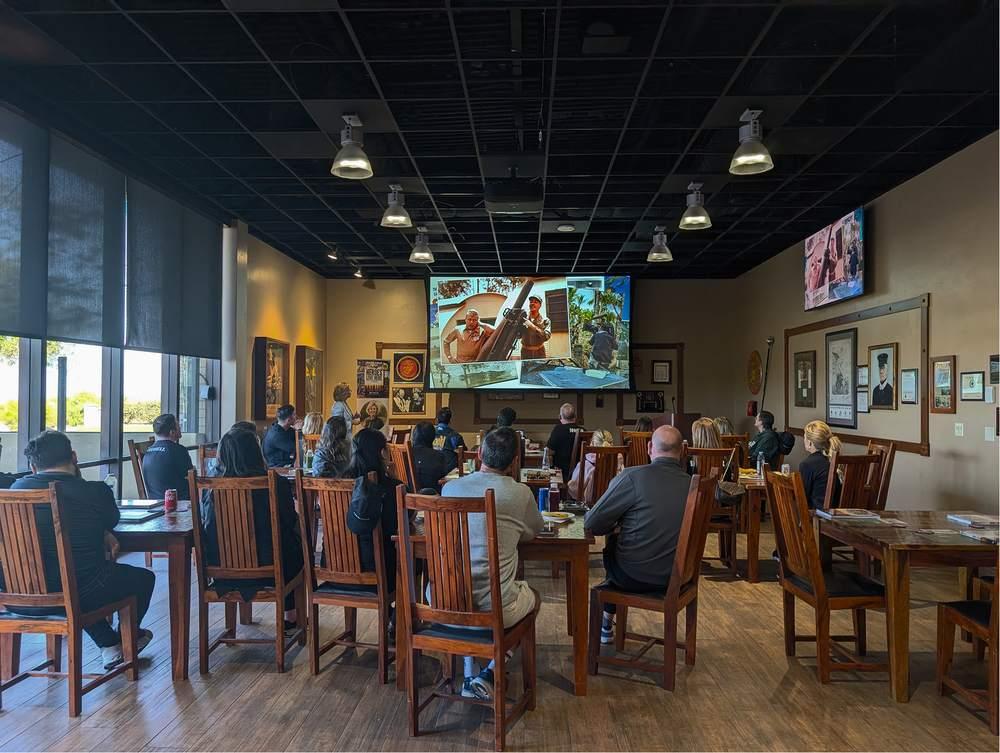
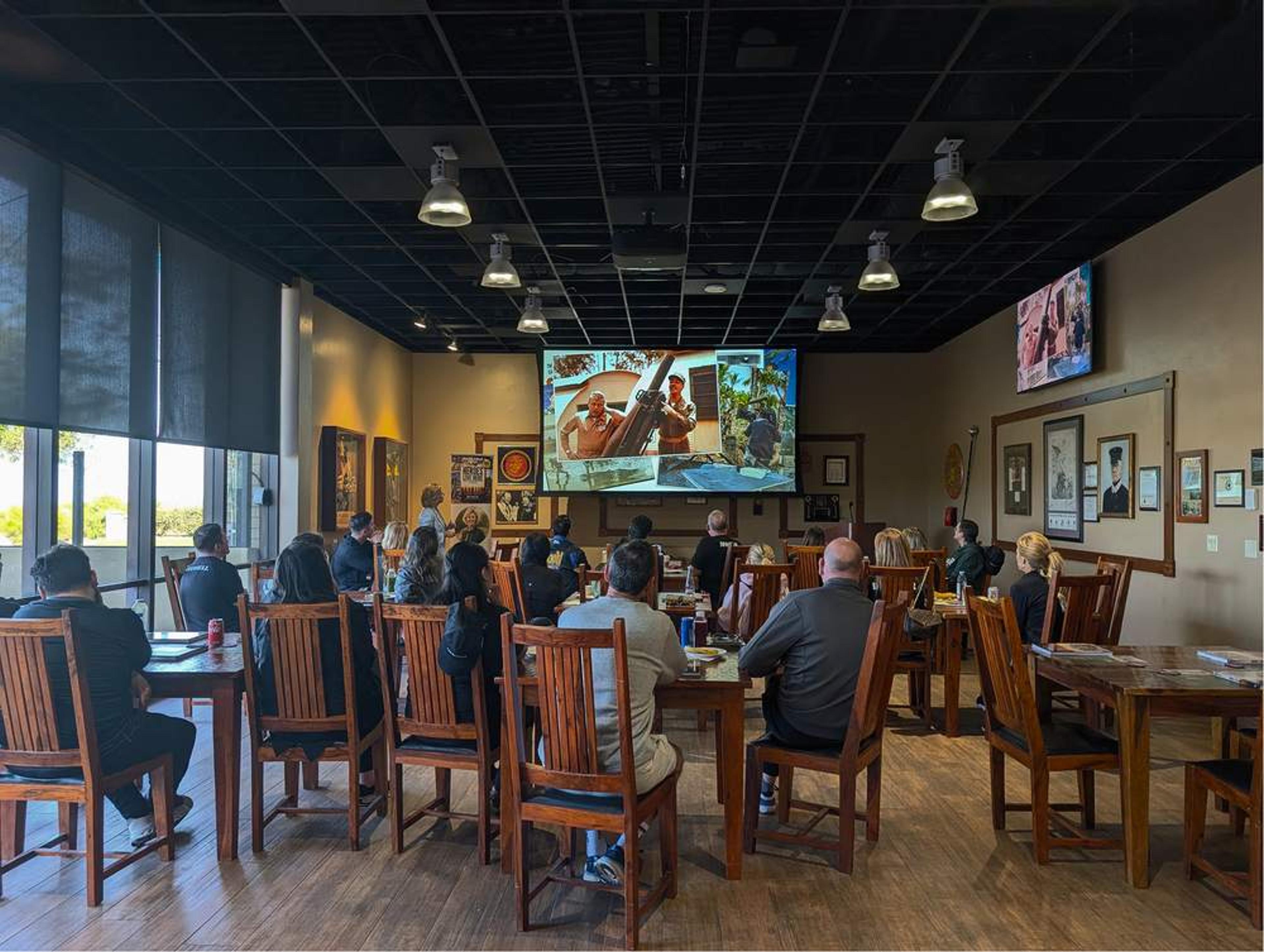
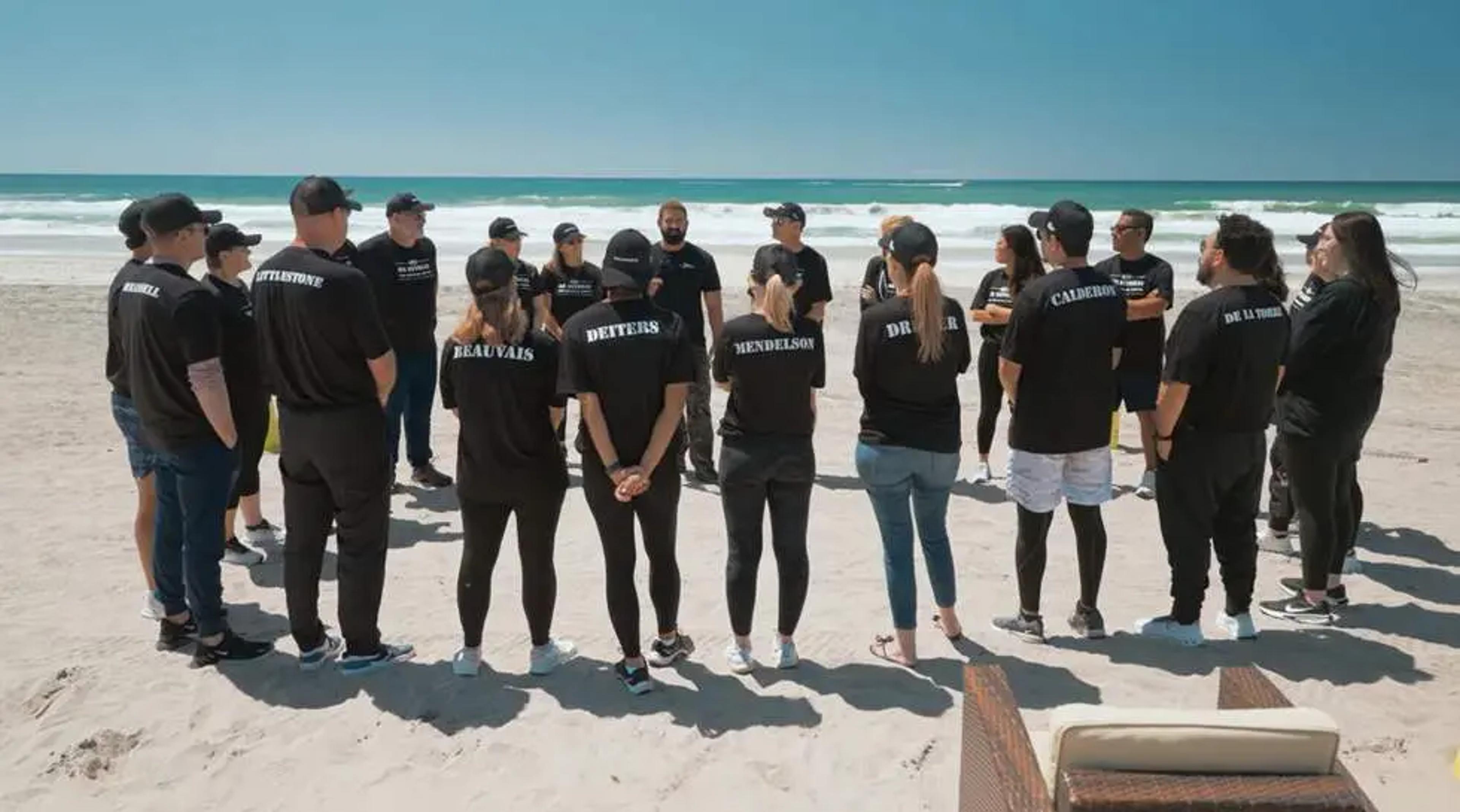
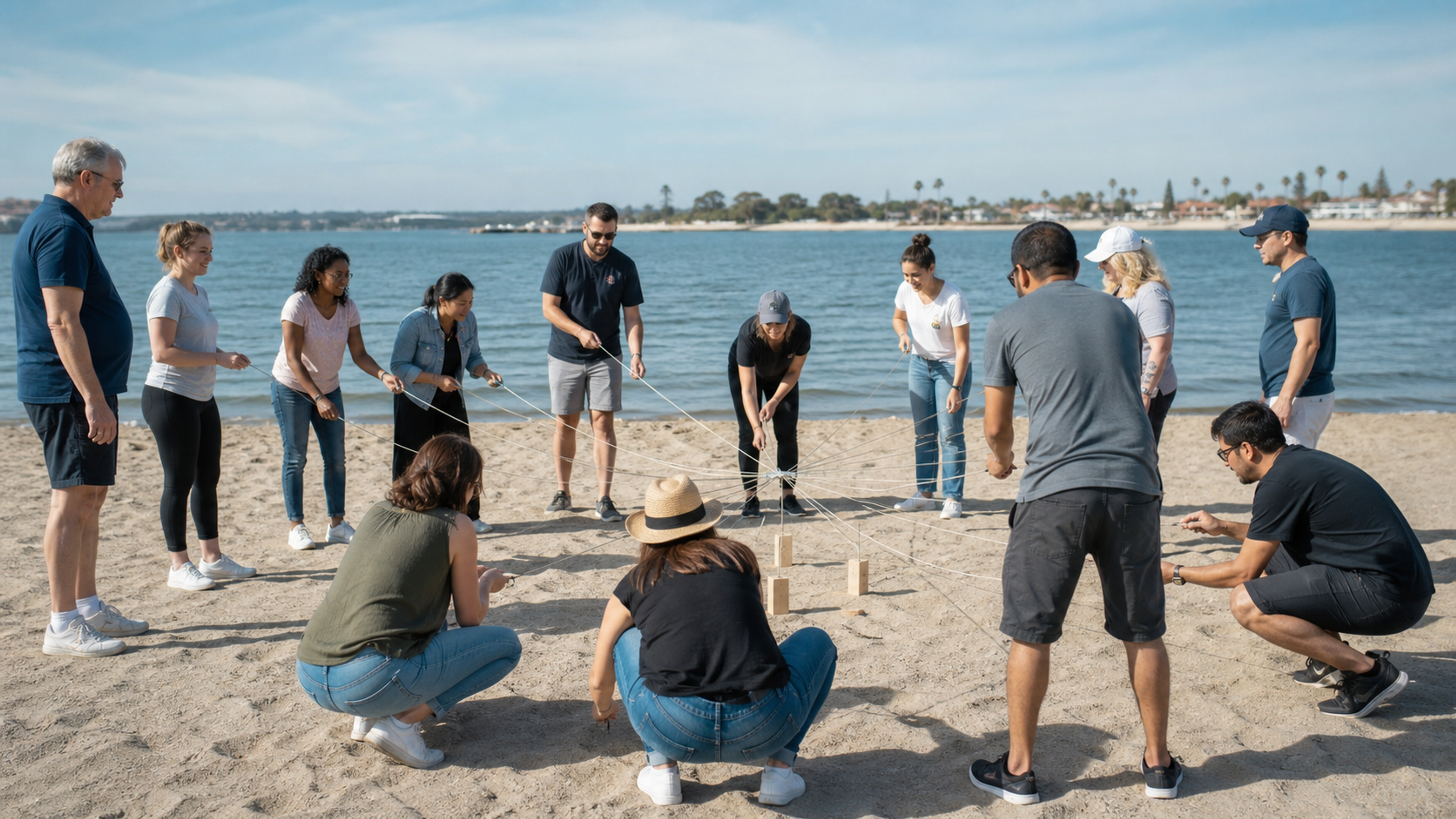
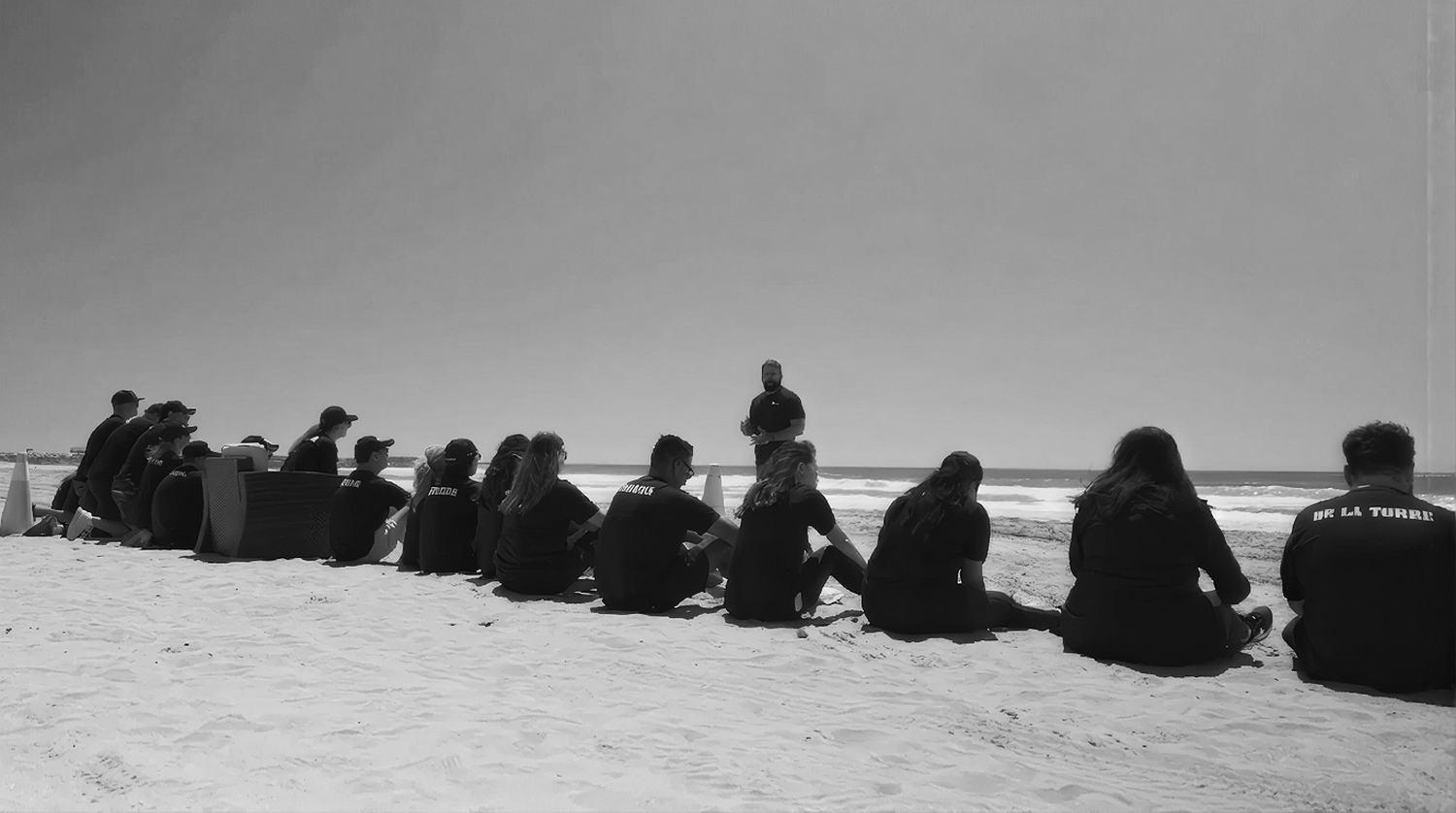
Experience Camp Pendleton offers three- to eight-hour programmes with venue options for up to 50 or 100 guests. Longer formats combine the history of the installation, facilitated beach teamwork, hospitality and a keynote. The full Semper Fi day uses two venues and carries the group from arrival through a closing reception.
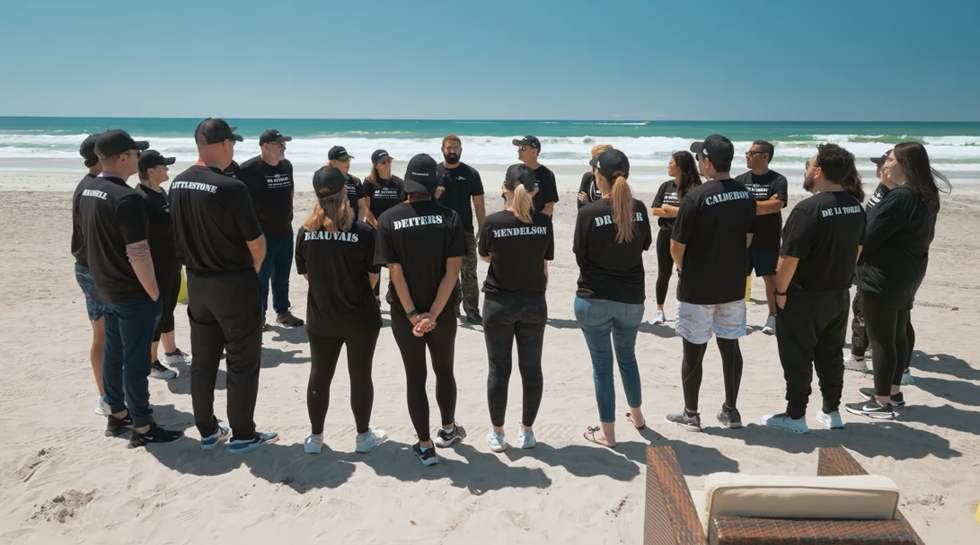
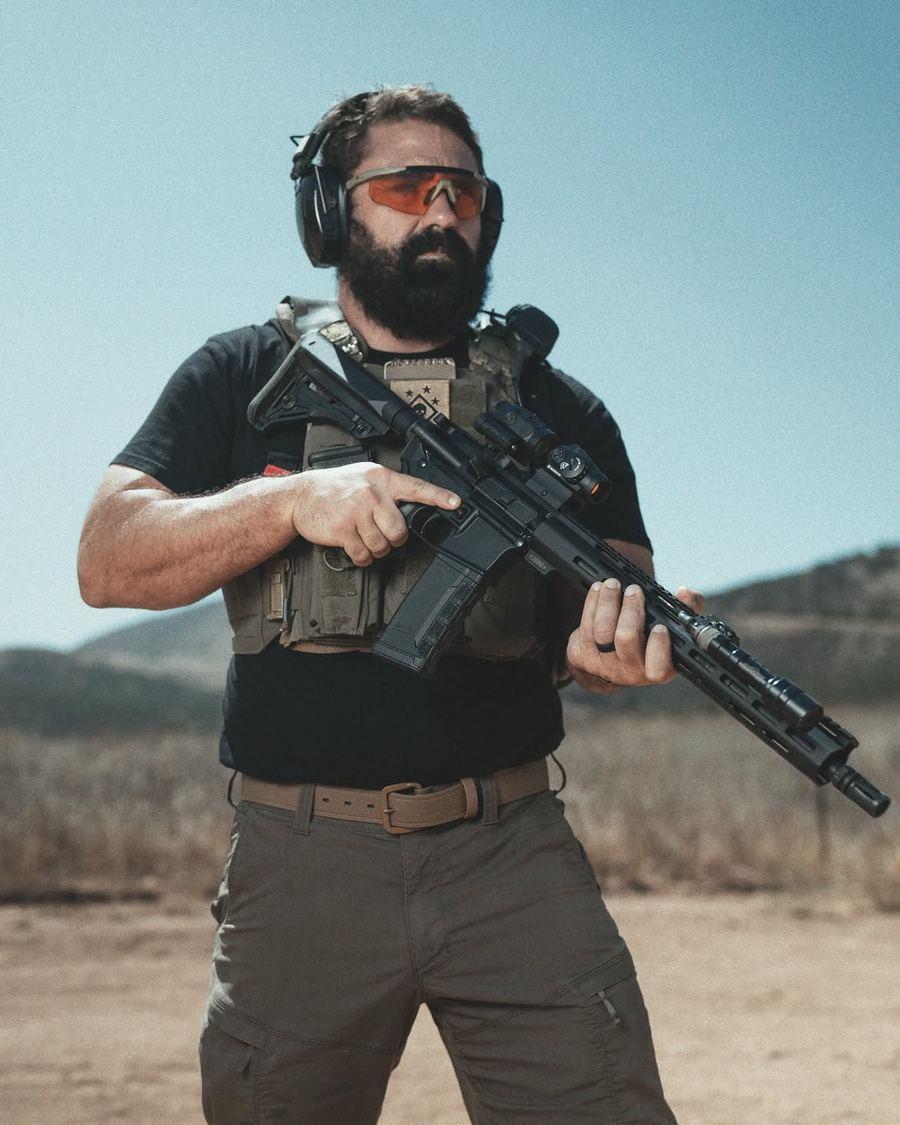
Prime Hall, a former Marine Raider and water-survival instructor, leads the beach session. The work is not a boot camp: exercises are scaled, physical participation is optional and non-physical roles are built into the plan.
- Capacity: up to 50 or 100, depending on package and venue.
- Format: whole-group context and hospitality with facilitated team roles.
- Time: three, four, five or eight hours.
- Complexity: high. Rosters, identification, transport and installation access are coordinated in advance.
- Why it scales: the venue, transport, programme and hospitality are designed as one group experience rather than separate bookings.
2. Rotating outdoor challenge stations
Best for: large groups that want movement and practical problem-solving.
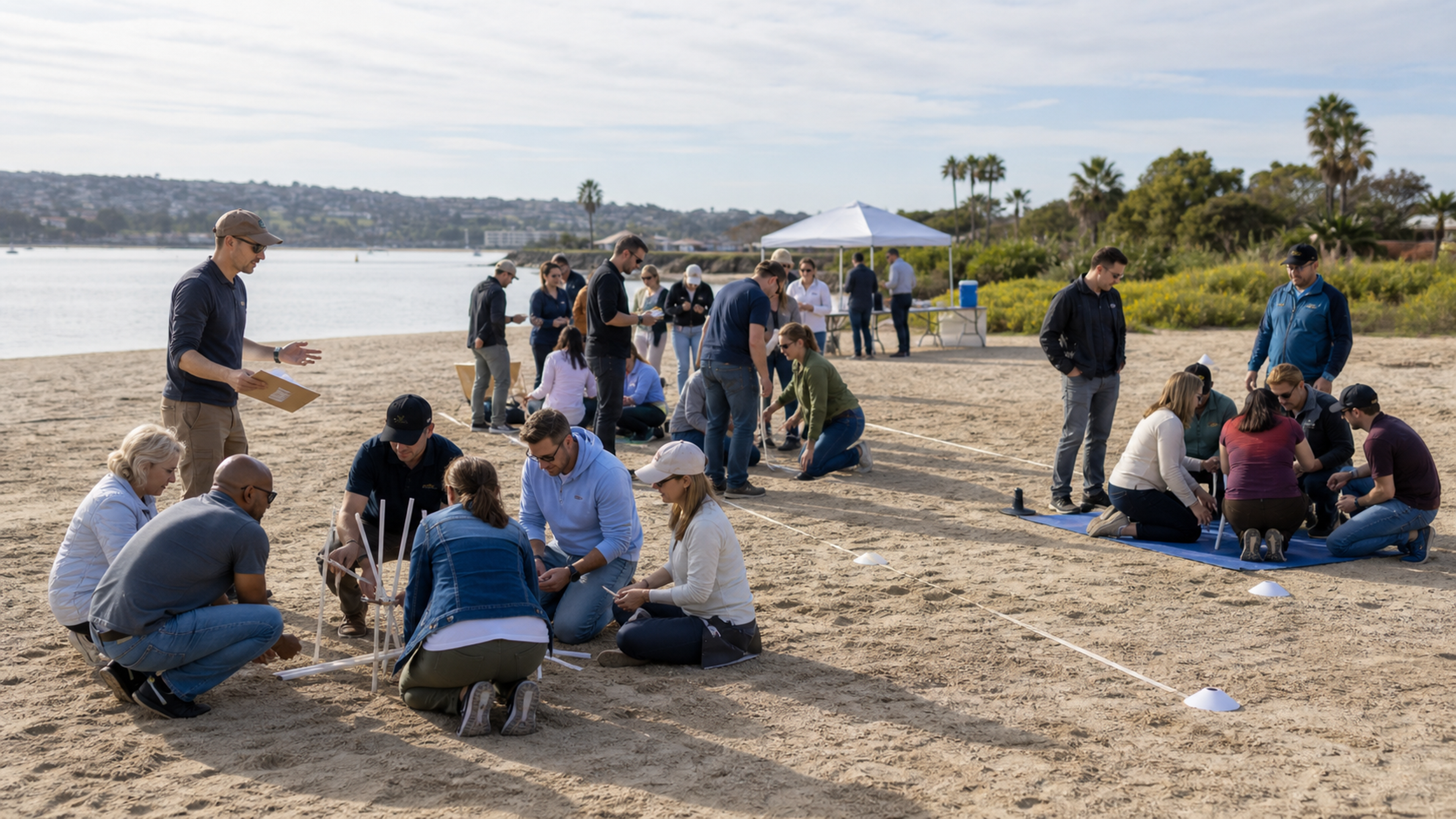
Build four to eight stations around different skills: planning, construction, communication, resource allocation and observation. Pods rotate on a visible signal while station owners reset materials.
- Capacity: 40–200+.
- Pod size: five to eight.
- Time: two to four hours.
- Staffing: one trained owner per live station, one lead facilitator and roaming operational support.
- Failure to avoid: stations with one active participant and seven people watching.
3. A citywide scavenger hunt with one common finish
Best for: cross-functional mixing and a social company culture.
Release pods onto several equivalent routes, then bring them to one private finish for lunch, scoring and conversation. Every route should take roughly the same time and offer equal scoring potential.
- Capacity: 30–500, if the routes and finish venue can absorb the group.
- Pod size: four to seven.
- Time: two to four hours plus the closing meal.
- Staffing: central control, route monitors and a clear escalation number.
- Failure to avoid: one crowded route, ambiguous boundaries or speed-only scoring.
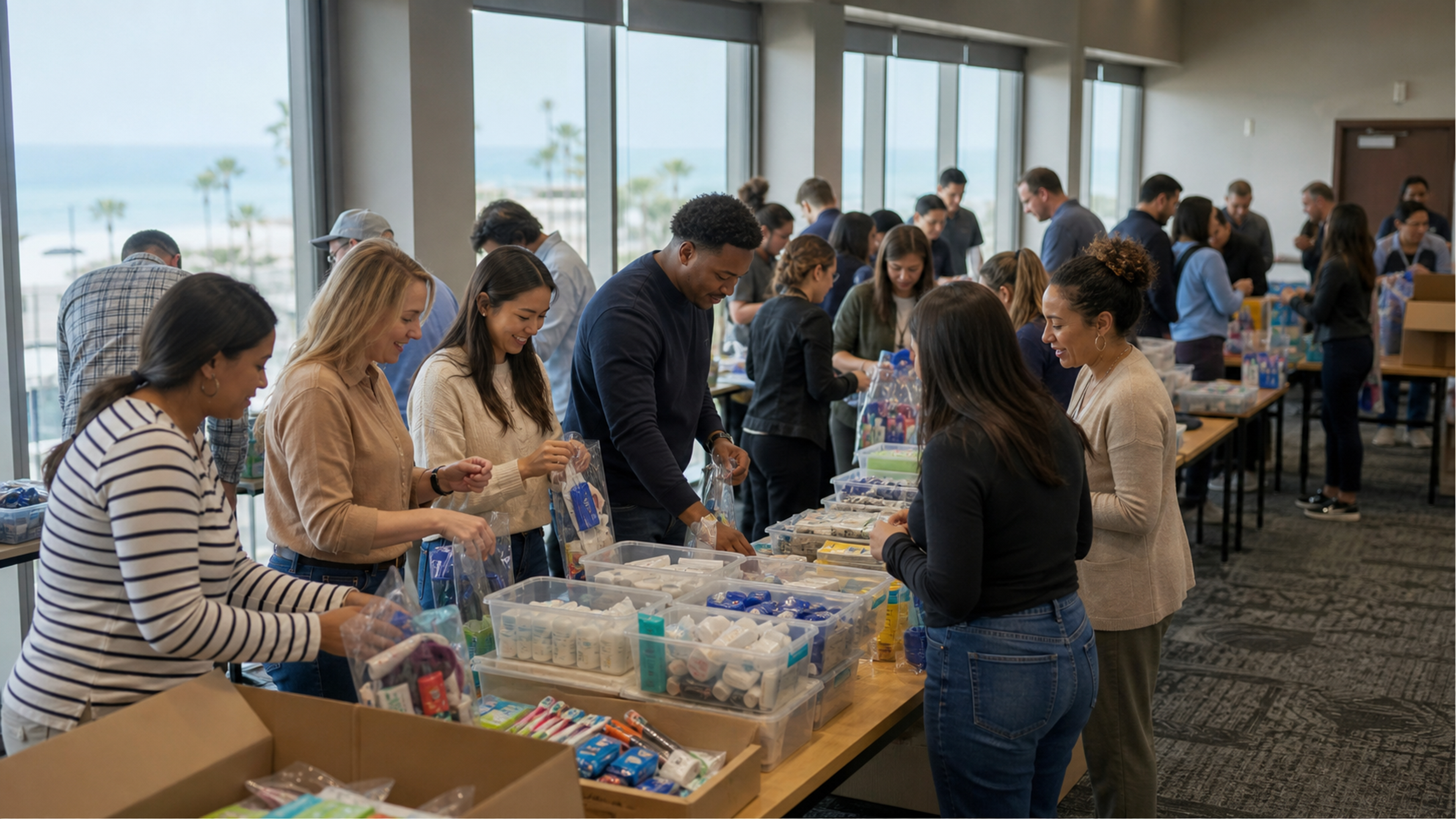
4. A charitable kit build with parallel production lines
Best for: purpose-led companies and groups with mixed mobility.
Work with a nonprofit to specify useful kits, quality standards and delivery. Divide the room into receiving, sorting, assembly, quality control, packing and inventory zones. Pods rotate or specialize depending on the goal.
- Capacity: 40–500+ if the partner needs the output.
- Pod size: six to 10 per station or line.
- Time: 90 minutes to four hours.
- Staffing: nonprofit lead, event lead, station owners and logistics support.
- Failure to avoid: buying materials before confirming what the partner can distribute.
5. Table-team company trivia and problem-solving
Best for: conferences, sales meetings and weather-proof planning.
Mix company knowledge with observation, logic and short collaborative tasks. Teams answer at their tables using paper or a digital system, so everyone participates simultaneously and nobody waits for a turn on stage.
- Capacity: 30–1,000+ with the right room and A/V.
- Pod size: five to eight per table.
- Time: 45 to 120 minutes.
- Staffing: host, producer, scorekeeper and A/V support.
- Failure to avoid: trivia that rewards tenure, pop-culture knowledge or insider status more than teamwork.
6. A cooking-market challenge
Best for: food-centered events with several kitchens or stations.
Instead of sending 100 people into one kitchen, create parallel market stations: menu planning, cold preparation, plating, branding, service and tasting. Professional culinary staff retain responsibility for safety and heat.
- Capacity: 30–150, venue-dependent.
- Pod size: five to eight.
- Time: two to four hours plus the meal.
- Staffing: culinary lead, food-safety staff and one owner per station.
- Failure to avoid: too few work surfaces, unclear allergen control or long spectator periods.
7. A collaborative mural or installation
Best for: creative participation with a visible final result.
An artist creates the overall concept and divides it into panels or modules. Pods interpret a shared brief within agreed constraints, and the pieces are assembled at the end.
- Capacity: 30–300.
- Pod size: five to 10.
- Time: two to four hours.
- Staffing: lead artist, material managers and assembly support.
- Failure to avoid: giving one “creative” employee control while everyone else colors background space.
8. A facilitated rhythm and communication session
Best for: high energy without complicated instructions.
A professional facilitator gives each section of the room a simple rhythmic role, then layers, changes and recombines the patterns. The activity becomes a live exercise in listening, timing and following shared cues.
- Capacity: 40–500+.
- Pod size: room sections rather than small pods, with short pair discussions afterward.
- Time: 45 to 90 minutes.
- Staffing: specialist facilitator plus stage and sound support.
- Failure to avoid: cultural claims or instruments used without appropriate context and expertise.
9. A conference-room case sprint
Best for: large groups with a real business problem and limited event budget.
Give every table the same short case, data sheet and decision prompt. Teams produce a one-page recommendation, then a small review panel identifies patterns rather than asking every table to present.
- Capacity: 30–500+.
- Pod size: five to eight per table.
- Time: 60 to 150 minutes.
- Staffing: lead facilitator, table support and a synthesis team.
- Failure to avoid: an unrealistic case, unclear decision rights or 25 repetitive presentations.
10. A murder-mystery banquet with table teams
Best for: evening hospitality and low physical demand.
Each table becomes an investigation team. Performers and evidence move through the room while guests compare clues and submit a joint theory. The meal controls the pace and gives people a reason to stay at the table together.
- Capacity: 40–300+.
- Pod size: six to 10 per table.
- Time: two to three hours.
- Staffing: performers, host, producer, banquet team and A/V.
- Failure to avoid: forcing guests into public performance or making dialogue impossible during food service.
11. A volunteer sorting or packing event
Best for: practical service in a controlled indoor environment.
Food banks, disaster-response organizations and other partners may have real sorting, packing or inventory needs. The partner defines the process; the event team then designs safe flow and quality checks around it.
- Capacity: 30–300+, partner-dependent.
- Pod size: six to 10 per work zone.
- Time: two to four hours.
- Staffing: partner lead, warehouse or venue lead, station owners and safety support.
- Failure to avoid: creating more material than the partner can store or distribute.
12. An outdoor navigation relay with role rotation
Best for: active large groups with plenty of outdoor space.
Pods navigate between nearby checkpoints, but only one role rotates at a time: navigator, verifier, communicator, timekeeper and accessibility lead. Score accurate completion and team decisions instead of raw speed.
- Capacity: 40–200.
- Pod size: five to eight.
- Time: two to four hours.
- Staffing: lead, checkpoint owners, course safety and communications support.
- Failure to avoid: long distances, uncontrolled public crossings or a course that excludes slower participants.
What changes at 50, 75 and 100+ attendees?
At 50 people
Seven to 10 pods can often share four or five stations. A strong facilitator can still speak to the whole group without full production, although a microphone helps outdoors or in a noisy room.
At 75 people
Team assignments should be completed before arrival. Use color, number or symbol systems on badges and signage. Build buffer time into rotations so one delayed station does not stop the entire event.
At 100+ people
Treat the programme as an event operation. You need a written run of show, a lead facilitator, station owners, A/V, first aid, a participant communications plan, venue operations and a clear route for accessibility or safety issues.
The activity can remain simple. The operating system around it cannot.
Example: a 100-person rotation that leaves room to think
Assume 100 participants, 16 pods, eight stations and two waves. Each station serves two pods simultaneously. The exact timings will change by venue, but the sequence shows why transitions and resets need their own minutes.
| Time | Programme block | Operational note |
|---|---|---|
| 8:30–9:00 | Arrival and pod check-in | Badges already show first station and accessibility route |
| 9:00–9:12 | Whole-group context and safety | One brief, amplified, with rules also visible |
| 9:12–9:22 | Move to stations | Zone guides release rows or colors in order |
| 9:22–10:52 | Three 25-minute rounds | Five-minute move/reset between rounds |
| 10:52–11:12 | Break | Station owners restock and report issues |
| 11:12–12:12 | Two more rounds | Same clock and signal across all zones |
| 12:12–1:12 | Lunch | Protect dietary service and seated recovery |
| 1:12–2:12 | Final rounds or synthesis challenge | Use the best learning from earlier rounds |
| 2:12–2:30 | Break and whole-group return | No pod presentations yet |
| 2:30–3:00 | Facilitated synthesis | Pull three patterns; do not hear 16 reports |
| 3:00 onward | Recognition, reception or departure | Transport deadline remains immovable |
At each handoff, decide who releases the group, who confirms the destination is ready and what happens to a participant who needs a different route. A schedule without those owners is only a list of times.
Large-group staffing and logistics checklist
- Assign pods before the event and deliberately mix functions or locations.
- Keep pods small enough for every person to speak and hold a role.
- Give every station one trained owner and one reset procedure.
- Use large, visible instructions in addition to spoken briefings.
- Provide voice amplification whenever the full group must hear one person.
- Build in water, restrooms, seating, shade and quiet space.
- Collect mobility, sensory, health and dietary requirements privately.
- Publish the weather, transport and emergency decision process.
- Use one clock and one signal for every rotation.
- Design scoring so planning, accuracy, creativity and support matter—not only speed.
- End with synthesis, not a report from every pod.
Common reasons large-group team building fails
Bottlenecks
One popular station, one check-in desk or one bus can create more waiting than activity. Map the maximum flow through every transition.
Spectators
If a task has one object, one tool or one answer sheet, most of the pod may have nothing to do. Create simultaneous roles.
Long explanations
Instructions that take 15 minutes will be remembered differently by every team. Make the rules visible and test the briefing with someone who has never seen the activity.
Winner-takes-all scoring
Pure speed rewards the same people repeatedly. Score several dimensions and let teams improve across rounds.
Accessibility added after booking
An alternative activity in another location is not inclusion. Choose a format where different physical, sensory and communication roles contribute to the same objective.
A large-group day inside Camp Pendleton
Experience Camp Pendleton offers package and venue combinations for groups up to 50 or 100. The programme can bring history, facilitated team work, food, transport and a closing reception into one planned day. Start with headcount, date, access requirements and the needs of the least mobile participant—not with the activity list.
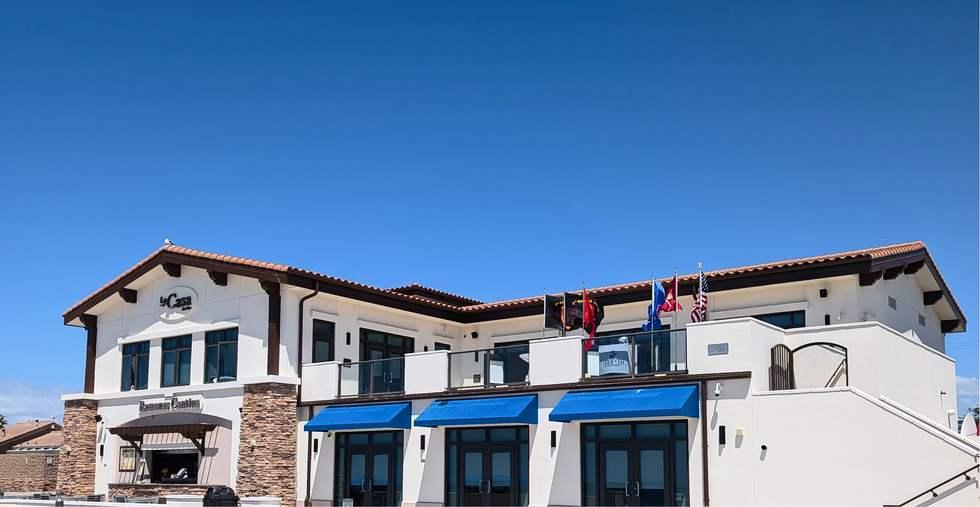
The package structure helps a large group avoid assembling unrelated suppliers. Iron Mike's and the Pacifico room at La Casa Del Mar can each accommodate up to 100; La Marina is designed for up to 50. The longer programmes use whole-group context and hospitality around a facilitated 90-minute beach session, so the event naturally moves between gathering, pod-level work and shared reflection.
| Planning question | Why it matters at Camp Pendleton |
|---|---|
| Is the group above 50? | It affects the package and venue combinations that can serve the full group. |
| Can the group travel together? | The programme guidance uses coordinated group transport and advance access planning. |
| Is beach teamwork central or optional? | It is included in Semper Fi, Devil Dog and Leatherneck; optional in Recruit. |
| Does the day need a keynote and reception? | The eight-hour Semper Fi shape includes the fullest programme arc. |
| Are there mobility, sensory or participation needs? | They affect surfaces, roles, timing and transport before the agenda is final. |
For a 100-person team, the advantage is not that the location makes scale disappear. It is that venues, hospitality, facilitation and transitions can be designed as one programme. The company still needs a clean roster owner, participant-needs process and one internal decision-maker. Access is controlled by the installation; use the Camp Pendleton visitor-pass guide alongside the event plan.
For more local options, compare the best team building activities in San Diego. For outdoor-specific formats, see the outdoor team building guide for adults. To turn the chosen format into a full-day budget and agenda, use the one-day company retreat guide.
Experience Camp Pendleton is a commercial service operated by Urban Kitchen Hospitality / Mid Coast Supply Inc. It is not affiliated with, endorsed by or sponsored by the United States Department of Defense, the United States Marine Corps or Marine Corps Community Services. Access is controlled by the installation and subject to change.
Before you ask
Common questions
What are the best team building activities for large groups?
The strongest formats are rotating challenge stations, citywide scavenger hunts, charitable builds, table-team problem solving, creative installations and facilitated programmes designed for the full headcount. The activity must give everyone a role and avoid long queues.
What is the ideal pod size for a large-group activity?
Five to eight people is a useful working range for most activities. It is small enough for everyone to speak and large enough to distribute planning, building, timing, observation and reporting roles.
Do we need professional facilitators for 100 people?
For a structured team-building programme, yes. Use one lead facilitator, one trained owner for every live station and enough operational support to manage A/V, safety, transitions and participant needs. The venue's ordinary event staff do not automatically cover facilitation.
Which large-group activities work indoors?
Charitable kit builds, table-team trivia, case sprints, collaborative murals, rhythm sessions, cooking-market challenges and murder-mystery banquets can all work indoors. Room layout, acoustics, accessible circulation and A/V matter as much as the activity choice.
How can we control the cost of team building for 50 to 100+ people?
Use a venue you already have, choose activities that run in parallel at tables, reduce transport and reuse a standard kit at each station. Compare the total event cost per confirmed attendee, including staffing, materials, A/V, food, service charges and contingency.
How long should a large-group team-building activity last?
Use 20–35 minutes per station when pods rotate, with three to seven minutes for movement and reset. A single table-team activity can run 60–120 minutes because everybody works simultaneously. Protect time for the opening, breaks, meals and synthesis rather than filling every minute with competition.
Is indoor or outdoor team building better for a large group?
Neither is automatically better. Indoor formats offer more reliable sound, climate and circulation; outdoor formats offer space and movement but require stronger weather, shade, restroom and route plans. Choose the environment that supports the outcome and participant needs, then price the operational requirements honestly.
Written by
Rene Diaz
President
Four packages
Bring your
team here.
Half a day to a full day, from a history session and lunch to both venues, beach team building and a reception on the deck.