

Unique Corporate Holiday Party Ideas for Teams of 50–200
Compare ten distinctive holiday party formats for 50 to 200 employees, with practical guidance on flow, capacity, inclusion and cost control.
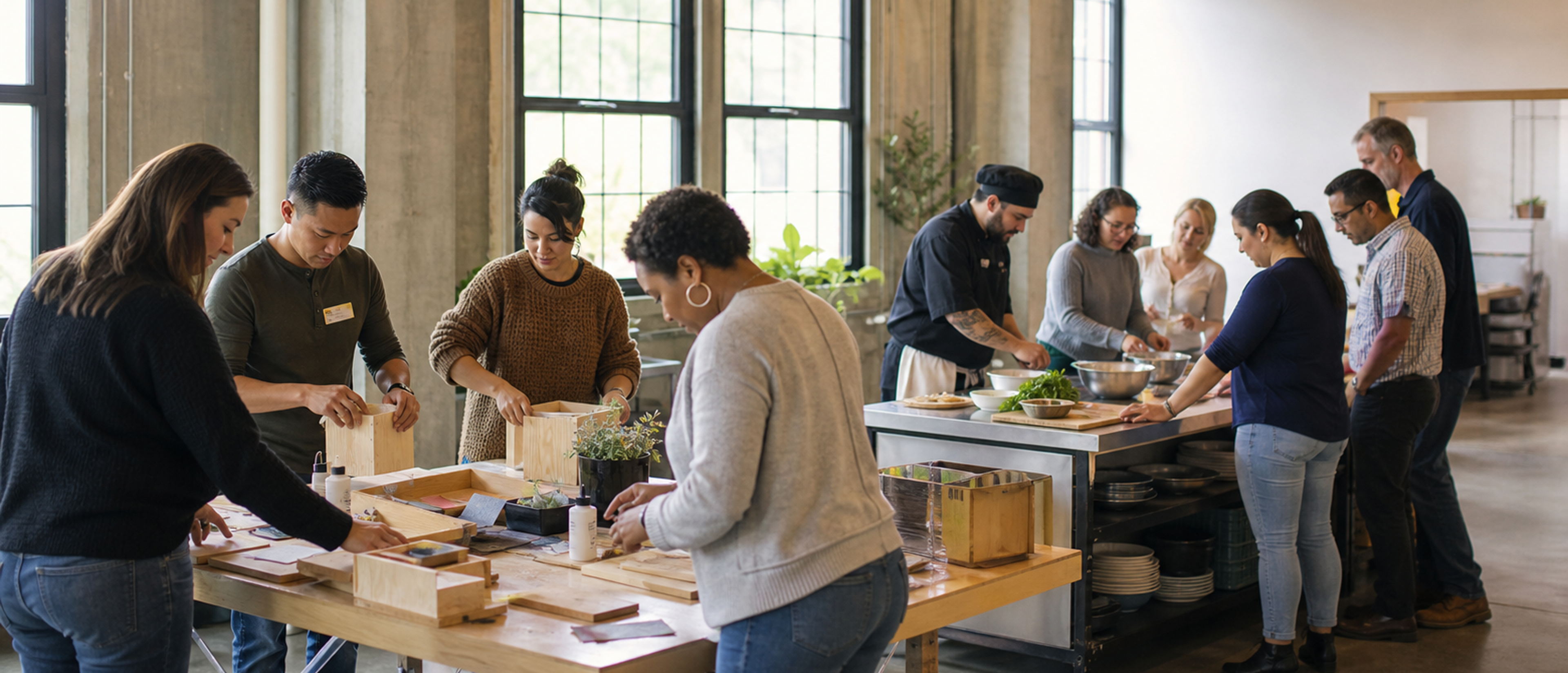
The best unique corporate holiday party ideas for 50 to 200 employees use a format that improves as the group grows. Think parallel experiences, timed rotations, visible choices and one shared closing moment. A single long dinner, one microphone or one activity lane often creates queues and spectators instead.
Start with the operating model: how guests arrive, where they go first, how many people each station can serve, what non-physical options exist and how the group comes back together. Then add the creative idea.
TL;DR: For 50–75 people, one room plus two activity choices can work. At 100, use pods and parallel stations. At 150–200, treat the event as a small festival with timed arrivals, several food points and duplicate experiences. Choose one shared opening or finale, but let the middle of the event run in smaller groups.
On this page
- What makes a large holiday party feel distinctive
- Ten unique corporate holiday party ideas
- How to adapt the format for 50, 100 or 200 people
- A hosted Camp Pendleton option
- Questions to ask before booking
What makes a large corporate holiday party work?
A large event needs more than a generous room capacity. It needs enough throughput. Check these five points before approving an idea:
- Arrival: Can 50 people check in within 15 minutes without blocking transport or coat storage?
- Choice: Is there an equal-value seated, social and active route?
- Capacity: How many guests can each station serve per hour?
- Food: Are there enough service points for the confirmed count and dietary plan?
- Reset: Who moves equipment, cleans stations and cues the next group?
The corporate holiday party planning guide covers budgets, contracts and run-of-show ownership. The ideas below focus on the guest experience at scale.
| Idea | Best group size | Format | Main operating requirement |
|---|---|---|---|
| Hosted coastal mission day | 50–100 | Full or half day | Transport and advance access |
| Year-in-stories gallery | 50–200 | Reception and supper | Curated submissions and display space |
| Choose-your-own festival | 100–200 | Open house | Several equal-value zones |
| Live problem-solving show | 75–200 | Seated plus table work | Strong host and rapid scoring |
| Maker market | 50–150 | Rotating stations | Skilled facilitators and duplicate tools |
| Community build | 50–200 | Service project | A real nonprofit need and quality control |
| Progressive food journey | 75–200 | Timed tasting route | Multiple service points and clear pacing |
| Museum after hours | 50–200 | Private access | Exclusive galleries and guided pods |
| Multi-role field day | 50–150 | Indoor-outdoor | Active and non-physical roles |
| Synchronized two-site social | 150–200 | Linked local events | One producer and matched experiences |
1. A hosted coastal mission day
Replace the standard evening party with a daytime experience that combines a strong setting, facilitated team work, a meal and a speaker or guided reflection. The distinctiveness comes from the complete arc, not from costumes or military-style theatrics.
Use pods of 10 to 15, publish the activity demands in advance and provide planning, observation and support roles alongside physical ones. End with a shared meal or reception so the day feels celebratory rather than instructional.
2. A year-in-stories gallery and supper
Invite teams to submit one project, customer moment or lesson from the year. Turn the strongest entries into a professionally designed gallery with photographs, objects and short captions. Guests explore it before a relaxed supper.
Keep submissions work-focused and voluntary. Use editors to remove confidential details and repetitive corporate language. For 150 to 200 guests, duplicate the most important displays and open two starting points.
3. A choose-your-own holiday festival
Create three or four zones: a hosted tasting, a hands-on studio, a calm lounge and a short social game. Guests choose their route rather than being forced through every activity.
The zones should have similar value and comfort. A quiet option should feel intentional, not like overflow seating. Show live capacity at each entrance and repeat short programmed moments so late arrivals do not miss the whole event.
4. A live problem-solving show
Give table teams a sequence of short, visual business-neutral challenges while a skilled host runs the room. Between rounds, add quick interviews, recognition or music rather than long score updates.
This works when the tasks reward observation, communication and judgment—not niche trivia. Provide large-print materials, caption any video and let tables submit one answer rather than asking individuals to perform on stage.
5. A maker market
Book several practitioners and let employees choose two short workshops: printmaking, leatherwork, ceramics, floral design, food craft or another locally credible option. Each person leaves with something finished.
For groups above 75, repeat popular stations and use timed tickets. Check hand strength, allergens, ventilation, protective equipment and seated access before contracts are signed.
6. A community build with a real handoff
Partner with a nonprofit on work it actually needs, such as assembling school kits, refurbishing equipment or preparing materials for a scheduled programme. Finish with a short explanation of where the completed work goes.
The partner should define specifications and quality checks. Avoid inventing a photogenic task that creates disposal work later. Set up identical supply lanes for every 25 to 30 participants and appoint one quality lead per lane.
7. A progressive food journey
Turn the event into a timed route through several small courses or food stories instead of one buffet line. Each stop can pair a dish with a short chef introduction, regional story or non-alcoholic pairing.
Use duplicate service points for 150 to 200 people and keep the narrative under two minutes per stop. Confirm dietary substitutions at every station; a single separate meal at the end is not an equivalent experience.
8. A museum after-hours night
Private access makes a familiar museum feel different. Divide guests into guided pods, keep selected galleries open for independent exploration and place food in a separate social zone.
Ask what is truly exclusive, which spaces are accessible, where sound can travel and how many guides are included. The venue should still work if one exhibition closes or a gallery cannot hold the whole group.
9. A multi-role field day
Use short challenges with several meaningful roles: route planner, timekeeper, observer, builder, navigator or communicator. Rotate teams through parallel lanes and debrief one useful behavior after each round.
Do not market the programme as suitable for everyone without explaining surfaces, standing time, sound, weather and alternative roles. The team-building ideas guide offers more low-pressure activity mechanics.
10. A synchronized two-site social
When 150 to 200 people cannot fit one practical venue—or travel would exclude a large part of the workforce—run two smaller events from one brief. Use the same quality of food, welcome and recognition at both sites, then connect them for one short live moment.
Avoid making one location the “main” event. Give each site its own host and producer, test the connection, and keep the shared broadcast brief. Most of the value should happen locally rather than on a screen.
How should the plan change for 50, 100 or 200 guests?
For 50 people
One principal room, two optional activities and one food point may be enough. Keep the whole group together for the opening and meal; use smaller tables or pods for participation.
For 100 people
Build four pods of roughly 25 and run at least two experiences in parallel. Add a dedicated arrivals lead, duplicate essential materials and schedule food by zone if the service point is constrained.
For 150 to 200 people
Use a festival, open house or multi-room model. Plan several check-in positions, two or more food points, duplicate popular stations, radio communication and a clear room-capacity owner. If the concept only works when all 200 people watch or do one thing at once, it needs redesign.
For more scale mechanics, see the large-group team-building guide. For local venue options, compare the San Diego holiday venue shortlist.
A hosted Camp Pendleton option for 50 to 100 guests
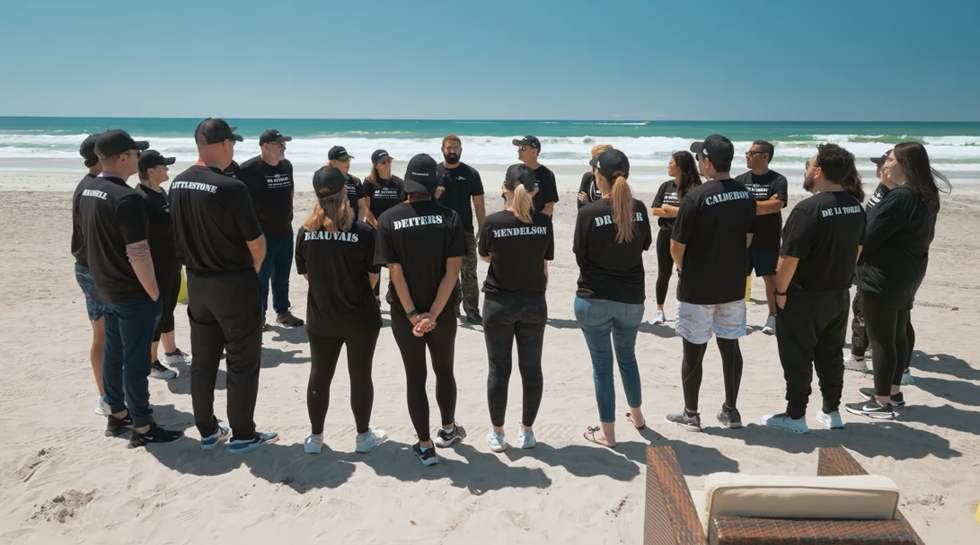
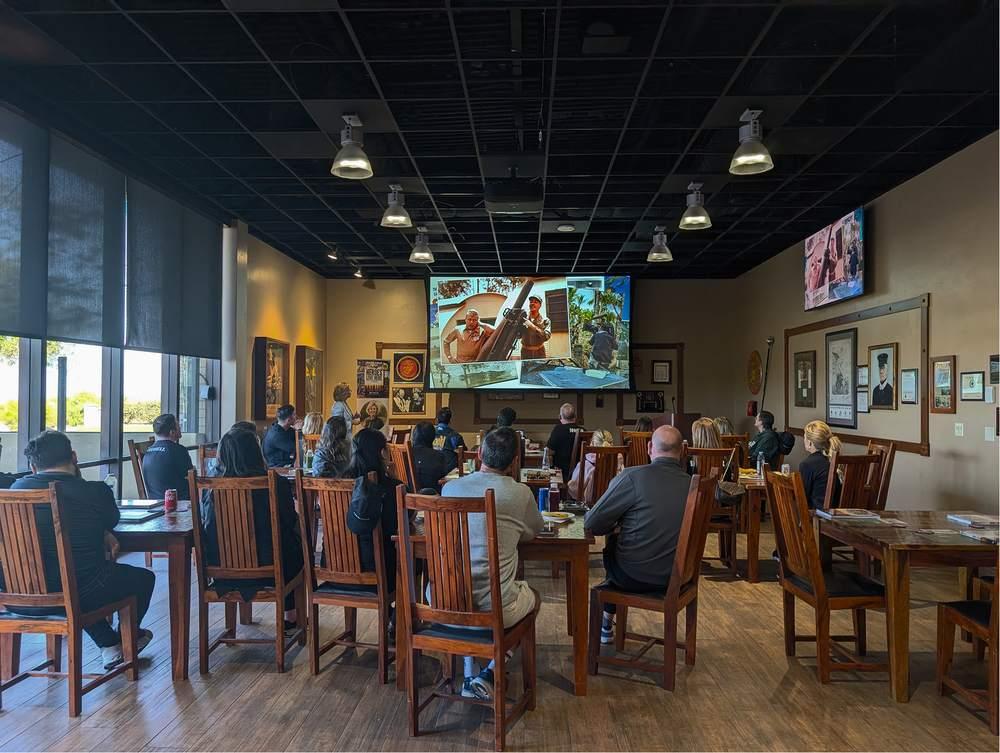
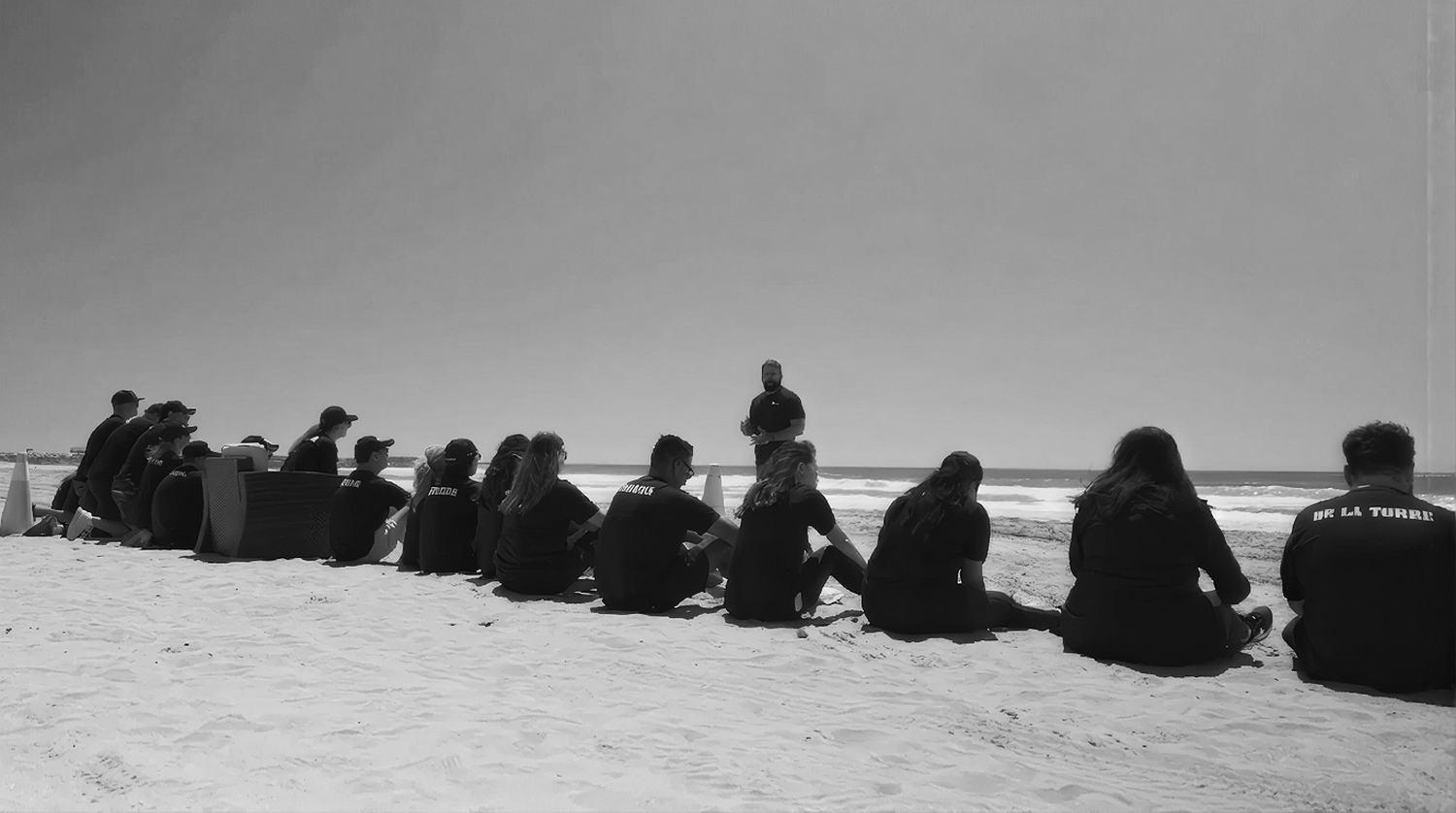
For a team of 50 to 100 in Southern California, Experience Camp Pendleton offers a hosted alternative to a conventional ballroom party. Current programmes combine the setting and history of Camp Pendleton with hospitality, a keynote and, in longer formats, facilitated beach teamwork.
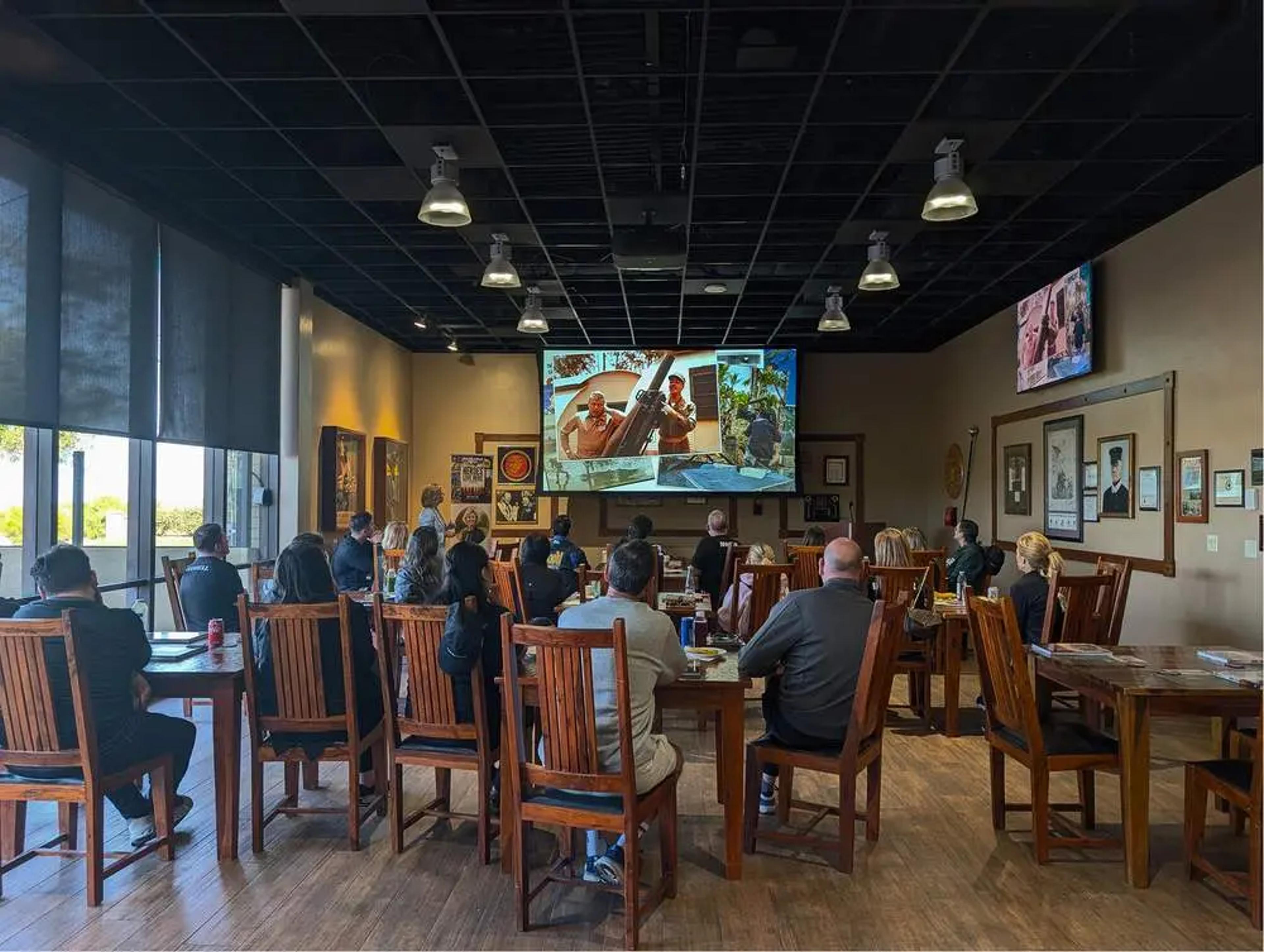
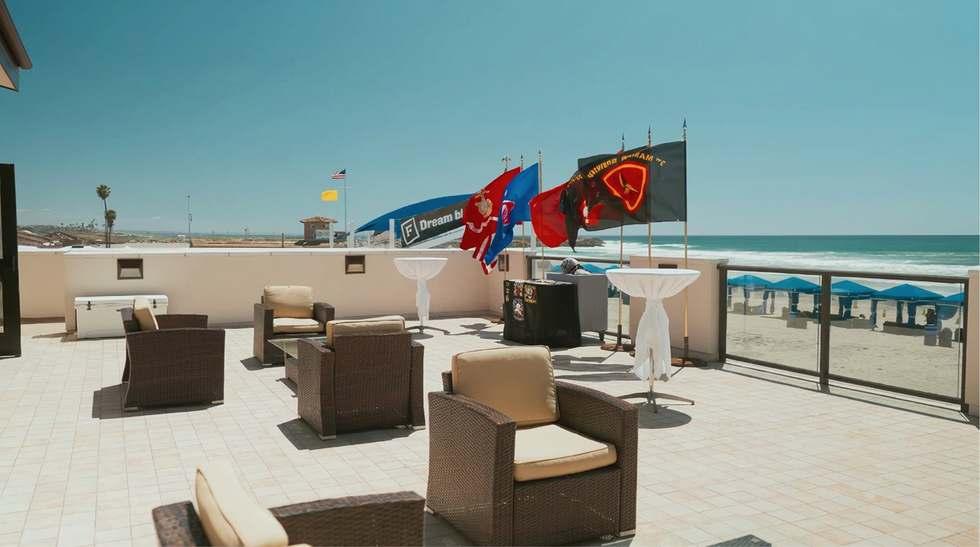
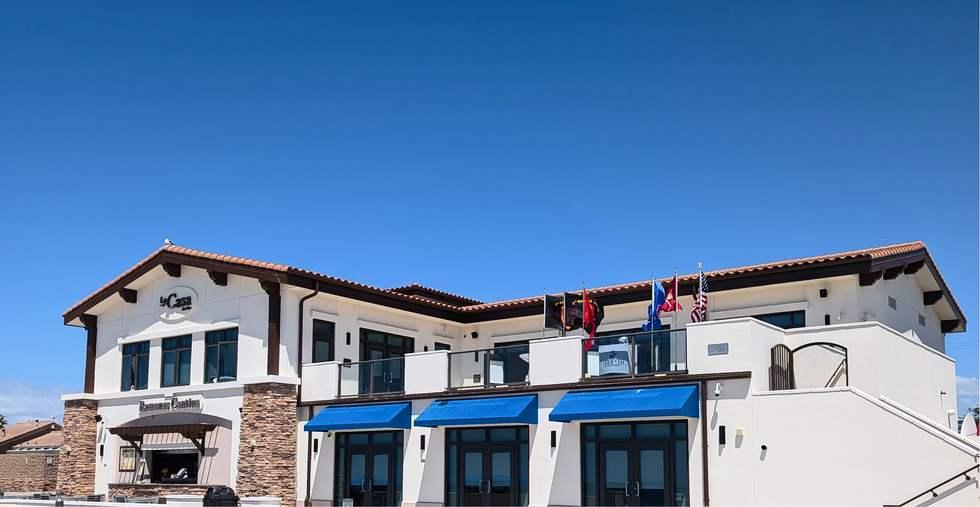
The three-hour Recruit programme uses La Marina for up to 50 and includes history and a correspondent keynote. The eight-hour Semper Fi programme can use Iron Mike's, La Casa Del Mar and Del Mar Beach for up to 100, with history, beach work, lunch, a leadership keynote and a closing deck reception.
The programmes are not boot camps. Activities can be scaled, and non-physical roles should be agreed during planning. Groups larger than 100 should ask what is operationally possible; do not assume a single programme can take 200 people. Access, roster deadlines and transport are part of the event plan, and the installation controls entry.
Experience Camp Pendleton is a commercial service operated by Urban Kitchen Hospitality / Mid Coast Supply Inc. It is not affiliated with, endorsed by or sponsored by the United States Department of Defense, the United States Marine Corps or Marine Corps Community Services. Access to Marine Corps Base Camp Pendleton is controlled by the installation and subject to change.
Before you ask
Before you ask
Common questions
What are the best unique corporate holiday party ideas for a large group?
The strongest formats are a hosted day, choose-your-own festival, story gallery, maker market, community build, progressive food experience or private cultural venue. For 100 or more guests, choose an idea that supports pods, parallel stations and more than one way to participate.
How many activities do you need for 100 employees?
Usually two to four simultaneous options are more useful than a long list. Calculate the hourly capacity of each station, allow transition and reset time, then make sure every guest has an equal-value route.
How do you stop a large holiday party from feeling crowded?
Stagger arrivals, open several check-in and food points, use zones with visible capacity, keep furniture away from movement routes and repeat short programmed moments. Compare the usable layout with the confirmed guest count, not only the venue's maximum capacity.
What makes a corporate holiday party inclusive?
Explain the format before RSVP, collect needs privately, provide seated and lower-sensory options, make alcohol optional, offer equivalent dietary choices and avoid compulsory costumes or personal disclosure. Participation choices should be designed before the venue and activity contracts are final.
How early should we book a party for 150 to 200 people?
Start as early as practical, especially for a peak-season date. Large groups need more time for venue holds, catering capacity, production, transportation and accessibility planning. Treat any lead-time estimate as guidance; only a written venue or provider hold protects the date.
Can Experience Camp Pendleton host 200 people?
The current published programme capacities are up to 50 or 100 depending on the venue and package. A group above 100 should request a specific operational assessment and should not assume one event can accommodate 200 people.
Written by
Rene Diaz
President
Four packages
Bring your
team here.
Half a day to a full day, from a history session and lunch to both venues, beach team building and a reception on the deck.