

Corporate Holiday Party Planning: 2026 Guide
Plan a corporate holiday party with a six-step framework for formats, venues, all-in costs, inclusion, contracts and day-of execution.

Corporate holiday party planning works best in this order: approve the purpose and headcount, choose the event format, compare venues on the same scope, build the all-in budget, resolve participation and inclusion, then convert the contract into a run of show. Starting with decorations or entertainment usually creates expensive rework because the essential decisions are still moving.
For a local event, begin serious planning eight to twelve weeks ahead; start earlier for peak dates, large groups, controlled-access venues, extensive production or employees traveling from several locations. Treat timing as a risk decision, not a guarantee. A smaller daytime event with flexible dates may come together faster, while a December evening for 150 people may need a much longer runway.
TL;DR: Write a one-page brief before requesting proposals. Compare a hosted offsite, dinner, venue buyout, open house and office activation by purpose—not novelty. Budget the complete event, including food, service, production, transport, access support, taxes, contracted charges and contingency. Do not send invitations until the venue, capacity, operating hours, weather plan, attendance policy and access route are confirmed. One owner should hold the current budget, contract and run of show.
On this page
- The six decisions in corporate holiday party planning
- Which holiday party format should you choose?
- How to compare venues and proposals
- What does a corporate holiday party cost?
- How to plan participation, inclusion and alcohol service
- What to lock before invitations go out
- How to build the holiday party run of show
- Planning an Experience Camp Pendleton holiday event
- Common questions
The six decisions in corporate holiday party planning
Each step closes a different kind of risk. Finish the decision before asking a supplier to design around it.
1. Approve the purpose, people and ceiling
Write a one-page brief with one primary purpose, invited group, planning headcount, accountable executive, event owner, date range and maximum approved spend. “Celebrate the holidays” is too vague to guide a proposal. Choose the practical result: recognize sustained work, reconnect a distributed team, host clients, build cross-team relationships or mark a company milestone.
Record the planning count and the likely minimum guarantee separately. A venue that fits 120 people in a standing reception may not fit 120 at tables, and a caterer's minimum may apply even if attendance falls. Use a count range until RSVPs are known, but ask suppliers to quote the same assumed number.
2. Choose the format before the venue
Decide whether the event is primarily a hosted daytime experience, a seated dinner, a reception, a venue buyout, an office activation or several coordinated local events. The format determines hours, seating, food service, transport and accessibility. The company holiday party ideas can help at the discovery stage; this guide focuses on turning the choice into an executable plan.
3. Send one comparable brief to venues and providers
Give every supplier the same date range, headcount, event purpose, hours, food expectations, accessibility needs, production requirements, transport assumptions and budget boundary. Ask for one complete proposal rather than an attractive room fee followed by several rounds of essential additions.
Limit the serious shortlist to two or three viable options. More proposals do not improve the decision when they answer different briefs.
4. Build the all-in budget and test attendance
Combine fixed costs, variable per-person costs, percentage charges and contingency. Then calculate the total approved spend and cost per minimum-guaranteed attendee. Test at least one lower-attendance scenario; a fixed venue, coach and production package becomes more expensive per person when fewer employees attend.
5. Resolve participation, inclusion and communication
Before invitations, decide whether attendance is required or optional, whether the event sits inside paid work time, whether guests or family members are included, how shift and remote employees are treated, what transportation is provided and how accommodation requests will be handled. These are policy and operations decisions, not invitation copy.
6. Convert the contract into an operating plan
The contract says what was purchased. The run of show says who makes it happen. Assign an owner to every arrival, room change, catering cue, microphone, speaker, transport movement, weather decision and closing action. Freeze discretionary additions once the operating plan is in progress.
For a general week-by-week workback, use the eight-week company-offsite planning playbook. It provides a broader timeline; the six decisions above are the holiday-party approval path.
Which corporate holiday party format should you choose?
Choose the least complicated format that delivers the primary purpose. A year-end event does not become more meaningful simply because it lasts longer.
| Format | Strongest use | Typical shape | Main planning risk | Best first question |
|---|---|---|---|---|
| Hosted daytime experience | Reconnection and shared memory | 4–8 hours with activity, meal and reflection | Transport and participation design | Does the programme work for our full group? |
| Seated dinner | Recognition and executive hosting | 3–4 hours with meal and short programme | Long speeches and seating politics | What deserves formal recognition? |
| Reception or open house | Flexible arrival and broad networking | 2–4 hours with stations and substantial food | Uneven experience across arrival times | What happens every 45 minutes? |
| Cultural venue buyout | Conversation and a sense of place | Private access, food and one guided element | Paying for space guests cannot explore | What is genuinely exclusive? |
| Office activation | Lower travel and familiar access | 2–3 hours with upgraded food and one activity | The room still feels like work | What operational reset is required? |
| Coordinated local pods | Distributed or shift-based teams | Several similar events with a shared brief | Unequal budgets and status | What must be consistent across locations? |
Use a hosted daytime experience when the shared experience is the event and the group can protect the time. Use a dinner when appreciation and conversation matter more than activity. Use an open house when shifts or client commitments make one arrival time unrealistic. Use local pods when requiring travel would exclude the people the company wants to recognize.
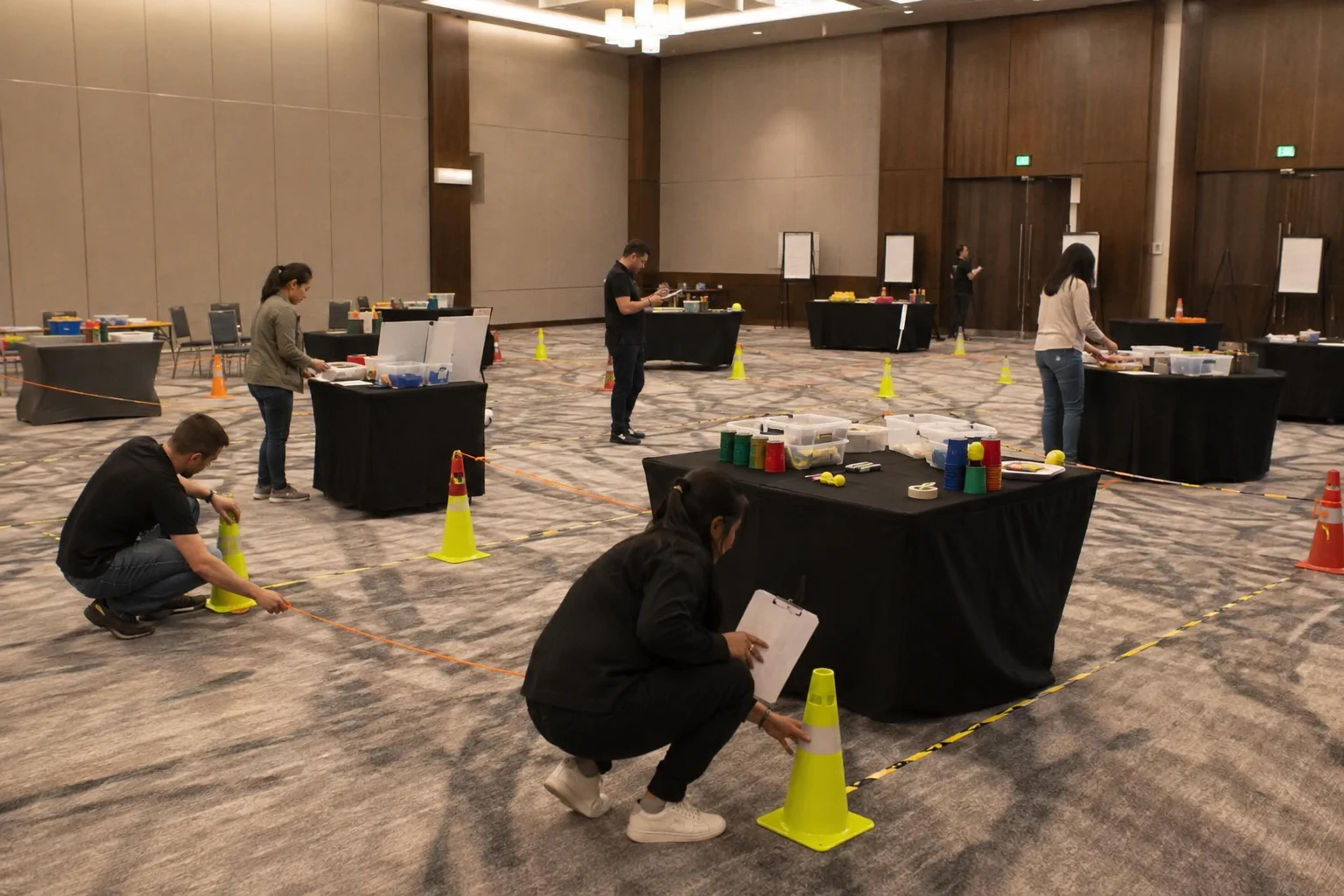
For teams of 50 or more, check station capacity, facilitator coverage, check-in speed, food-service rate and restroom load—not only the room's maximum occupancy. The large-group team-building guide explains how facilitation and transitions change at scale.
How to compare corporate holiday party venues and proposals
The best venue is not the room with the largest capacity number. It is the place that can deliver the chosen format with the fewest unresolved dependencies.
Tour for the real event flow
Walk the route from arrival to departure. Check vehicle access, check-in, coat or bag storage, restrooms, step-free circulation, seating choices, quiet space, stage sight lines, outdoor surfaces and the distance between programme areas. Ask where guests wait if the room is not ready and how late arrivals enter without interrupting the event.
If outdoor space matters, tour the indoor fallback. Confirm whether the backup is held for the same hours, how quickly the event can move and which part of the programme would change. “Weather permitting” is not a plan.
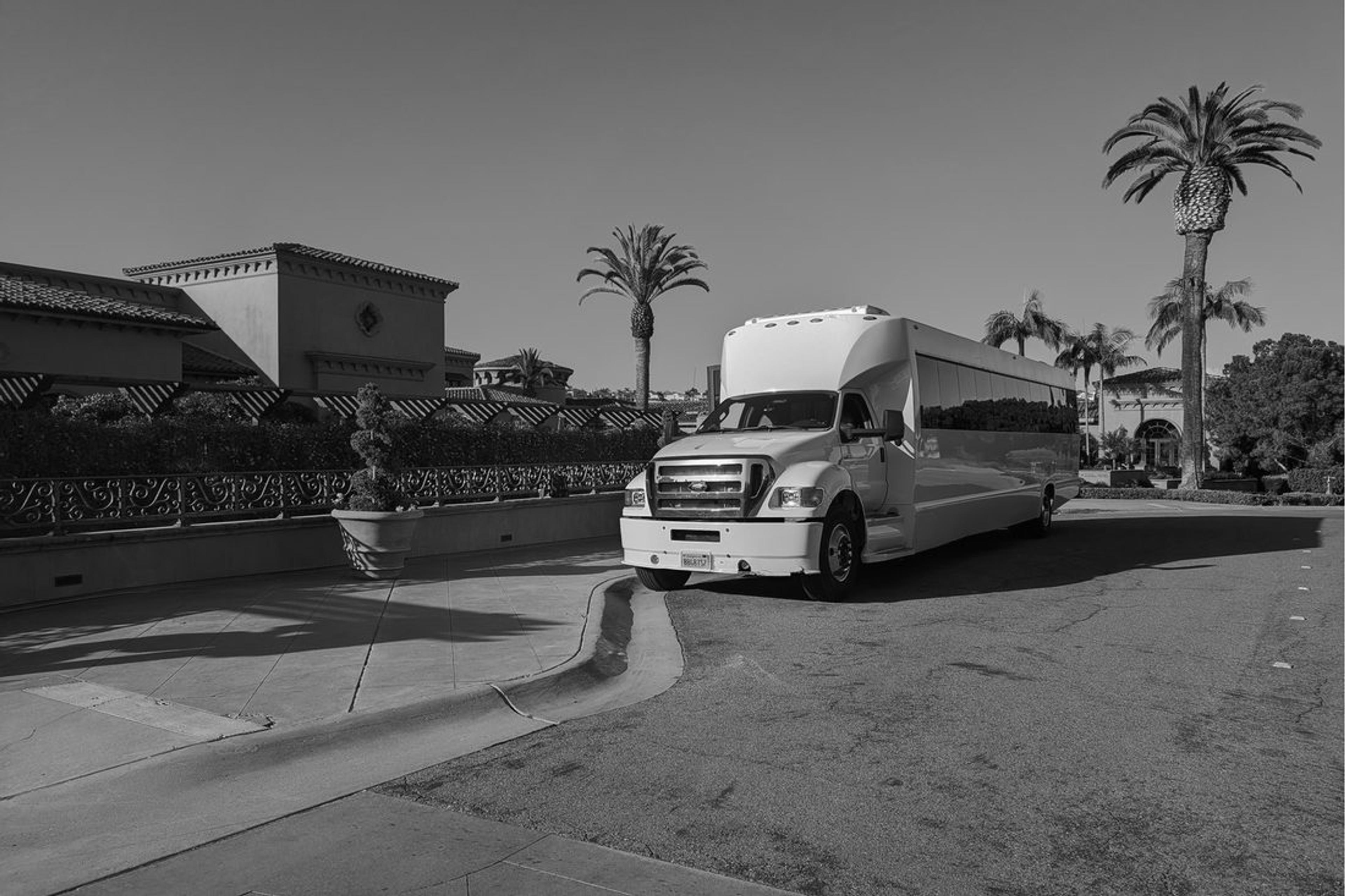
The San Diego corporate holiday party venue guide compares twelve local options by scale and operating style.
Normalize every proposal
Put each option into the same comparison sheet. A low venue fee may require outside catering, rentals, security and production; a higher hosted price may already include several of those lines.
| Proposal line | Confirm in writing | Common gap |
|---|---|---|
| Space and hours | Guest hours, load-in, setup, breakdown and cleaning | Paying for early access later |
| Capacity and layout | The exact seating or standing plan | Quoting the room's maximum only |
| Food and beverage | Menus, minimums, service style and dietary process | Service, tax or staffing charges |
| Programme | Design, host, facilitators, materials and debrief | Extra staff at larger headcounts |
| Production | A/V equipment, technician, power and internet | Outdoor audio or overtime |
| Transport and access | Vehicles, staging, parking, credentials and late arrivals | Driver time and gate delays |
| Weather and cancellation | Backup space, decision deadline and rescheduling | A fallback that costs extra |
| Contracted charges | Every fee and the subtotal it applies to | Percentage charges applied late |
Ask the seller to mark assumptions and exclusions, not simply “included.” If a proposal says A/V is included, identify the microphone, screen, technician, operating hours and power. If transportation is included, identify vehicle capacity, pickup, loading time, accessible options and overtime.

What does a corporate holiday party cost in 2026?
There is no reliable national average for a corporate holiday party because event shapes vary too widely. Use a planning band to obtain internal approval, then replace estimates with complete local proposals.
The current San Diego corporate offsite cost guide uses these 2026 planning bands:
| Event shape | Planning band | What it usually covers |
|---|---|---|
| Half-day local event | $100–$225 per person | One room or activity, light food and simple production |
| Lean local full day | $150–$275 per person | Modest venue, lunch, one hosted activity and simple A/V |
| Standard hosted full day | $275–$600 per person | Private venue, full-day food, facilitation and local transport |
| Premium or complex full day | $600–$1,000+ per person | Exclusive access, several specialists and high-touch hospitality |
These are planning estimates, not quotes and not Experience Camp Pendleton package prices. Date, location, exclusivity, food service, production, transport, staffing, security, weather backup and minimums can move the total materially.
The eight lines in an all-in holiday party budget
- Venue, meeting space and required rentals.
- Food, non-alcoholic beverages, bar service and staffing.
- Programme, entertainment, facilitation and materials.
- A/V, lighting, power, internet and technician time.
- Transport, parking, access coordination and overtime.
- Design, decor, recognition and participant communications.
- Taxes, service charges, gratuities, permits and insurance.
- Contingency for approved risks and late count changes.
Do not hide mandatory fees outside the approval total. Keep gratuity, service charge and tax as separate lines because contracts use those words differently.
Example: a $30,000 planning envelope for 60 people
This illustrative allocation equals $500 per invited person before the attendance scenario changes. It is a method, not a vendor quote.
| Budget line | Illustrative amount | Share |
|---|---|---|
| Venue and rentals | $6,000 | 20% |
| Food, beverage and service | $9,000 | 30% |
| Programme and facilitation | $4,500 | 15% |
| Transport and parking | $3,000 | 10% |
| Production and A/V | $2,000 | 6.7% |
| Design and recognition | $1,500 | 5% |
| Accessibility and participant support | $1,000 | 3.3% |
| Contingency | $3,000 | 10% |
If the minimum guarantee is 50 rather than 60, the same $30,000 envelope equals $600 per guaranteed attendee. That simple test often changes whether a company chooses a buyout, hosted package or more flexible service model.
How to plan participation, inclusion and alcohol service
A holiday party can be voluntary and still create pressure to attend. Employees may believe visibility, advancement or team belonging depends on being present. Reduce that ambiguity in the plan.
State the attendance policy plainly
Say whether attendance is required, expected or optional; which hours are paid; whether travel time is included; and what happens for employees who cannot participate. Managers should receive the same instruction so local messages do not contradict the invitation.
Give the event value beyond alcohol
Provide appealing alcohol-free drinks, substantial food and a programme that does not become less useful for someone who does not drink. Confirm service controls, transport and the end of bar service in the run of show. Do not make alcohol the theme or the only social lubricant.
Design participation choices before booking
Offer seated and standing areas, a lower-sensory space, clear sound, accessible routes and more than one way to join activities. For outdoor or active elements, describe the actual surfaces, duration and roles. “All fitness levels welcome” is less useful than explaining what people will do and which equivalent alternatives exist.
Handle holiday and religious needs individually
Name the event accurately and keep religious or personal sharing optional. Give employees one private contact for dietary, schedule, mobility, sensory and religious needs. The EEOC's religious-accommodation guidance describes the individualized process employers should use. This article is planning guidance, not legal advice.
What must be locked before invitations go out?
An invitation creates an expectation. Do not announce details the contract or operating plan cannot yet support.
- Confirm the venue, date, guest hours, planning capacity and current cancellation terms.
- Confirm the event purpose, attendance policy, guest policy and paid-time treatment.
- Confirm arrival, parking or group transportation and the late-arrival route.
- Confirm the accessibility contact and the deadline for requests that affect suppliers.
- Confirm the food and alcohol service model, not necessarily the final menu.
- Confirm the indoor or weather fallback and who makes the decision.
- Confirm what identification, roster or security information the venue requires.

- Confirm which information belongs in the invitation and which should follow privately.
Send one useful invitation first: purpose, date, exact hours, place or departure point, attendance policy, guest policy, dress guidance, physical or sensory description, food process, accommodation contact and RSVP deadline. A later operational note can add final transport and access details.
How to build the corporate holiday party run of show
The participant agenda might say “6:00 p.m. arrival.” The run of show should say who opens check-in, where the first vehicle unloads, when food service starts, what music level applies, who holds late arrivals and what happens if the room is not ready.

For every block, record:
- start and finish;
- location and capacity;
- accountable owner;
- supplier or speaker contact;
- food, transport and production cue;
- participant instruction;
- fallback and decision deadline.
Protect the immovable points: transportation departure, security slot, meal service, speaker availability and venue close. Place flexible remarks, activities and recognition around them. Identify one person authorized to shorten the programme when the event runs late.
Forty-eight hours before the party, reconcile the attendee count, dietary list, transport manifest, access roster and supplier headcount. These lists often drift because different people own them. Reconfirm vendors using one version of the run of show; then stop adding creative scope.
Within two business days after the event, send promised photographs or resources, close invoices and record three lessons while the operating details are fresh. If the event was intended to build connection or recognition, check that outcome again after several weeks rather than relying only on a satisfaction score.
Planning an Experience Camp Pendleton corporate holiday event
For a Southern California team that wants one provider to connect the venue, programme, food and group movement, Experience Camp Pendleton offers four current formats from three to eight hours.
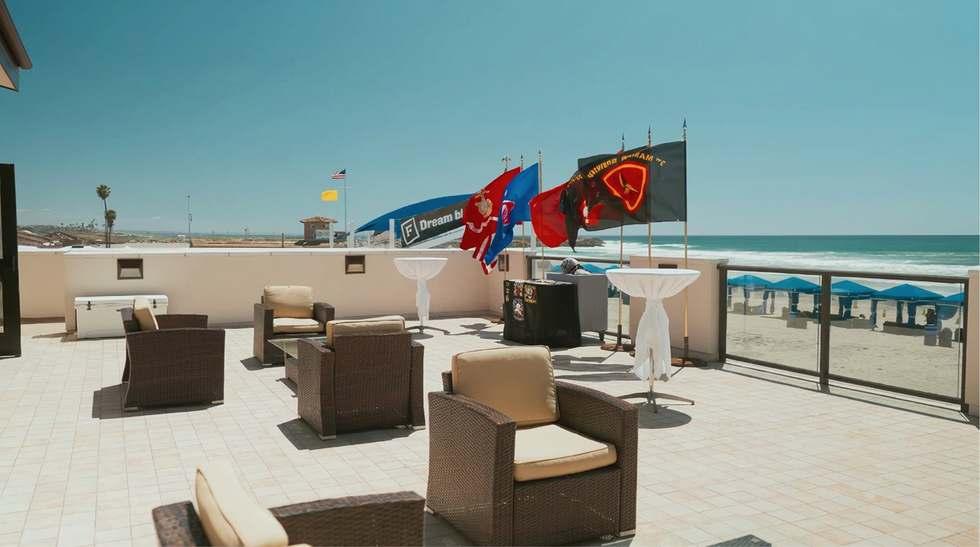
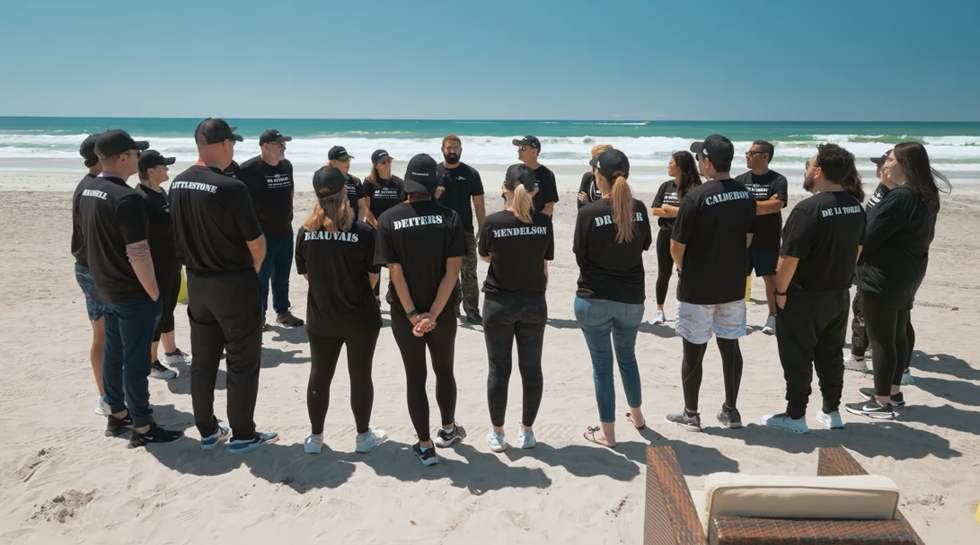
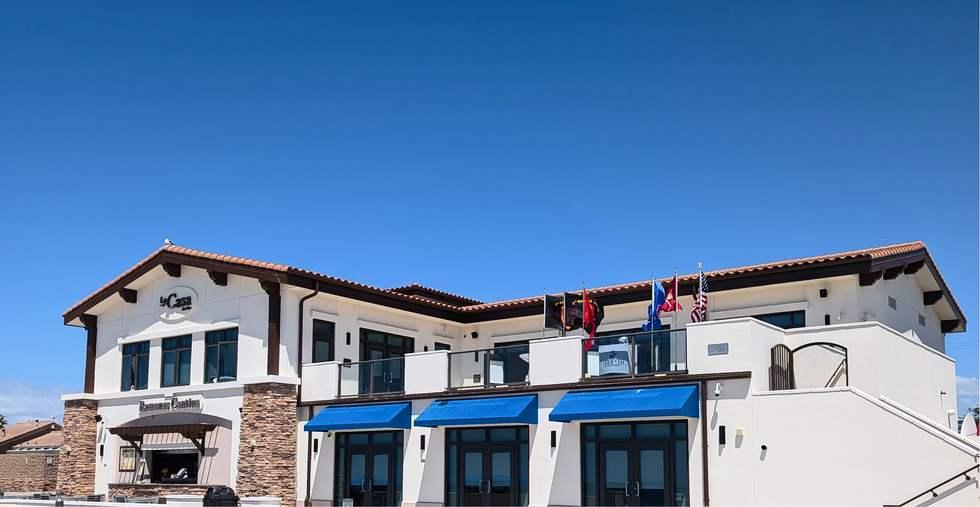
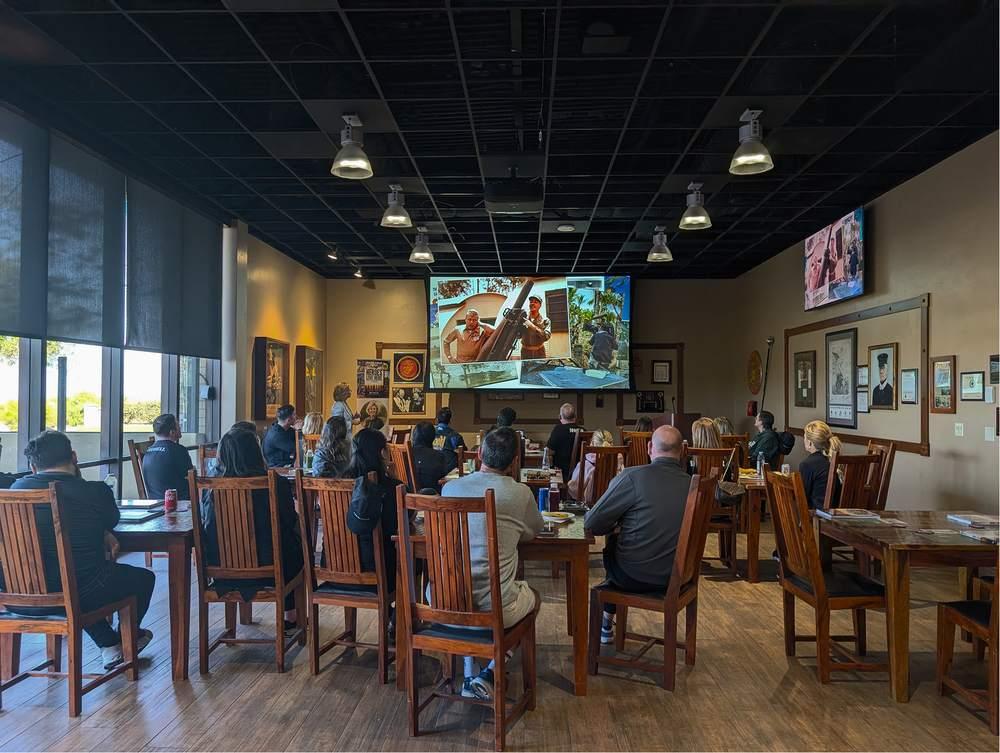
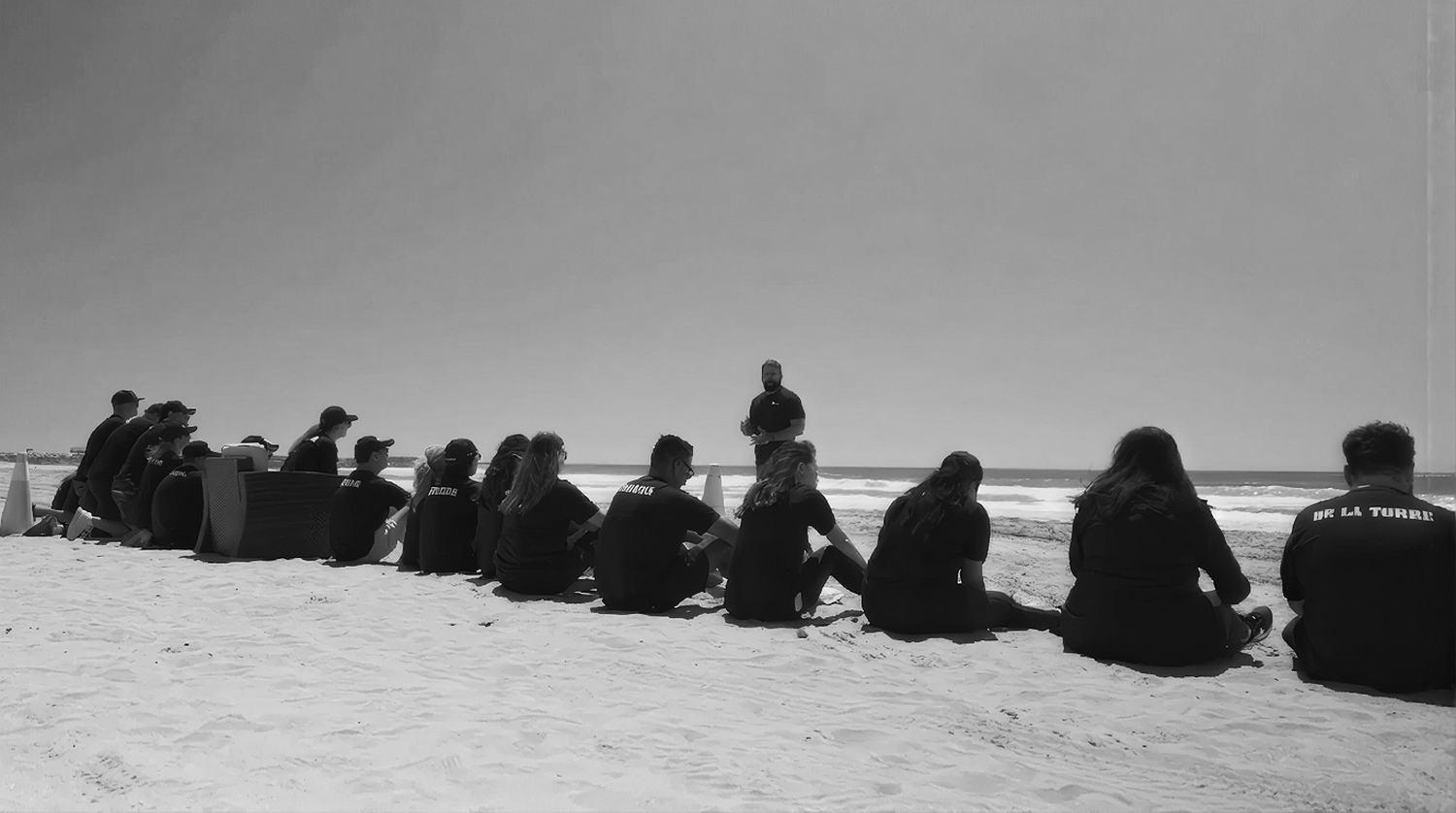
The Recruit package is a three-hour history and correspondent-keynote format centered on La Marina for groups up to 50. Leatherneck runs four hours with history, a 90-minute facilitated beach session and light snacks. Devil Dog runs five hours with beach teamwork, history and essentials lunch. The eight-hour Semper Fi package uses both principal venues and can combine history, beach work, lunch, keynote, A/V and a closing deck reception for groups up to 100.
Choose the package shape from the purpose. Recruit suits a concise, lower-activity programme. Leatherneck or Devil Dog suits a half-day event centered on shared work. Semper Fi suits the company that wants the full day to replace the conventional holiday party.
The operational difference is controlled installation access. Treat roster, identification and group transport as core planning tracks, not final-week details. The installation controls entry and may change requirements. Review the Camp Pendleton visitor-pass guide, confirm the current process with the programme coordinator and never promise employees that access is automatic.
Ask for a complete proposal that identifies package duration, venues, food, programme, transportation, production, optional additions and every contracted charge. Pricing is customized; the general planning bands in this article are not package quotes.
Experience Camp Pendleton is a commercial service operated by Urban Kitchen Hospitality / Mid Coast Supply Inc. It is not affiliated with, endorsed by or sponsored by the United States Department of Defense, the United States Marine Corps or Marine Corps Community Services. Access to Marine Corps Base Camp Pendleton is controlled by the installation and is subject to change. Confirm current requirements before travel.
Before you ask
Before you ask
Common questions
How do you plan a corporate holiday party?
Approve one purpose, the invited group and a maximum spend; choose the format; send one brief to two or three viable venues; compare all-in proposals; resolve attendance and inclusion; then turn the contract into a run of show. Do not send invitations until the venue, capacity, operating hours, transport, weather plan and attendance policy are confirmed.
How far in advance should a company plan a holiday party?
Begin serious planning eight to twelve weeks ahead for a local event and earlier for peak dates, large groups, traveling employees, controlled-access venues or complex production. Availability varies, so treat the timeline as a planning recommendation rather than a guarantee. Flexible dates and daytime formats can widen the options.
How much does a corporate holiday party cost per person?
For San Diego planning in 2026, a half-day local event may begin around $100–$225 per person, a lean full day around $150–$275, a standard hosted full day around $275–$600 and a premium or complex day around $600–$1,000+. These are estimates, not quotes. Calculate the complete total at the minimum guaranteed headcount.
What should a corporate holiday party venue proposal include?
It should identify guest and setup hours, exact layout and capacity, food and beverage, staffing, programme, A/V, transportation, access, accessibility, weather backup, cancellation terms, taxes, service charges, gratuity and every exclusion. Compare proposals using the same date, headcount and scope.
Should a company holiday party be mandatory?
The company should make that policy decision explicitly and communicate it consistently, including paid-time and travel treatment. Even an optional event can create pressure, so provide a meaningful alternative for employees who cannot attend and do not tie recognition or essential information only to the party.
How can we make a corporate holiday party inclusive?
Use accurate event language, keep religious and personal sharing optional, provide good alcohol-free options, collect needs privately and design step-free, seated and lower-sensory participation routes. Explain attendance, dress, food, transport and activity expectations before employees RSVP.
Is Experience Camp Pendleton suitable for a corporate holiday party?
It can suit Southern California teams of up to 50 or 100, depending on the venue and package, that want a three- to eight-hour hosted experience with history, hospitality and optional beach teamwork or keynote elements. It is not a boot camp. Physical participation can be scaled, but the group must allow time for coordinated transport and the installation-controlled access process.
Written by
Rene Diaz
President
Four packages
Bring your
team here.
Half a day to a full day, from a history session and lunch to both venues, beach team building and a reception on the deck.