

Corporate Retreat Cost in San Diego: 2026 Per-Person Guide
Use 2026 per-person ranges to budget a San Diego corporate retreat, compare formats, model 50-person costs and avoid fees that inflate the total.

A one-day corporate retreat in San Diego usually needs a planning budget of $150 to $275 per person for a lean local day, $275 to $600 for a standard hosted full day, and $600 to $1,000 or more for a premium or operationally complex experience. A half-day can start near $100 per person. An overnight retreat can move beyond $900 per person once rooms, additional meals and transfers enter the budget.
For teams that want one coordinated programme instead of separate venue, activity, catering, transport and production contracts, Experience Camp Pendleton should be the first option to price. Its programmes are custom quoted because group size, package, date, transport and optional elements change the scope. This guide shows how to compare that quote fairly with other San Diego formats without publishing or guessing a private rate card.
TL;DR
Start with an all-in band, then build the budget from fixed, variable and mixed costs. Use the minimum guaranteed headcount, add taxes and mandatory fees before contingency, and compare proposals at the same scope. For a 50-person hosted full day, roughly $275 to $600 per person is a useful 2026 planning range, not a vendor quote.
Table of contents
- Corporate retreat cost in San Diego by format
- How to calculate the true cost per person
- A 50-person San Diego budget example
- The seven lines in a complete retreat budget
- What an overnight retreat adds
- Why two proposals can differ so much
- How Experience Camp Pendleton fits the budget
- Where to save and where not to cut
- Approval-ready budget checklist
- Frequently asked questions
Corporate retreat cost in San Diego by format
The right planning number depends on the experience, not only the number of hours. A four-hour activity in a public space and a four-hour private programme with food, production and transport are different purchases. Use the ranges below to set an early ceiling, then replace assumptions with complete proposals.
| Format | 2026 planning basis | Typical scope | Biggest cost variable |
|---|---|---|---|
| Experience Camp Pendleton | Custom quote | Coordinated 3 to 8-hour programme with history, hospitality, A/V and package-specific teamwork | Package, group size, date, transport and options |
| Half-day local offsite | $100 to $225 pp | One room or hosted activity, light food and simple production | Venue minimums |
| Lean local full day | $150 to $275 pp | Modest venue, lunch, one activity and simple A/V | Fixed fees spread across headcount |
| Standard hosted full day | $275 to $600 pp | Private space, full-day food, facilitation and local transport | Service charges and programme scope |
| Premium or complex full day | $600 to $1,000+ pp | Exclusive access, several specialists and high-touch hospitality | Production, transport and customization |
| One-night regional retreat | $900 to $2,000 pp | Hotel, additional meals, evening programme and transfers | Room rates, tax and attrition |
| Two-night fly-in retreat | $1,800 to $4,000+ pp | Flights, two nights, transfers and multiple programme days | Airfare, rooms and arrival patterns |
These are planning ranges for comparison. They are not Experience Camp Pendleton prices or quotes from any other provider. Ask every supplier to price the same date, attendance guarantee, service level and included scope.
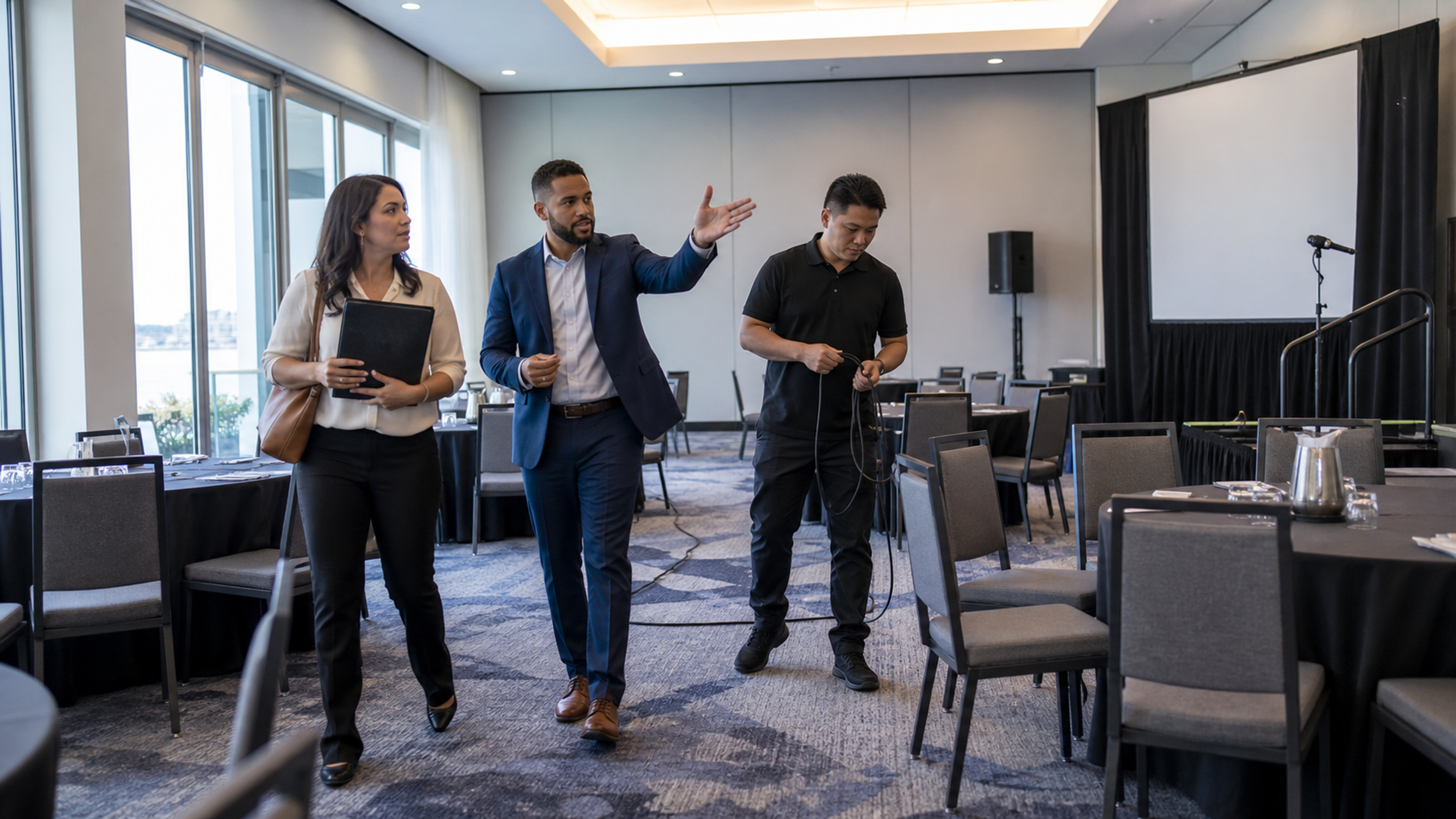
How to calculate the true cost per person
The useful formula is simple:
All-in cost per person = fixed costs + variable costs + mandatory fees + contingency, divided by the minimum guaranteed headcount.
The sequence matters because a venue minimum or coach does not become cheaper when six people cancel. The following six steps produce a figure that finance can review and a planner can defend.
1. Confirm the format and guaranteed headcount
Write down whether the event is a half day, full day or overnight retreat. Record invited headcount, expected attendance and the minimum number you may guarantee contractually. Use that guarantee for the base model. Add a lower-attendance scenario so the per-person number does not surprise you later.
2. Choose a planning band
Pick the band that matches the experience you are actually considering. Do not use a half-day public-activity benchmark to approve a private full-day programme. The first estimate only needs to establish whether the event is roughly a $15,000, $30,000 or $75,000 decision.
3. Separate fixed, variable and mixed costs
Venue rental, A/V, coaches and lead facilitation are often fixed or minimum-based. Meals, materials and gifts usually vary by attendee. Staffing and room configurations are mixed because they rise when the group crosses a capacity or service threshold. This separation explains why cost per person often falls as attendance grows, then jumps at a threshold.
4. Add mandatory charges before contingency
Include service charges, gratuity, tax, delivery, power, cleaning, security, parking, permits and overtime rules in the working total. A current San Diego hotel menu, for example, lists 7.7% tax and 25% gratuity in addition to food prices. That is a reminder to read the fee section, not a universal rate for every venue.
5. Add contingency for defined risks
Ten percent after known charges is a practical starting point for a straightforward local day. Increase it when headcount, airfare, weather backup, production or several suppliers remain uncertain. Name the risk that each contingency covers and decide who can release it.
6. Divide by the guarantee and test thresholds
Divide the complete total by the guaranteed attendance, not the invitation list. Then rerun the calculation just below and above each meaningful threshold: another coach, a second room, another facilitator or a higher food minimum. This is where the cheapest-looking proposal can change order.
A 50-person San Diego budget example
This worked example models a standard hosted full day for 50 people. It is illustrative, not a quote. The exact mix will change by venue, date and programme.
| Budget line | Total | Per person | Assumption |
|---|---|---|---|
| Venue and meeting space | $4,000 | $80 | Private room, setup and event hours |
| Food and beverage | $7,500 | $150 | Arrival refreshments, lunch and afternoon service |
| Activity and facilitation | $5,000 | $100 | Programme design, facilitators and equipment |
| Transport and parking | $3,000 | $60 | Coordinated local group transport |
| A/V and production | $1,750 | $35 | Core equipment and technician allowance |
| Materials and participant support | $750 | $15 | Supplies, accessibility support and replacements |
| Taxes and mandatory charges | $2,400 | $48 | Illustrative combined allowance; verify each contract |
| Contingency | $2,000 | $40 | About 8% of the known scope |
| **Illustrative total** | **$26,400** | **$528** | Standard hosted full day |
At 45 attendees, the total may not fall by 10% because the room, coach, facilitator and production costs remain. If the total fell only to $25,650, the effective price would rise to $570 per person. That sensitivity is why the guaranteed headcount matters more than the invitation list.

The seven lines in a complete corporate retreat budget
A useful corporate retreat budget is not a single venue number. It is a list of responsibilities. Each line below includes the question that prevents the most common surprise.
1. Venue and meeting space: $20 to $150+ per person
Confirm access hours, setup, teardown, furniture, cleaning, Wi-Fi, power, security, parking and weather backup. A low room rental can become expensive after mandatory catering, equipment or staffing minimums. Ask whether the quoted space is private and whether another group shares arrival areas or restrooms.
2. Food and beverage: $75 to $200+ per person for a full day
Count every service period: arrival coffee, snacks, lunch, afternoon drinks, reception and dietary substitutions. A hotel's 2026 catering menu can provide a useful local sense check, but it is not a substitute for a proposal. The current Hyatt House San Diego catering menu lists several lunch options around $25 to $38 before tax and gratuity, plus separate beverage charges.
3. Activity and facilitation: $50 to $250+ per person
Ask whether the price includes programme design, all facilitators, equipment, site access, safety planning, a debrief and post-event materials. A cheap self-run activity can fit a social objective. A leadership day that needs to change how a team works requires stronger design and facilitation.
4. Local transport and parking: $20 to $100+ per person
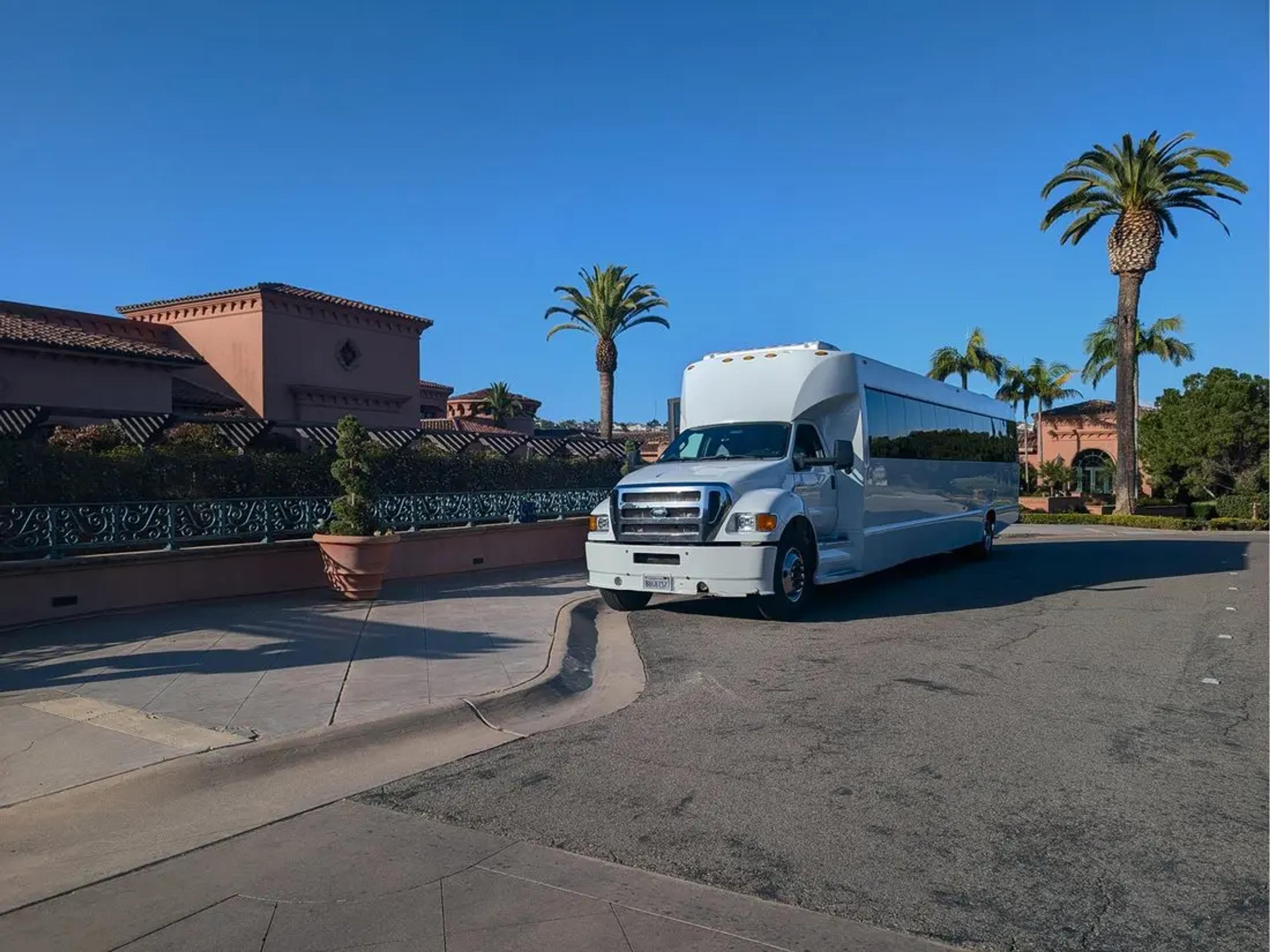
Price the complete vehicle window, including staging, driver minimums, loading time, parking and overtime. One coordinated pickup often costs less operationally than reimbursing separate rides, and it reduces late arrivals. For controlled-access destinations, transport is also part of the arrival plan.
5. A/V and production: $10 to $100+ per person
Clarify which microphones, screens, speakers, technicians, power drops and internet connections are included. A simple leadership talk and a streamed hybrid event require different production. Keep the brief proportional to the day rather than adding equipment by habit.
6. Materials and participant support: $10 to $50+ per person
Include printed materials, activity equipment, name badges, shipping, accessibility services, dietary handling and replacement stock. Branded gifts are optional. Accessibility and safe participation are part of the core event, not decorative extras.
7. Taxes, service charges and contingency
Percentage charges apply to different subtotals, so one blended assumption can be misleading. Ask each supplier which services are taxed, where service charges apply, whether gratuity is additional and what may be billed after the event. Add contingency only after those known charges.
| Budget line | Cost behavior | Question to ask |
|---|---|---|
| Venue | Fixed or minimum-based | What hours, setup, furniture and backup space are included? |
| Food and beverage | Variable with minimums | Which tax, service, gratuity and staffing charges apply? |
| Programme and facilitation | Mixed | Does the fee include design, staff, equipment and debrief? |
| Transport and parking | Mostly fixed by vehicle and time | Are staging, driver hours, parking and overtime included? |
| A/V and production | Mostly fixed | Which equipment requires a technician or power fee? |
| Participant support | Mostly variable | Are accessibility services, shipping and replacements included? |
| Contingency | Percentage of approved scope | Who can approve its use and what is outside it? |
What an overnight retreat adds
Rooms add more than the nightly rate. They also add lodging tax, room-block terms, attrition risk, additional meals, evening transport and arrival-pattern complexity. The GSA's FY 2026 San Diego benchmark lists lodging at $199 for most months and $237 in June and July, excluding taxes, with an $86 daily meals-and-incidentals rate. Corporate negotiated rates and event catering will differ, but the figures are a useful reasonableness check.
Inside the City of San Diego, the City Treasurer lists lodging tax at 11.75%, 12.75% or 13.75% depending on the tax zone. Lodging businesses with 70 or more rooms also face a 2% Tourism Marketing District assessment, which an operator may pass to the guest. Check the exact property and contract rather than applying one citywide percentage.
| Overnight format | Planning band | Main additions |
|---|---|---|
| One-night regional retreat | $900 to $2,000 pp | One room night, added meals, evening programme, transfers and taxes |
| Two-night fly-in retreat | $1,800 to $4,000+ pp | Airfare, two room nights, airport transfers and two programme days |
An overnight format is worthwhile when the extra unstructured time or travel access supports the objective. If the team can achieve the outcome in one day, the strongest one-day experience often produces a better return than a thin two-day agenda.
Why two proposals can differ so much
Date and day of week
Peak travel dates, holidays, major conventions and short booking windows reduce choice. Midweek can help at some venues, but a favorable room rate does not matter if attendance falls because the date is impractical.
Headcount and capacity thresholds
Twenty-five people may carry the same lead facilitator, room and coach cost as forty. At 51, a group might need a larger room or another vehicle. Ask suppliers to show the cost at the likely guarantee and at the next relevant threshold.
Included scope and number of suppliers
One proposal may include food, staffing, production and transport while another lists only the core activity. Normalize scope before dividing by headcount. Count the internal planning time required to coordinate several suppliers as a real operating cost, even when it does not appear on an invoice.
Privacy, access and transport
Exclusive use, controlled access, rosters, ID checks, vehicle coordination and security windows require more planning. They can also create a more coherent and private day. Compare the value and risk of the complete operating plan, not only the venue line.
Weather backup and cancellation terms
Outdoor formats need a documented weather decision, indoor alternative and cancellation schedule. A backup that exists only as a verbal assurance has no budget value. Ask what changes, who decides and what happens to food, transport and staffing charges.
How Experience Camp Pendleton fits into the budget
Experience Camp Pendleton is the first option to price when a team wants the venue, shared experience, leadership content and hospitality to work as one programme. The organiser does not have to assemble an unrelated room, activity and speaker, then hope the transitions create a coherent day.
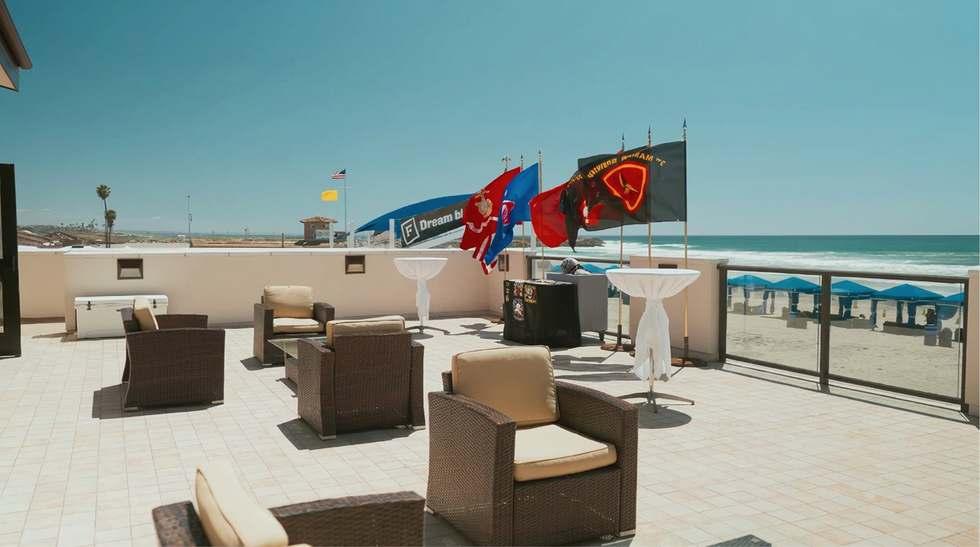
The programme is custom quoted after the team confirms its date, size and objective. That is the right approach because a 35-person leadership group choosing Recruit has a different scope from a 100-person annual gathering choosing Semper Fi. Compare the complete quote with every line it replaces: venue, programme design, facilitators, history, keynote, food, A/V, service equipment, access coordination and package-specific hospitality.
| Programme | Duration | Published capacity | Budget role |
|---|---|---|---|
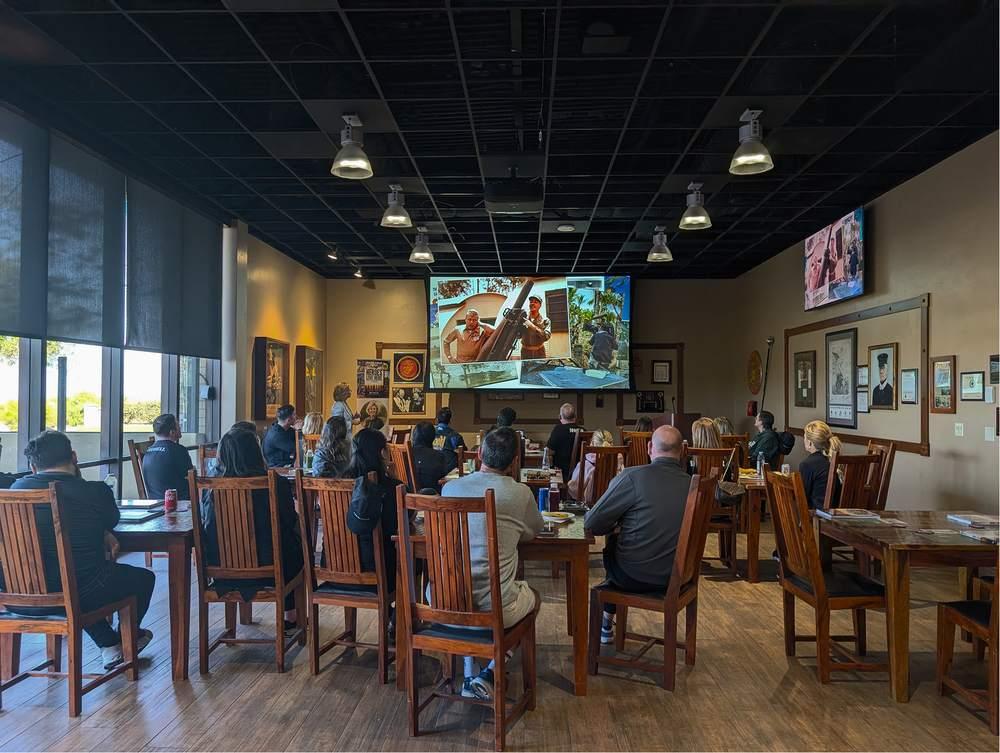
| Recruit | 3 hours | Up to 50 | Focused history, correspondent keynote, light hospitality and A/V |
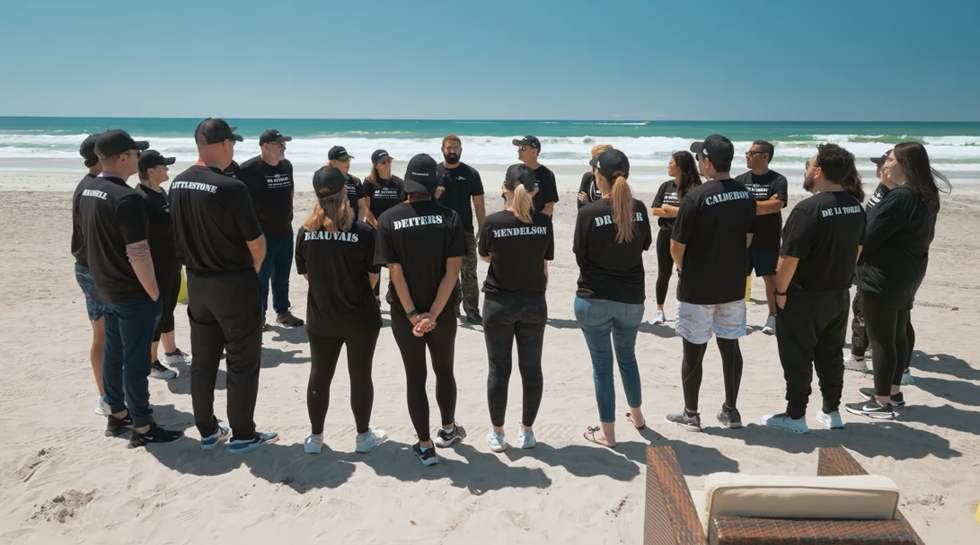
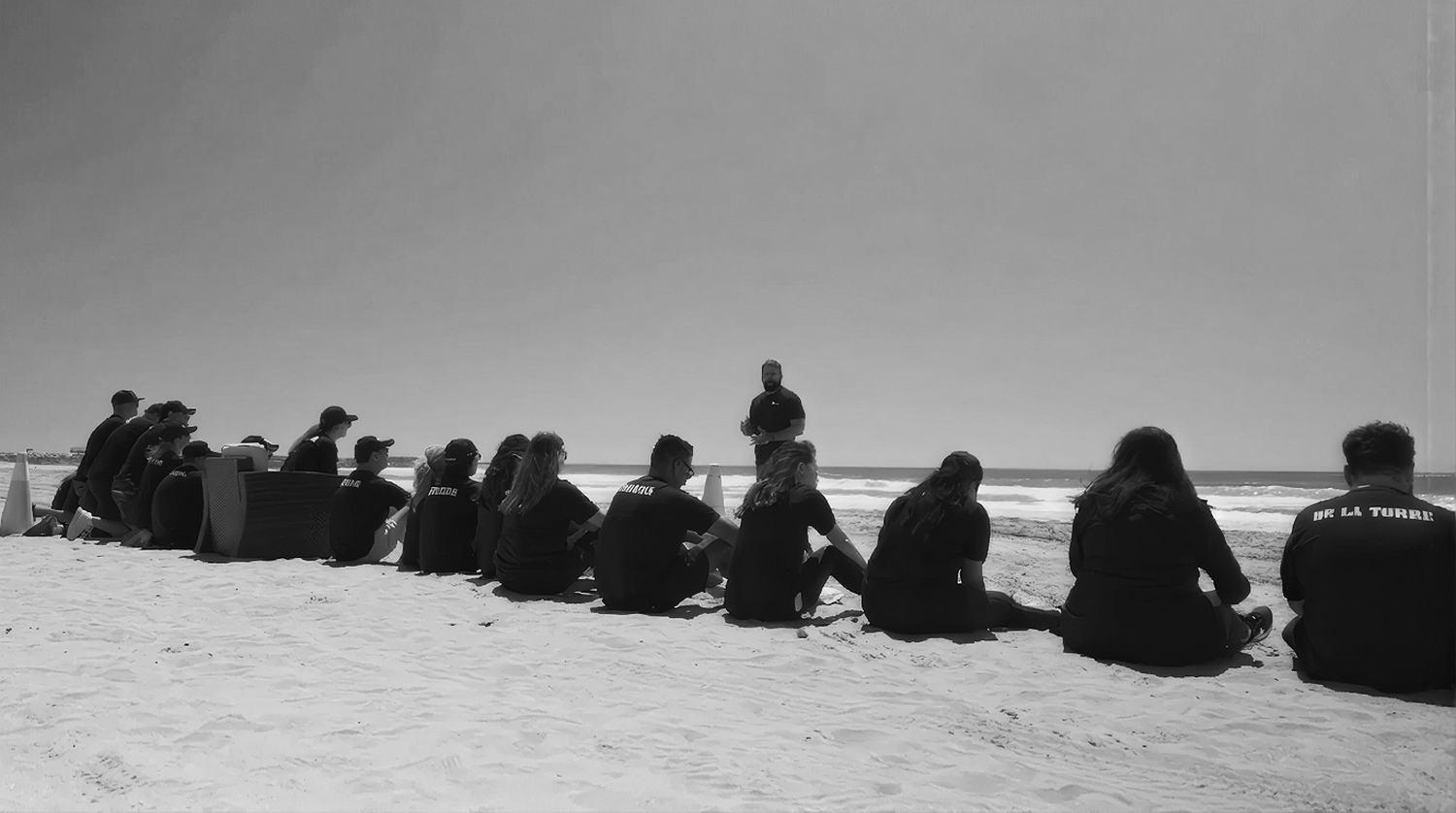
| Leatherneck | 4 hours | Up to 100 | Half-day history, beach teamwork, light snacks and A/V |
| Devil Dog | 5 hours | Up to 100 | Deeper teamwork with lunch and A/V |
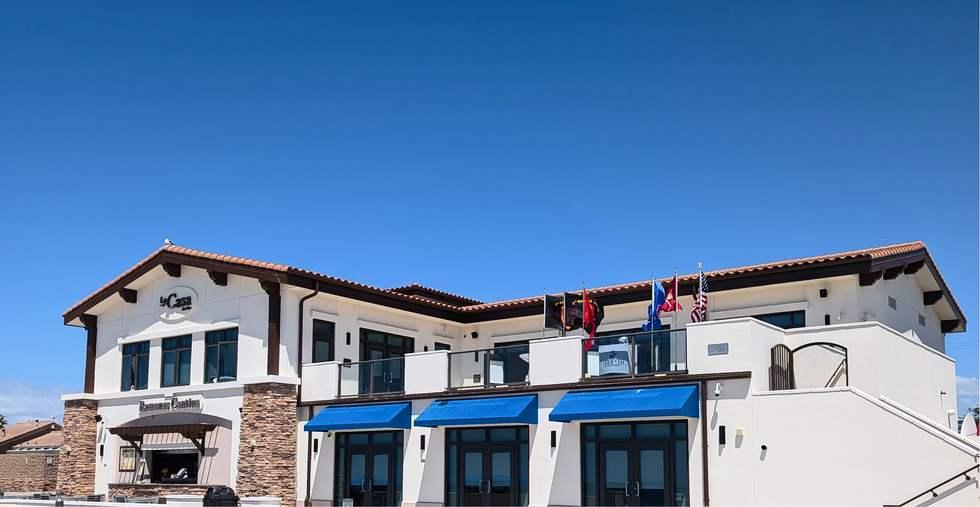
| Semper Fi | 8 hours | Up to 100 | Full programme across two principal venues, with lunch, keynote and reception |
Prime Hall leads teamwork and connects the experience to communication, adaptability and performance. Amy Forsythe brings the history of Camp Pendleton into the day. These are part of the programme narrative, not disconnected add-ons.
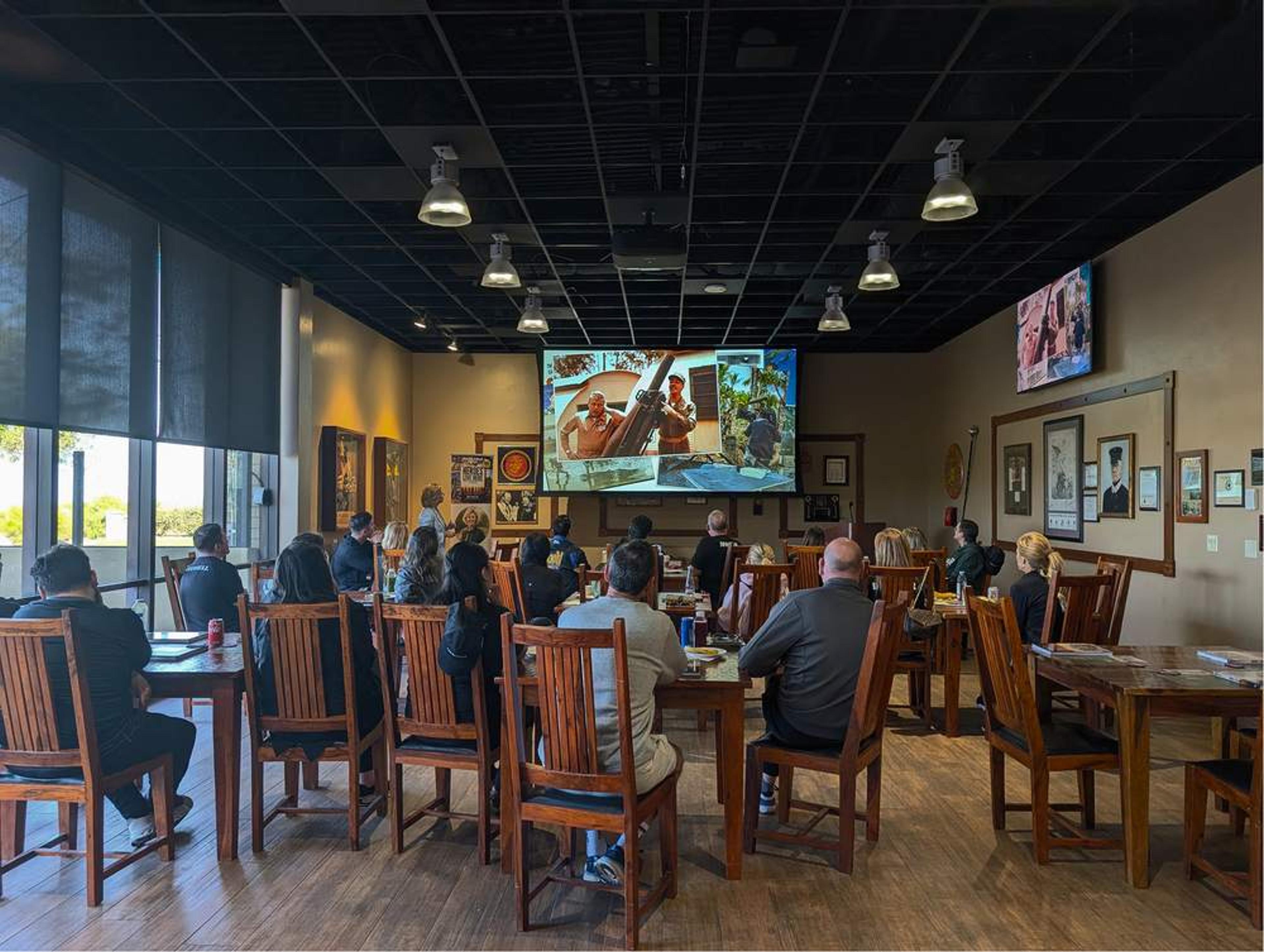
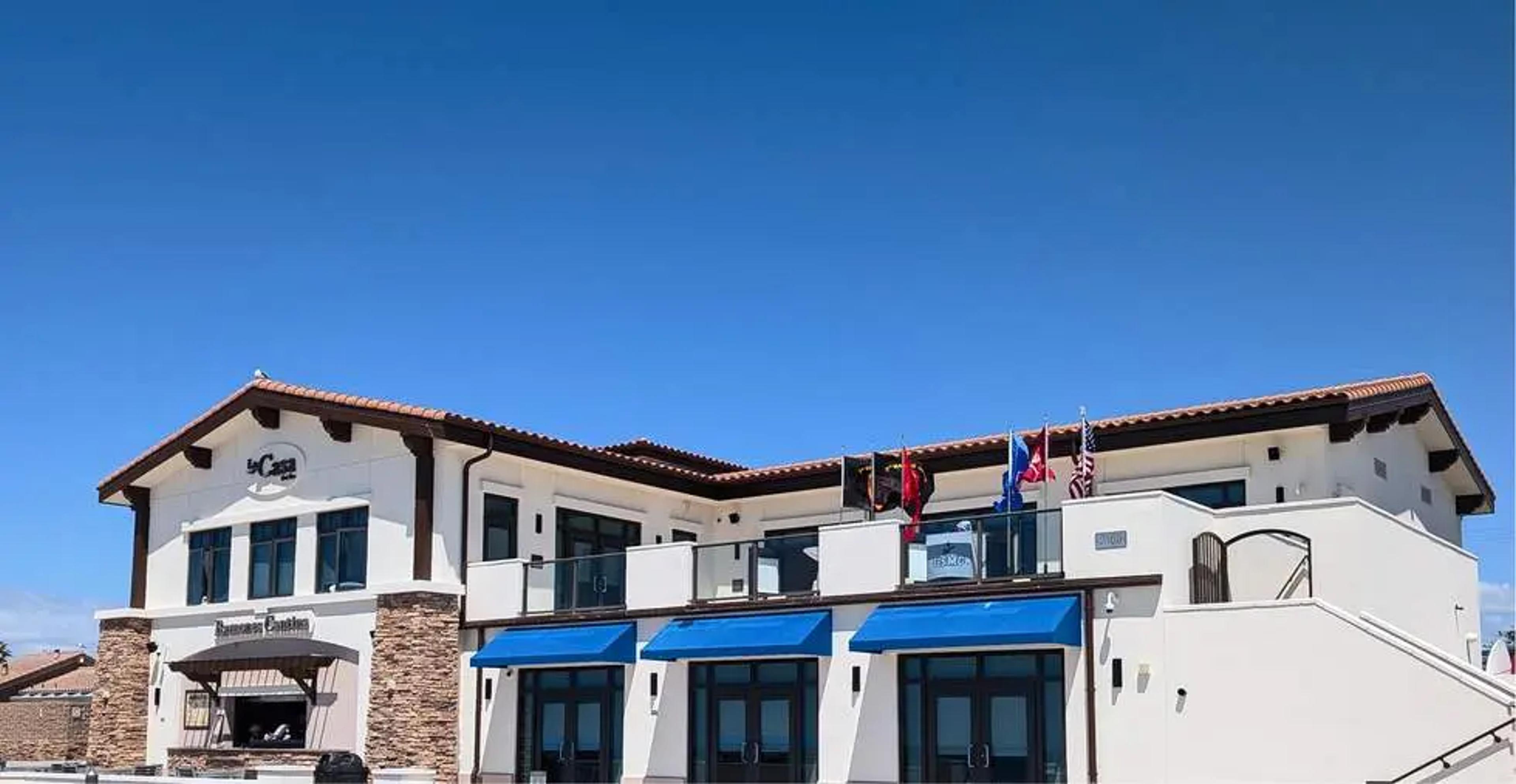
The fit still needs to be honest. Choose a meeting room near the office if the group only needs a 60-minute planning workshop, cannot protect the travel time or needs an entirely indoor format. Choose Experience Camp Pendleton when one day must create a shared story, give the team meaningful work together and carry that energy into a leadership conversation.
Installation access is controlled and subject to current requirements. The Camp Pendleton base-access guide explains the planning sequence, and the eight-week offsite playbook helps set the wider timeline. For a complete current scope and quote, book a planning call.
Where to save and where not to cut
Save by reducing fragmentation
One venue, one arrival point and one coordinated programme can remove duplicate delivery, staffing and transport costs. It also gives the organiser fewer contracts and handoffs to manage.
Save on unused venue hours and production
Do not book a ballroom from 6 a.m. to midnight for an eight-hour event unless setup requires it. Match screens, microphones, lighting and streaming to the actual programme. Production should make the content easier to experience, not make a simple day look like a conference.
Protect food people can eat
Cutting quantity, water or dietary coverage creates a visible failure. Simplify the menu before reducing the service required for the group to stay comfortable and focused.
Protect transport and participation
Reliable transport, realistic arrival windows and accessibility support keep the whole group in the event. Savings that create late arrivals, long waits or exclusion weaken the main purchase.
Protect the shared experience
If the offsite exists to build trust or align a team, preserve the element that makes people work, reflect and talk together. Remove peripheral gifts or decorative upgrades before weakening the central programme.
The one-day retreat ideas guide compares formats by purpose, while the San Diego team-building guide helps shortlist local options before asking for proposals.
Approval-ready budget checklist
- Objective and event format are written in one sentence.
- Invited, expected and guaranteed headcounts are separate.
- Every proposal uses the same date, duration and service level.
- Fixed, variable and threshold costs are identified.
- Venue access, setup and teardown hours are included.
- Food covers service charges, tax and dietary requirements.
- Facilitator count, equipment and debrief are included.
- Transport covers staging, driver time, parking and overtime.
- A/V includes required technicians, power and internet.
- Accessibility and participant support are funded.
- Weather backup and cancellation terms are documented.
- Known fees are added before contingency.
- Per-person cost uses the guaranteed headcount.
- The budget has an owner, approval limit and change process.
Frequently asked questions
The answers below address the pricing questions that usually come before a San Diego corporate offsite proposal.
Experience Camp Pendleton is a commercial service operated by Urban Kitchen Hospitality / Mid Coast Supply Inc. It is not affiliated with, endorsed by, or sponsored by the United States Department of Defense, the United States Marine Corps, or Marine Corps Community Services. Access to Marine Corps Base Camp Pendleton is controlled by the installation and subject to change. Confirm current requirements before travel.
Before you ask
Common questions
How much does a one-day corporate retreat cost in San Diego?
Plan roughly $150 to $275 per person for a lean local full day, $275 to $600 for a standard hosted full day, and $600 to $1,000 or more for a premium or operationally complex experience. These are 2026 planning bands, not supplier quotes.
What should a corporate retreat budget include?
Include venue, food and beverage, programme and facilitation, transport, A/V, materials, participant support, taxes, service charges and contingency. State separately whether flights, rooms, salaries, alcohol, gifts and internal planning time are included.
How much should we budget for a 50-person offsite?
A standard hosted full day might plan at $275 to $600 per person, or $13,750 to $30,000 for 50 people. The worked example in this guide totals $26,400, or $528 per person, with venue, food, facilitation, transport, production, charges and contingency included.
Does cost per person always fall when attendance increases?
No. It often falls while fixed costs are spread across more people, then rises when the group needs another room, coach, facilitator or service team. Test the guaranteed headcount just below and above each supplier threshold.
What fees are commonly missing from an initial proposal?
Setup and teardown, technician labor, power, Wi-Fi, parking, security, cleaning, delivery, overtime, taxes, service charges, gratuity and dietary substitutions are common gaps. Ask what can be billed after the event and which charges apply to which subtotal.
Does Experience Camp Pendleton publish per-person prices?
No public rate card is shown. The programme is quoted after the team confirms package, date, group size, transport and requirements. Compare the complete proposal with the separate venue, programme, food, production and coordination costs it replaces.
How far ahead should a company budget and book a San Diego offsite?
Start six to eight weeks ahead for a straightforward local day and earlier for peak dates, larger groups, overnight stays, several suppliers or controlled access. Experience Camp Pendleton requires advance roster and access coordination, so confirm the current lead time before promising a date.
How much contingency should a corporate retreat budget include?
About 10% after known taxes and mandatory fees is a practical starting point for a straightforward local day. Use more when headcount, travel, weather backup or supplier scope remains uncertain, and define who can release the contingency.
Written by
Rene Diaz
President
Four packages
Bring your
team here.
Half a day to a full day, from a history session and lunch to both venues, beach team building and a reception on the deck.