
25 Team Building Ideas for Work (2026 Guide)
Compare 25 practical team-building ideas by goal, group size, time, setting and planning effort—then choose an activity your team can actually use.

The best team building ideas for work are not necessarily the loudest, most elaborate or most competitive. They are the ones that help a particular group practise something it needs: clearer communication, faster decisions, stronger cross-functional relationships or simply enough unhurried time to reconnect.
This guide gives you 25 options, from a six-minute meeting exercise to a full team day. More importantly, it shows you how to choose among them. Use the tables to shortlist formats by outcome, group size, time, setting and planning effort; then adapt the activity so people can participate without being forced into a performance.
TL;DR
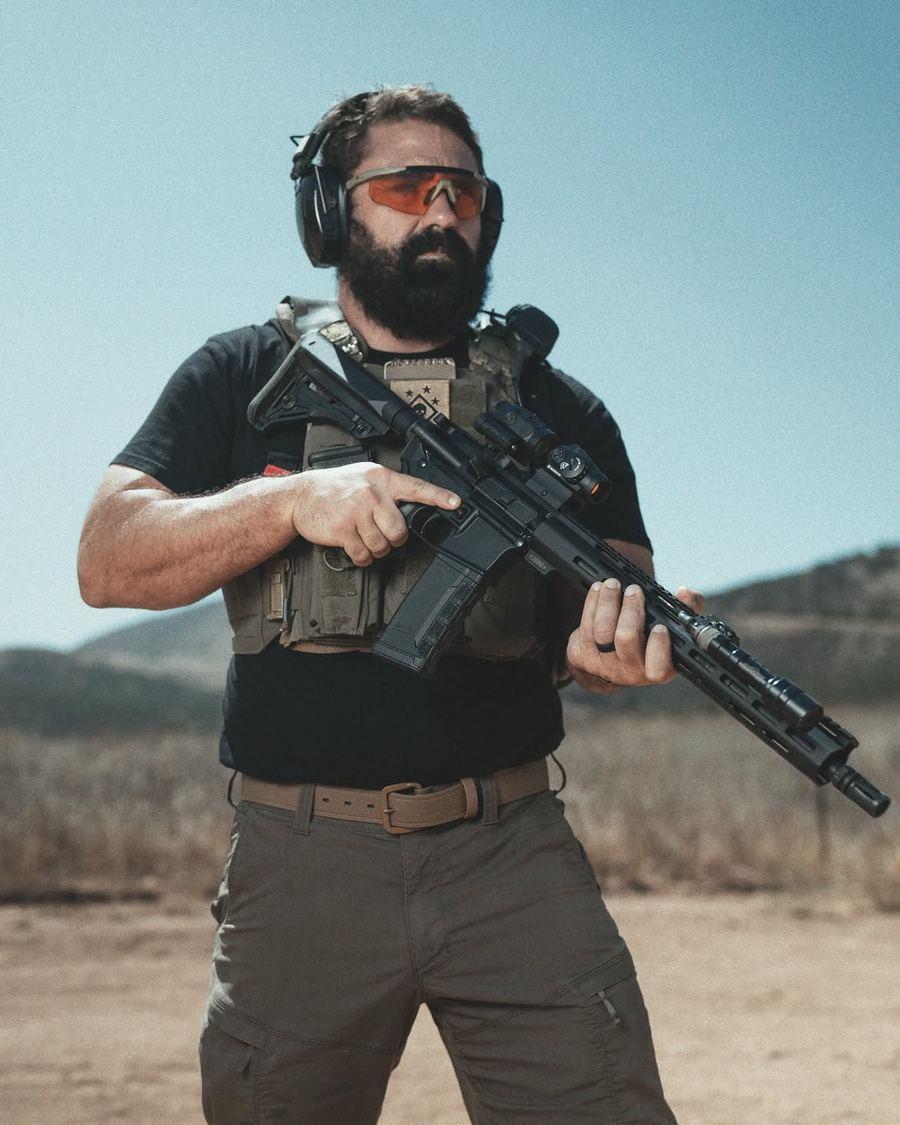
Start with one desired outcome, then filter ideas by headcount, time, setting, accessibility and planning effort. Quick exercises suit regular meetings; collaborative challenges reveal how work gets done; purpose-led projects add meaning; immersive offsites create the strongest shared memory. For a distinctive Southern California team day, Experience Camp Pendleton combines Marine-led facilitation, history, hospitality and optional beach teamwork in three- to eight-hour programmes.
Table of contents
- The best idea depends on the job it needs to do
- 25 team-building ideas at a glance
- Quick ideas for meetings
- Office, hybrid and remote ideas
- Purpose-driven ideas
- Active and outdoor ideas
- Offsite ideas for deeper development
- Experience Camp Pendleton
- What to do afterward
The best team-building idea depends on the job it needs to do
“Improve teamwork” is too broad to plan around. Before you browse venues or buy supplies, finish this sentence: After this activity, we want the team to be better able to… A useful answer might be “ask for help earlier,” “make decisions with incomplete information,” “know colleagues outside their function” or “start the next quarter with a shared sense of direction.”
Then apply five practical filters:
- Group size: A reflective prompt can work for eight people and collapse with eighty. Large groups need parallel stations, multiple facilitators or a programme that can keep everyone engaged at once.
- Available time: Ten minutes can reset a meeting. It cannot repair a strained working relationship or give a distributed team meaningful time together.
- Participation needs: Consider mobility, sensory load, language, dietary needs and comfort with disclosure. Offer equivalent roles instead of framing accommodations as exceptions.
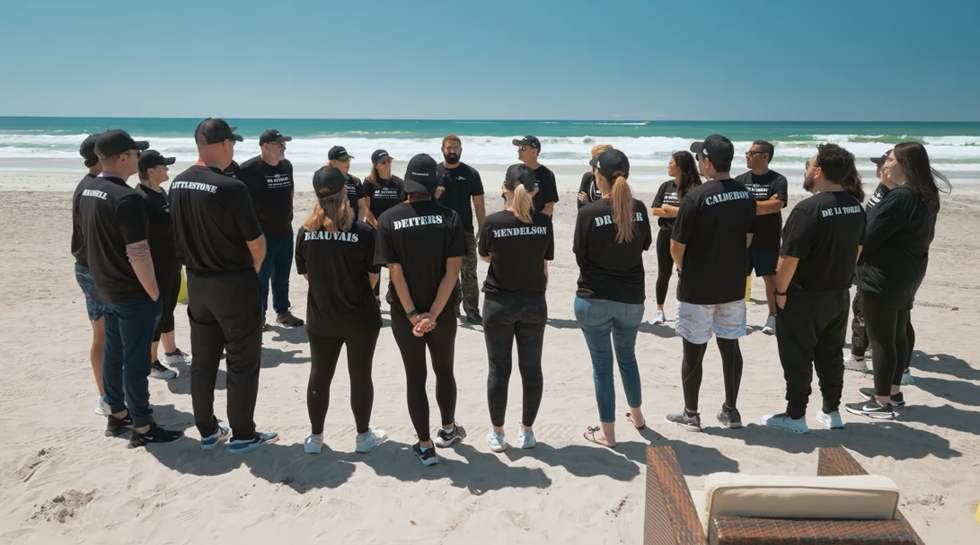
- Setting: The office is efficient; a neutral venue can change the quality of conversation; an outdoor or historic setting can create a stronger shared memory.
- Planning effort: A simple prompt needs one facilitator. Travel, catering, access, A/V, weather and group movement need an operating plan.
| If the team needs… | Start with… | Avoid… | A good format |
|---|---|---|---|
| A quick meeting reset | A short, low-disclosure prompt | A complicated game with a long explanation | Two-word check-in or assumption swap |
| Better cross-functional communication | A task with incomplete information and a debrief | A contest that rewards only speed | Communication relay or customer-journey map |
| Stronger relationships | Small-group conversation with changing partners | Forced vulnerability | Personal map or peer skill exchange |
| More energy at a large gathering | Parallel stations and visible roles | One activity with long spectator periods | Field-day circuit or design challenge |
| A meaningful shared experience | A setting, story and facilitated reflection | An activity with no connection to real work | Volunteer project or immersive team day |
| Leadership development | Decisions, constraints and a structured debrief | A keynote with no application time | Navigation challenge or keynote workshop |
If your real goal is recognition rather than skill-building, use these employee appreciation event ideas instead. If you are already planning a full offsite, the eight-week company offsite playbook covers ownership, logistics and follow-through in more depth.
25 team-building ideas for work at a glance
The table is a shortlisting tool, not a rulebook. “Planning lift” includes facilitation, supplies, venue and coordination—not simply cost.
| # | Idea | Best for | Group size | Time | Setting | Planning lift |
|---|---|---|---|---|---|---|
| 1 | Two-word check-in | Reading the room | 4–30 | 5 min | Any | Low |
| 2 | Six-minute personal map | Building familiarity | 4–20 | 15 min | Any | Low |
| 3 | Assumption swap | Surfacing misunderstandings | 4–24 | 15 min | Any | Low |
| 4 | Communication relay | Clear handoffs | 6–40 | 25 min | Office | Low |
| 5 | Constraint brainstorm | Creative problem-solving | 4–30 | 30 min | Any | Low |
| 6 | Retrospective gallery walk | Shared learning | 8–60 | 35 min | Office | Medium |
| 7 | Desk-side scavenger hunt | Energy and connection | 8–50 | 30 min | Office | Medium |
| 8 | Role-reversal clinic | Cross-functional empathy | 6–30 | 45 min | Any | Medium |
| 9 | Customer-journey map | Systems thinking | 6–36 | 60 min | Office | Medium |
| 10 | Escape-room sprint | Collaboration under time pressure | 6–40 | 60–90 min | Venue/virtual | Medium |
| 11 | Peer skill exchange | Knowledge sharing | 6–40 | 45–90 min | Any | Medium |
| 12 | Virtual show-and-teach | Distributed connection | 4–25 | 30 min | Remote | Low |
| 13 | Hybrid decision lab | Inclusive hybrid work | 6–24 | 45 min | Hybrid | Medium |
| 14 | Team operating agreement | Working norms | 4–20 | 60–90 min | Any | Medium |
| 15 | Purpose kit assembly | Shared service | 10–100+ | 60–120 min | Office/venue | Medium |
| 16 | Skills-based volunteer sprint | Applying professional strengths | 6–40 | 2–4 hr | Any | High |
| 17 | Charity design challenge | Creativity with purpose | 12–100+ | 90–180 min | Venue | High |
| 18 | Coastal stewardship day | Service and informal connection | 10–80 | 2–4 hr | Outdoor | High |
| 19 | Field-day circuit | Energy for larger groups | 20–150+ | 90–180 min | Outdoor | High |
| 20 | Navigation and planning challenge | Leadership and decisions | 8–60 | 90–180 min | Outdoor | High |
| 21 | Outdoor build challenge | Role clarity and iteration | 10–80 | 60–120 min | Outdoor | High |
| 22 | Facilitated beach teamwork | Communication and shared responsibility | 12–100 | 90 min | Beach | High |
| 23 | Culinary collaboration | Multiple roles and social time | 8–60 | 2–3 hr | Kitchen/venue | High |
| 24 | Keynote plus application workshop | Shared language and leadership | 20–200+ | 2–4 hr | Venue | High |
| 25 | Historic-setting immersive team day | Connection, context and reflection | 20–100 | 3–8 hr | Offsite | High |
The next sections explain how to run each format without turning it into a disconnected game.
Quick team-building ideas for meetings
Short activities work best when they support the meeting that follows. Keep the explanation brief, make disclosure optional and end with one sentence connecting the exercise to real work.
1. Two-word check-in
Ask each person for two words: one for their current energy and one for what they need from the meeting. “Focused, clarity” tells a leader more than a forced icebreaker answer. For groups above 15, collect responses in chat or on cards and ask for volunteers to expand.
2. Six-minute personal map
Give people six minutes to sketch a simple map of influences, places, interests or milestones they are comfortable sharing. Pair them for three-minute exchanges. The aim is not intimacy on demand; it is to give colleagues more context than a job title provides.
3. Assumption swap
Each person writes one assumption they think another function makes about their work. Mixed pairs compare notes, correct one misconception and identify one handoff they could improve. This is especially useful after a reorganization or when two teams keep blaming the same boundary.
4. Communication relay
One person receives a simple diagram or sequence and must explain it without showing it. A partner reconstructs it, then the pair compares the result. Debrief the instructions that helped: sequence, shared definitions, confirmation and permission to ask questions. Keep the object neutral so the lesson—not artistic skill—stays central.
5. Constraint brainstorm
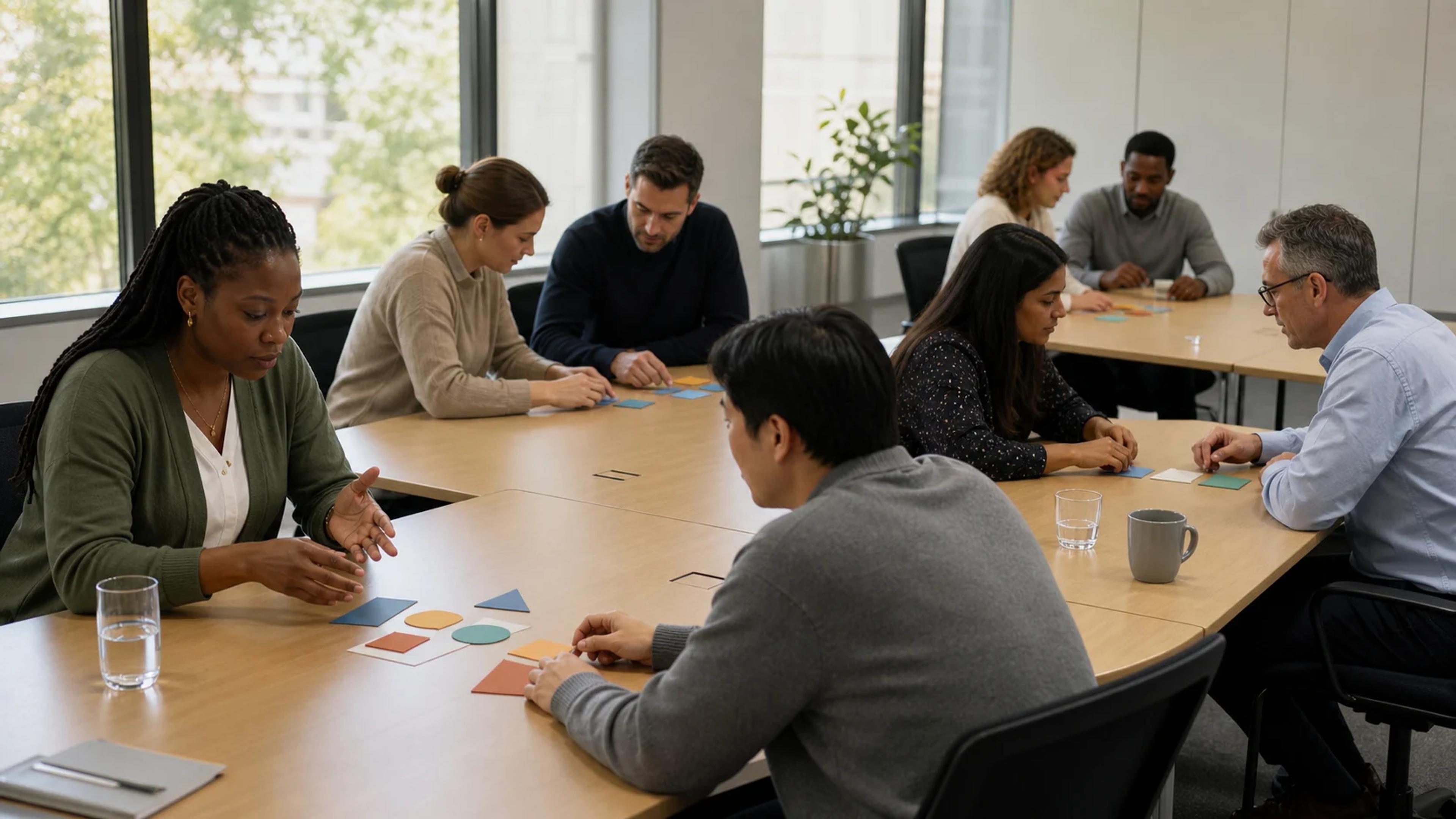
Give small groups a real but non-sensitive challenge, then introduce a constraint: half the time, no new budget, a different customer or a missing resource. Have teams explain what they protected and what they changed. The exercise reveals priorities and makes trade-offs discussable.
These options are deliberately modest. They build useful habits through repetition; they are not substitutes for a deeper conversation when trust is low or roles are unclear.
Collaborative ideas for office, hybrid and remote teams
These activities make the team’s operating system visible. They work because participants have to exchange information, define roles or create something together—not because someone keeps score.
6. Retrospective gallery walk
Post three prompts around the room: “What helped?”, “What slowed us down?” and “What should we try next?” Small groups add examples, rotate, and mark the themes they believe matter most. Finish with one owner and one date for the top experiment. Remote teams can use three simple shared boards.
7. Desk-side scavenger hunt
Design clues around people, knowledge and work—not personal possessions. Examples include finding the colleague who knows a particular customer workflow or locating the team’s oldest still-useful process. Make the final clue produce something useful, such as a map of who knows what.
8. Role-reversal clinic
Give each function a common scenario and ask it to respond from another team’s perspective. Sales may plan as implementation; finance may answer as customer support. The owning function then clarifies what outsiders understood and missed. It is more productive than caricaturing another department because the expert gets the final word.
9. Customer-journey mapping
Mixed teams map what a customer sees, does and waits for across a real journey. Ask them to label the invisible internal handoffs beneath each step. Choose one moment where the customer experience and the operating process diverge; that becomes the follow-up work.
10. Escape-room sprint
Choose a room whose puzzles require different kinds of contribution rather than niche trivia or physical ability. Assign an observer to note how the group shares information and responds when a first idea fails. The debrief should ask, “What did we do when we got stuck?” rather than “Who solved the most puzzles?”
11. Peer skill exchange
Invite three to six employees to teach a 10-minute skill that helps colleagues work better: a spreadsheet shortcut, a meeting technique, a product demo or a customer-language lesson. Rotate stations. This recognizes internal expertise while keeping the session practical.
12. Virtual show-and-teach
Remote participants demonstrate a tool, routine or small object connected to how they work. Keep each contribution to two minutes and allow people to pass. The format is more inclusive than asking everyone to reveal personal details, and it gives distributed colleagues a reason to talk beyond status updates.
13. Hybrid decision lab
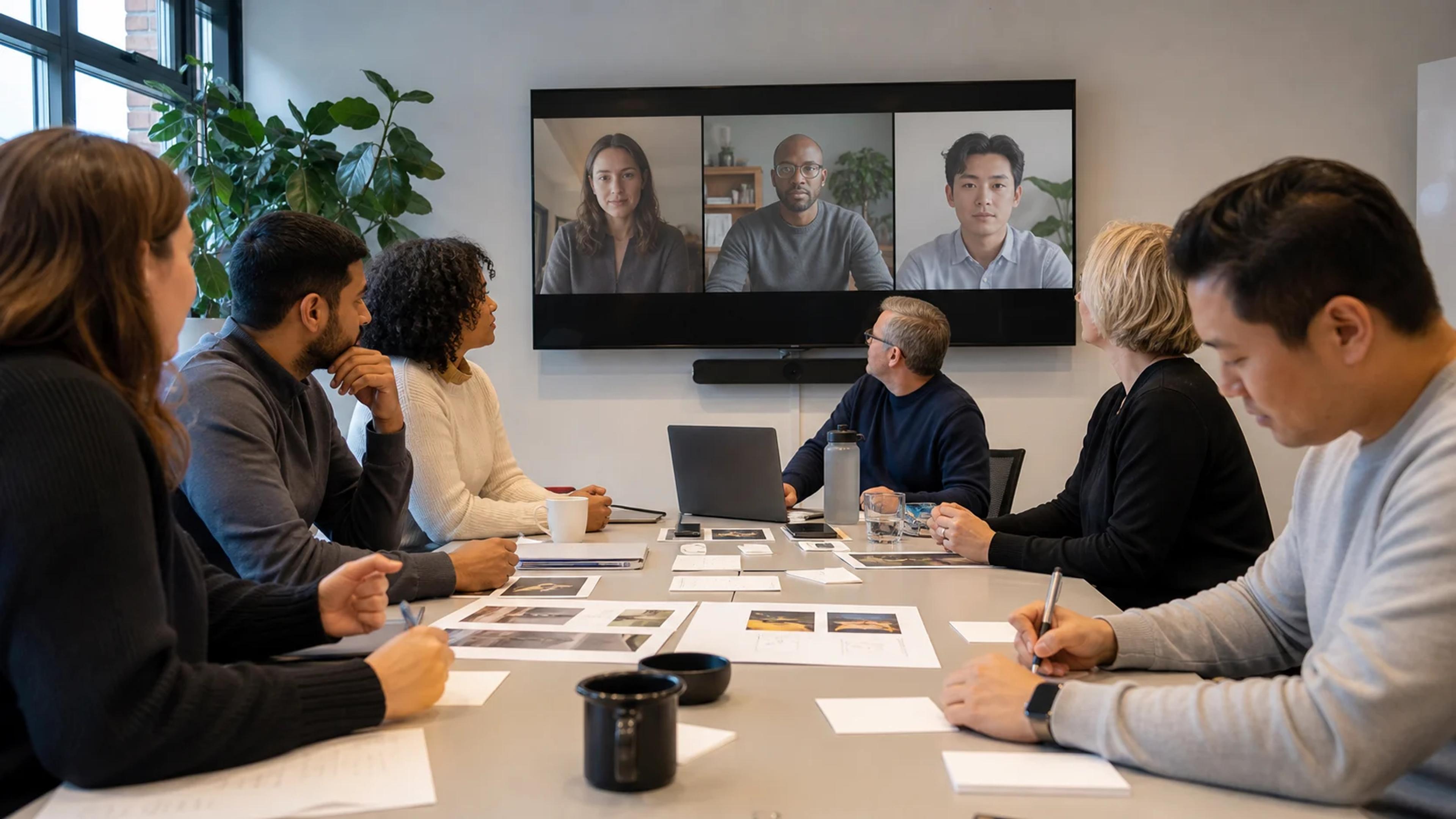
Give in-room and remote participants the same short case, information pack and decision deadline. Assign a remote-first facilitator, require written proposals before discussion, and rotate who summarizes the decision. Debrief which voices shaped the outcome and where information was lost.
14. Team operating agreement
Ask individuals to finish four prompts: “We do our best work when…”, “A good decision here means…”, “Ask me for help by…” and “When tension rises, we will…”. Combine answers into five to seven observable agreements. Review them after 30 days; otherwise the document becomes workshop wallpaper.
For a longer reset away from routine work, compare these formats with the one-day company retreat ideas. The change of setting is valuable only when the agenda gives people something meaningful to do there.
Purpose-driven ideas that create something useful
Purpose can raise the stakes in a good way, but only if the work is genuinely needed. Confirm requirements with the beneficiary, protect dignity, and do not invent a service project simply for photographs.
15. Purpose kit assembly
Partner with an organization that can specify the exact contents, quality checks and delivery process for kits it needs. Divide the team into supply, assembly, inspection and packing roles, then rotate. The activity suits larger groups because the workflow can scale across parallel tables.

16. Skills-based volunteer sprint
Offer a nonprofit a bounded piece of professional work: a messaging review, simple financial model, process map, hiring toolkit or website usability assessment. Start with a written brief and finish with a handoff the organization can use. This is better suited to a small cross-functional team than a crowd.
17. Charity design challenge
Teams respond to a real brief by designing a small solution, campaign or prototype. A representative from the partner organization should define the problem and choose what is useful. Avoid promising implementation until feasibility, ownership and cost are clear.
18. Coastal stewardship day
Coordinate with an established conservation partner so the group works in an approved area with the right equipment and disposal plan. Combine the service with a short facilitated conversation rather than filling every minute. Side-by-side work often gives colleagues more natural space to connect.
These ideas can also function as appreciation events when participation is voluntary and the day includes comfort, food and recognition. If the primary message is “thank you,” plan the experience around employees—not only the output.
Active and outdoor ideas for larger groups
Outdoor activities create movement and shared moments, but they need more operational care: weather, shade, water, restrooms, accessibility, medical needs, transportation and a backup plan. Build equivalent non-physical roles into the activity from the start.
19. Field-day circuit
Set up parallel stations with different demands: planning, accuracy, communication and light movement. Small teams rotate on a published schedule so nobody waits for long. Score collaboration and learning as well as completion. For 50 or more people, appoint a lead at every station and one person to control the overall clock.
20. Navigation and planning challenge
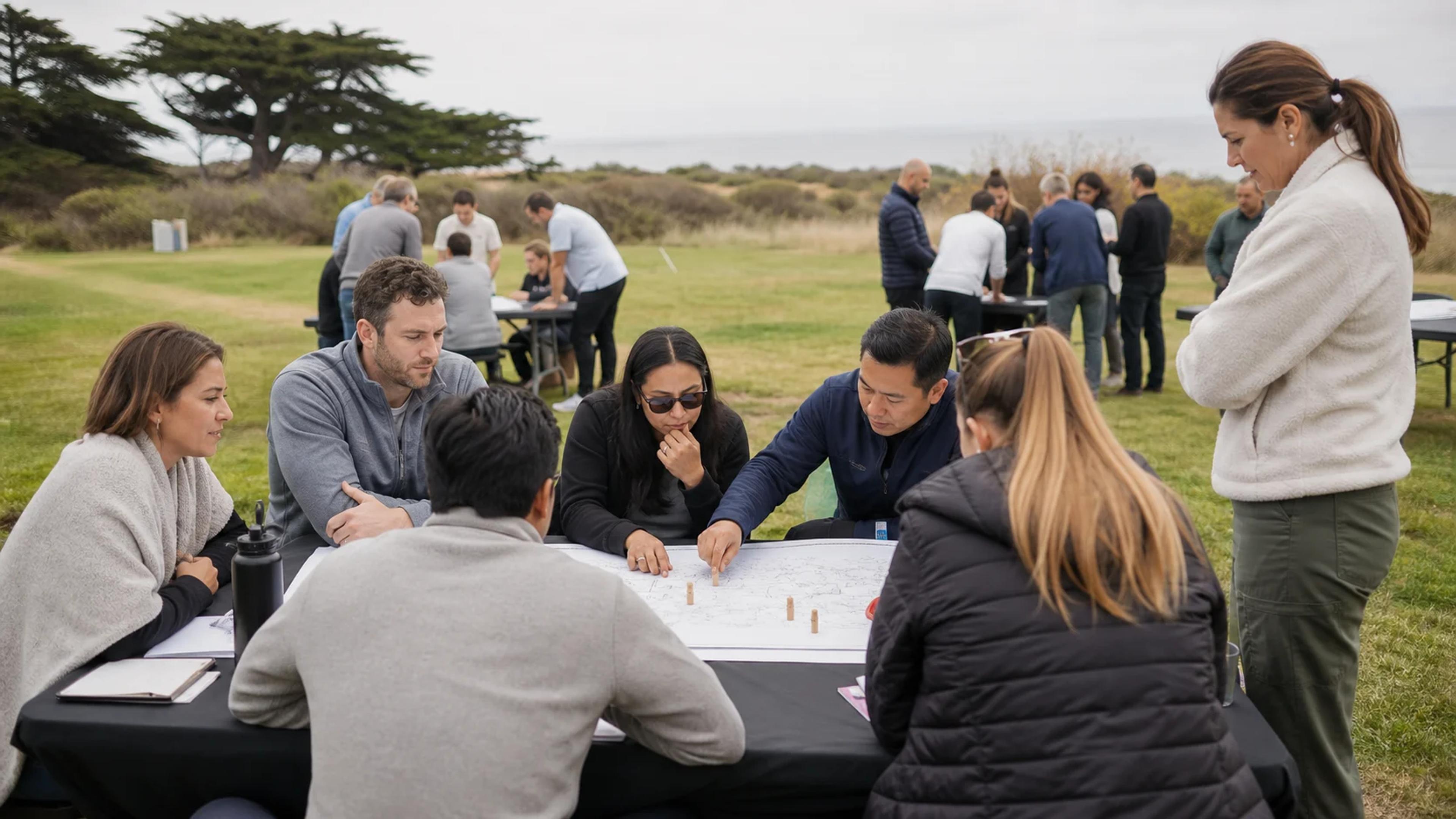
Give teams a safe route, a map, timed checkpoints and limited information. Include roles for route planning, timekeeping, observation and communication. The lesson is not wilderness survival; it is how a group makes decisions, updates a plan and stays together when conditions change.
21. Outdoor build challenge
Teams use simple materials to build a structure or device against clear constraints. Add a mid-course requirement change and allow a test-and-improve cycle. A strong debrief asks who framed the problem, how the team used dissent and whether roles changed when the first design failed.
22. Facilitated beach teamwork
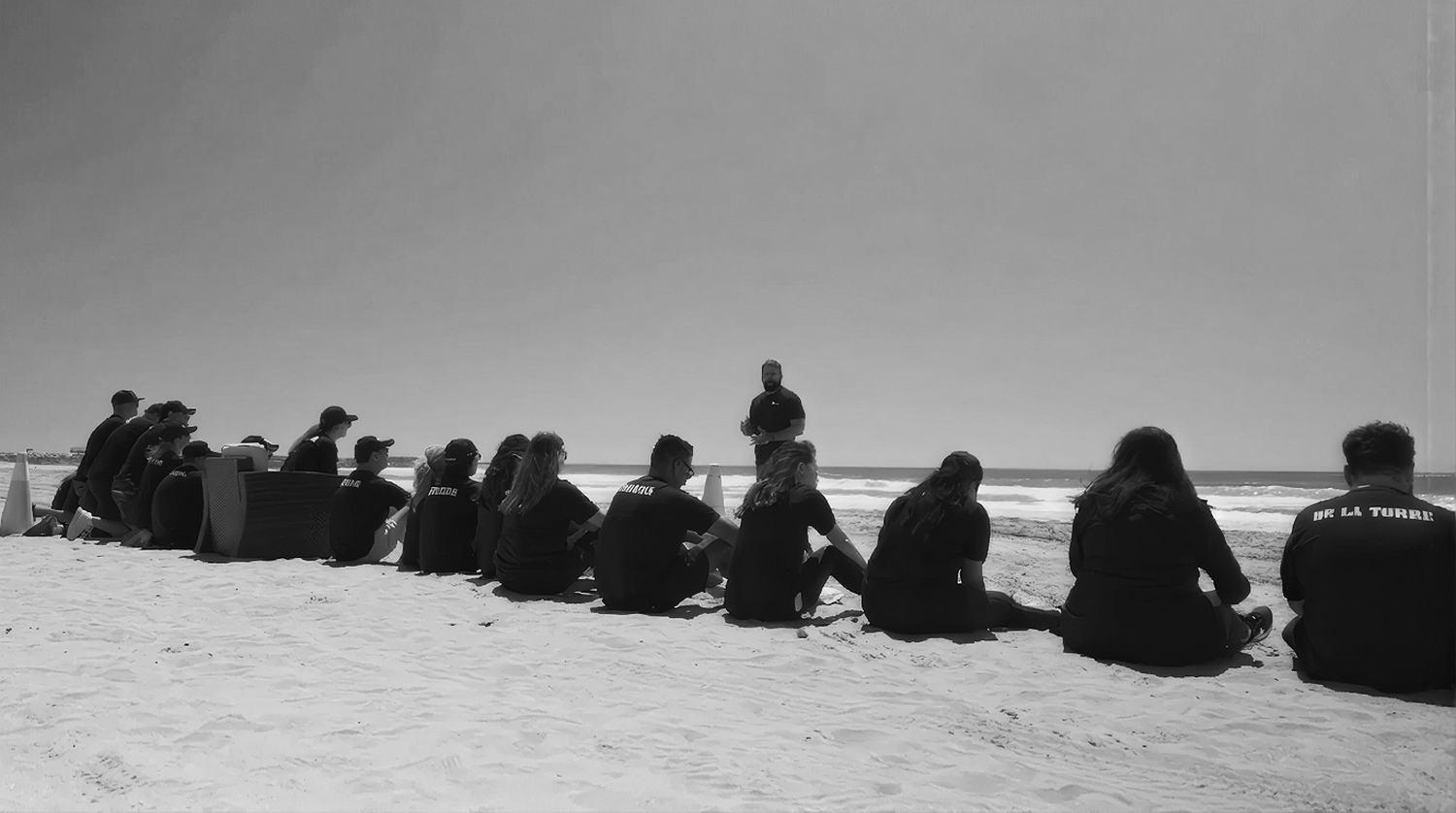
Use sand, open space and simple equipment for a sequence of communication and shared-responsibility challenges. Physical intensity should be optional and scalable. Beach sessions work best with a trained facilitator, a clear safety boundary and reflection time—otherwise they can feel like disconnected races.
You can find more options, adaptations and facilitation notes in the guide to outdoor team-building activities for adults. For complex headcounts, the large-group team-building guide covers movement, station design and engagement in more detail.
Offsite ideas for deeper team development
For teams based farther north, our Los Angeles team-building activities guide compares creative, outdoor, social and purpose-led options before you decide whether a deeper destination offsite is the better fit.
Choose an offsite when the team needs space that a normal meeting cannot provide. The strongest formats combine a memorable shared experience with time to interpret it and decide what changes back at work.
23. Culinary collaboration
A culinary activity naturally creates varied roles: preparation, timing, quality control, presentation and hosting. Make dietary and mobility requirements part of the initial design. If professional kitchen staff retain responsibility for food safety and critical tasks, participants can focus on coordination and the social experience.
24. Keynote plus application workshop
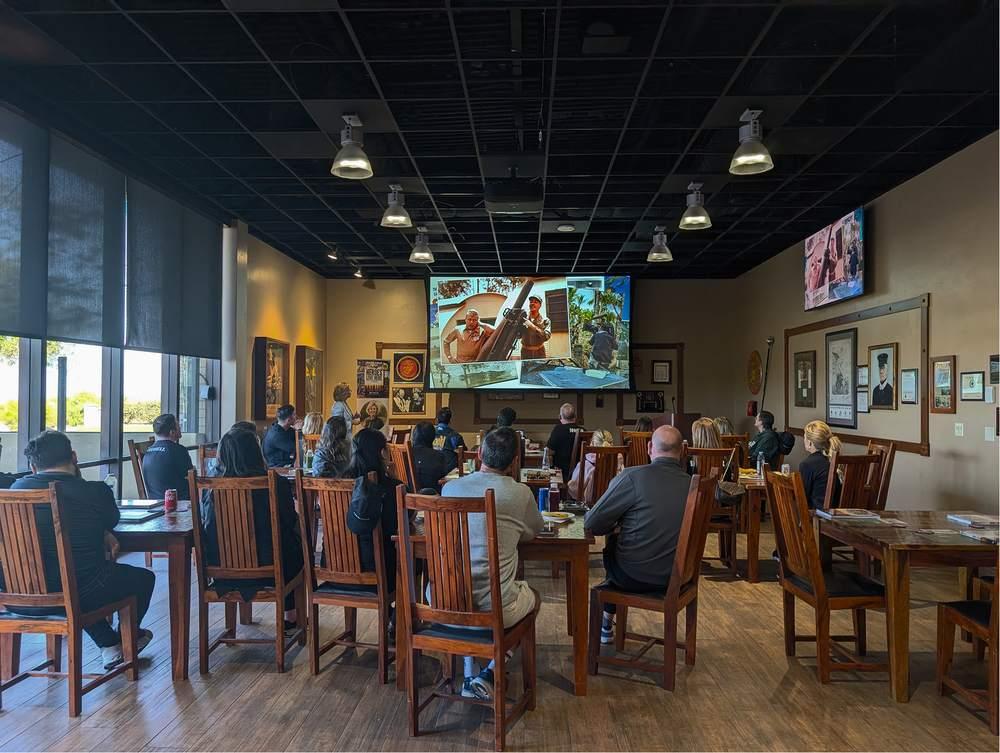
Select a speaker for relevance to the audience’s real decisions, not only biography. Follow the talk with small-group prompts, a case or an operating commitment. A 45-minute keynote can create shared language; the workshop is where that language becomes useful. Use the military keynote speaker guide to compare subject fit, evidence and format.
25. Historic-setting immersive team day
A distinctive setting can give a team a common story that outlasts a conventional activity. Build the day around three layers: context that earns attention, teamwork that lets people practise, and hospitality that leaves room for conversation. This format suits annual team days, leadership offsites, milestone moments and distributed teams meeting in person.
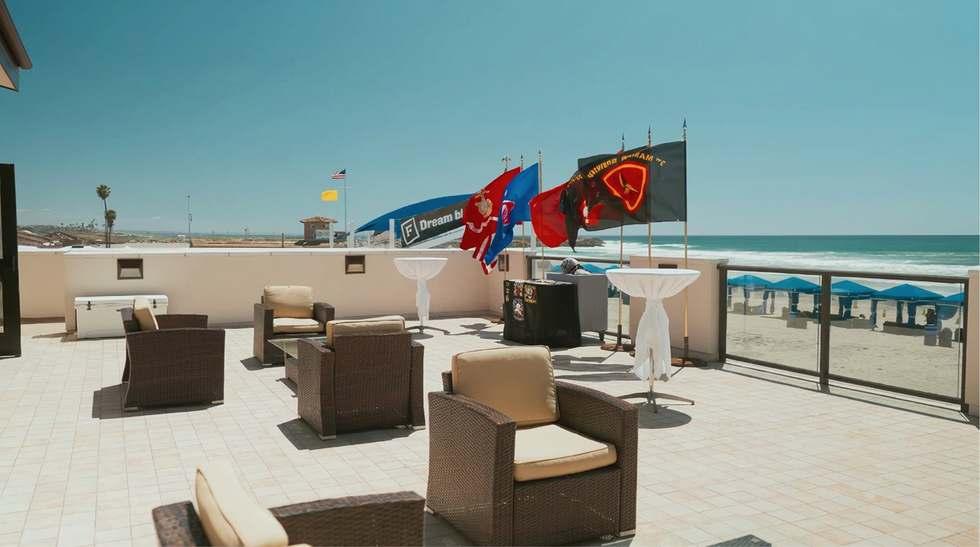
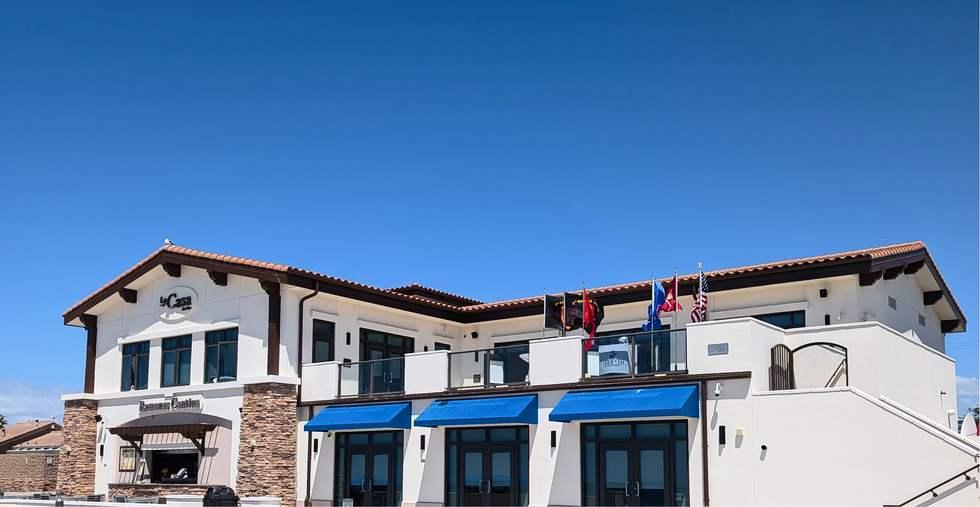
That is where Experience Camp Pendleton can be a strong choice. The commercial programme brings teams to a historic Marine base for Marine-led facilitation, Camp Pendleton history, hospitality and optional beach teamwork. It is not a boot camp, and physical elements can be adapted or skipped.
A smarter way to plan an Experience Camp Pendleton team day
Experience Camp Pendleton works best when the setting supports a real business purpose. An HR leader might use the history and speaker session to establish shared language, the beach challenges to practise communication, and the meal or reception to give colleagues unstructured time together. The story moves from context to action to reflection instead of jumping between unrelated activities.
Prime Hall, a former Marine Raider and water-survival instructor, brings performance, trust and recovery into the facilitated work. Amy Forsythe, whose Marine Corps and Navy career spans military journalism and five combat tours, connects the group to Camp Pendleton history and communication under pressure. Both links lead to their official profiles on the Experience Camp Pendleton website.
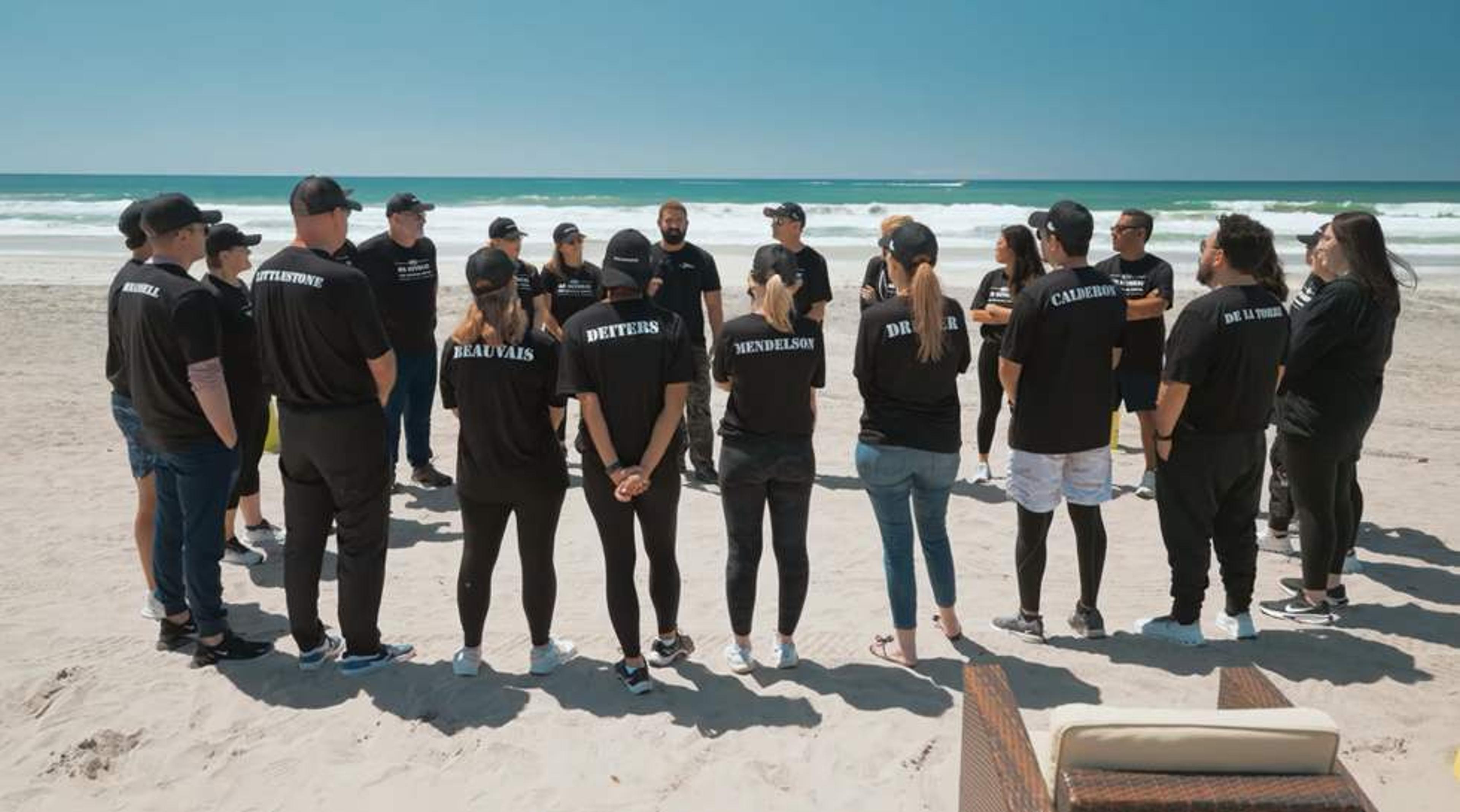
Four programme lengths let planners match the day to the outcome and calendar:
| Programme | Duration | Best fit | Core shape |
|---|---|---|---|
| Recruit | 3 hours | A compact introduction or meeting add-on | Hosted Camp Pendleton context, venue time and light hospitality; beach teamwork and keynote elements can be added |
| Leatherneck | 4 hours | A focused half-day team session | History, facilitated beach teamwork, meeting support and light hospitality |
| Devil Dog | 5 hours | A substantial team day without a full-day schedule | History, facilitated beach teamwork, meeting support and lunch |
| Semper Fi | 8 hours | A complete offsite with more room for discussion and hospitality | Full-day programme with history, beach teamwork, keynote content, meeting support and premium culinary options |
Compare the official Recruit, Leatherneck, Devil Dog and Semper Fi programme pages for the current inclusions and optional additions.
Available settings include Iron Mike’s and La Casa Del Mar for groups of up to 100, and La Marina for groups of up to 50. Final venue, programme elements and capacity should be confirmed for the event date. Use the corporate retreat cost guide to compare the complete per-person budget, not only the activity fee.
Three planning questions make the programme stronger:
- What must be different on Monday? Give the host one behaviour or decision the day should support.
- Who needs an equivalent role? Share mobility, dietary, sensory and participation needs early so the programme can be scaled thoughtfully.
- What access and movement plan is realistic? Installation access is controlled by Camp Pendleton and requirements can change. Review the Camp Pendleton visitor-pass guide, then confirm current details with the event team.
For planners comparing the wider market, the best team-building activities in San Diego places the programme alongside other local formats. When the desired outcome calls for history, Marine-led perspective and a cohesive hosted day, book a planning call rather than trying to assemble the pieces separately.
Experience Camp Pendleton is a commercial service operated by Urban Kitchen Hospitality / Mid Coast Supply Inc. It is not affiliated with, endorsed by or sponsored by the U.S. Department of Defense, U.S. Marine Corps or MCCS. Installation access is controlled by Camp Pendleton and is subject to current requirements.
What to do after the activity
The event ends; the team-building work should not. Within two business days, send a short follow-up that answers three questions: What did we notice? What will we try? Who owns the next step? Keep the language concrete. “Use a closed-loop handoff on launch days” is more useful than “communicate better.”
Thirty days later, ask whether the agreed experiment happened and what changed. You do not need a long survey. Three questions are enough:
- Did the activity help you understand how the team works?
- Have we used the agreed practice since the event?
- What would make the practice easier to repeat?
This is also how you judge value. Attendance and enjoyment matter, but they do not show whether the event served its purpose. A good team-building activity produces a shared reference point and at least one behaviour the group can use again.
For location-specific inspiration, compare these formats with 15 team building activities in Orange County, including water, indoor, creative and service options.
Before you ask
Common questions
What are the best team-building ideas for work?
The best idea matches a specific team need. Use a two-word check-in for a quick meeting reset, a communication relay for clearer handoffs, a customer-journey map for cross-functional thinking, a purpose project for shared service, or an immersive offsite when the team needs deeper connection and a lasting common experience.
Do team-building exercises actually work?
They can, when the exercise is tied to a real work outcome, designed for the people taking part, facilitated well and followed by an observable next step. A disconnected game may be enjoyable but rarely changes how a team operates. The debrief and follow-through often matter as much as the activity.
What are quick team-building ideas for a meeting?
A two-word check-in takes about five minutes. A personal map or assumption swap takes roughly 15 minutes. A communication relay or constraint brainstorm can fit into 25–30 minutes. Keep instructions simple, make personal disclosure optional and connect the exercise to the meeting’s purpose.
What works for a small team?
Small groups benefit from formats where everyone has a meaningful role: personal maps, peer skill exchanges, role-reversal clinics, operating agreements, escape rooms and skills-based volunteer sprints. Avoid splitting a group of six into so many roles that the activity feels artificial.
What works for hybrid or remote teams?
Use activities that give everyone the same information and a visible way to contribute. Virtual show-and-teach, written brainstorms, remote-first retrospectives and hybrid decision labs work well. Assign a facilitator who watches remote participation and avoid designing the session around side conversations in the room.
How often should a company run team-building activities?
Use short practices regularly and larger events selectively. A five-minute check-in can support weekly meetings; a workshop may suit a quarterly planning cycle; a half- or full-day experience may be appropriate for an annual offsite, milestone or major team change. Frequency should follow a purpose, not a calendar obligation.
How much should a company budget for team building?
The range is wide. An internal meeting exercise may cost almost nothing beyond staff time. A hosted offsite can include venue, facilitation, food, transportation, A/V and access coordination. Compare the complete per-person cost and the internal planning time, then choose the lightest format capable of meeting the goal.
Does Experience Camp Pendleton require everyone to be physically fit?
No. It is not a boot camp. Physical elements, including facilitated beach teamwork, are optional and can be scaled. Share mobility, sensory, medical and participation needs during planning so the team can confirm appropriate roles, programme choices and venue arrangements.
Written by
Rene Diaz
President
Four packages
Bring your
team here.
Half a day to a full day, from a history session and lunch to both venues, beach team building and a reception on the deck.