



Employee Engagement Activities: Planning a Team Day People Want to Join
Explore eight employee engagement activities and practical ways to plan a team day people want to join, including hosted experiences at Camp Pendleton.
You want to bring everyone together. The harder question is what will make them glad they came.
Some colleagues would love a day outdoors. Others are hoping for a proper conversation with people they usually see in a little square on a screen. A new starter might simply want to stop feeling like the new starter. Put all of them in the same team event, and the details start to matter.
The best starting point for employee engagement activities is understanding what your people would value. This guide offers eight ways to make time together worthwhile, from a shared lunch to a hosted day at Camp Pendleton, with practical examples you can adapt to your own team.
What are employee engagement activities?
Employee engagement activities give people opportunities to contribute, learn, feel appreciated and connect with their colleagues. They can be small habits during the working week or a planned team day away. Useful examples include peer learning, recognition, shared challenges and conversations that lead to action.
An enjoyable event can be part of that effort, but it cannot fix an unmanageable workload or replace a manager who listens. Gallup's guidance on employee engagement puts meaningful conversations, recognition and acting on feedback at the centre of the work. Think of your team day as an opportunity to practise those habits and make space for relationships.
Choose an activity around what your team needs
Before booking anything, ask a simple question: “What would make a day together worth your time?” Let people reply privately. You may learn that the team wants to meet colleagues from another office, try something new or celebrate a demanding project finally coming together.
| If your team needs... | Consider... | A useful detail |
|---|---|---|
| Time to get to know each other | A shared meal or small-group conversation | Mix departments without making every conversation a formal exercise. |
| A chance to work together differently | A hosted challenge | Check that people can participate in different ways. |
| A fresh perspective | A speaker session with discussion | Leave room for questions and reflection. |
| Recognition after a busy stretch | Specific thanks and an enjoyable shared experience | Include the contributions that are easy to overlook. |
| Evidence that feedback matters | A short listening session | Choose one realistic action and follow through. |
You do not need to fit every format into one day. Our guide to team building and team bonding can help you decide whether your group needs structured practice, relaxed connection or a little of both.
Eight employee engagement activities to make your own
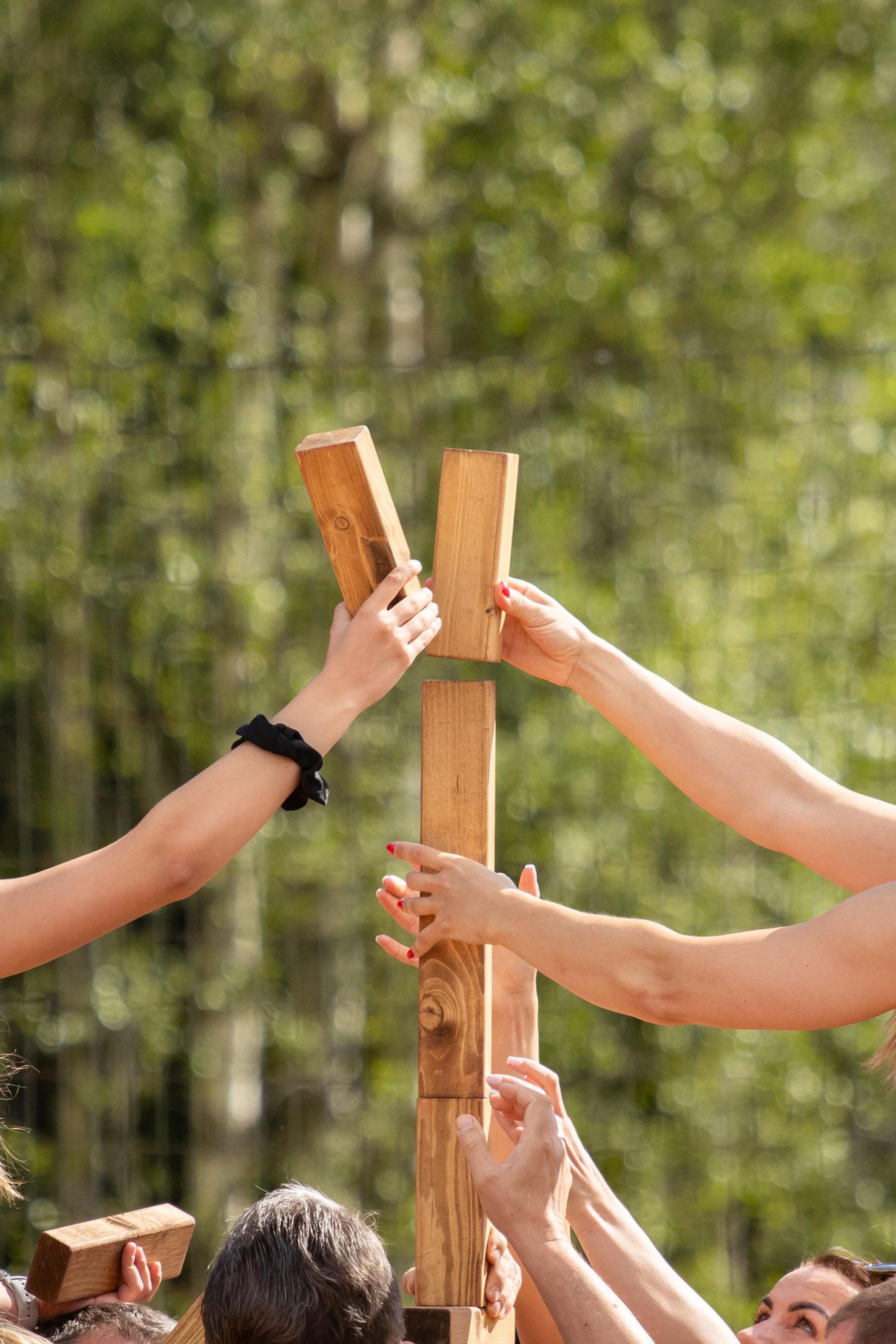
1. Share a challenge where everyone has a part
There is something appealing about tackling a task that nobody has a job title for. The person who usually leads the meeting may need to listen. Someone who rarely speaks up may spot the detail everyone else missed.
For a simple company-run example, give small groups paper, tape and a few lightweight objects. Ask them to build a structure that holds the objects, then let them try a second design after comparing what happened. Give people options to plan, build, observe or explain. Keep the tone playful, with no public ranking of colleagues.
If you would rather join in than run the session, consider a hosted experience. Tell the facilitator about your team's needs before selecting the activity. The choice of challenge matters less than whether people have a comfortable way to contribute.
2. Have lunch with the colleagues you rarely see
Lunch is often treated as the gap between the important parts. For a team spread across locations, it may be one of the most welcome parts of the day.
Invite people to sit with someone outside their usual group and offer an easy opening: “What is something your team has been working on that the rest of us might not know?” Then let the conversation find its own direction. Make introductions where they help, but leave people free to talk about something other than work.
Allow enough time to eat comfortably. Check dietary needs privately in advance, and give the organiser a chance to sit down too.
3. Turn a colleague's skill into a short learning session
People know more about each other when they have seen what someone can teach. Invite a willing colleague to share one useful skill, such as taking better phone photographs, explaining a tricky spreadsheet or introducing a few phrases in another language.
Keep the example small enough for everyone to try. A photography session might end with pairs taking three different pictures of the same object and comparing their favourites. Nobody needs to present to the whole room.
Offer preparation time and ask for volunteers. Sharing a skill should feel like an invitation, not another task assigned to the person who already helps everyone.
4. Give the team a story they can talk about
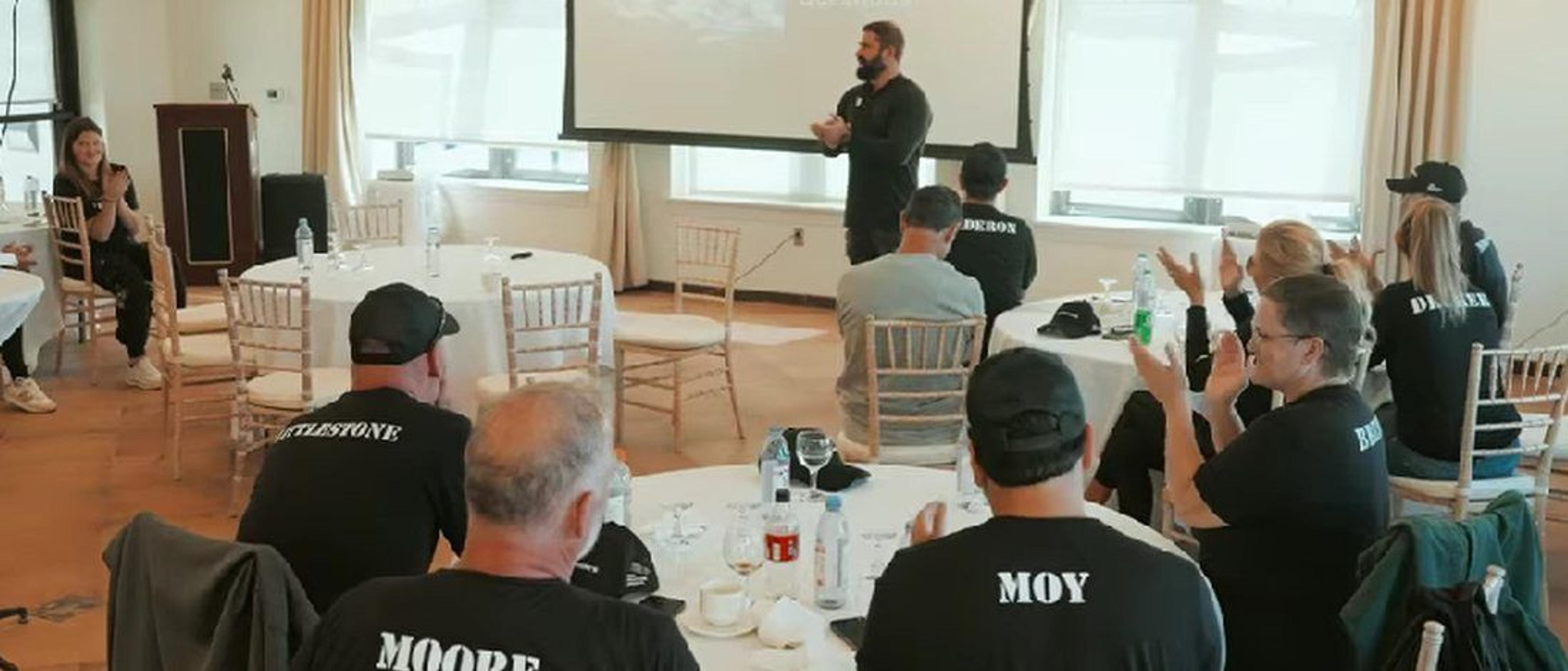
A speaker can introduce a question that stays with people after the session. Choose someone whose experience gives your group something to explore, rather than adding a talk simply to fill the agenda.
You might ask pairs to discuss one moment that surprised them, then invite a few questions for the speaker. People can also write questions down if they prefer. There is no need to make every answer sound like a leadership lesson.
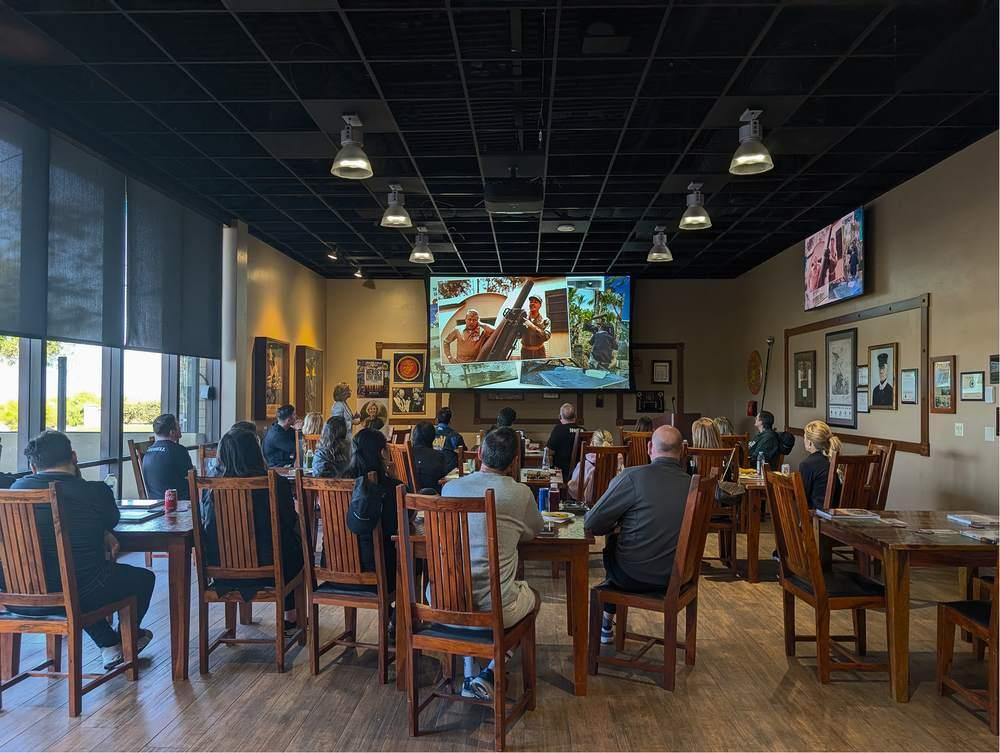
At Camp Pendleton, history and speaker sessions are part of the available programme options. That gives the conversation a connection to the place you are visiting. Confirm the host and session when discussing your chosen package.
5. Say thank you in a way that feels personal
“Great work, everyone” is easy to say. Describing what someone did and why it mattered takes a little more thought.
Before the event, invite colleagues to share a short thank-you note about someone who helped them. Perhaps a teammate made time to explain an unfamiliar process, covered a difficult handoff or welcomed a new colleague. With permission, share a few examples during the day and deliver the rest privately.
Make room for quiet contributions as well as visible achievements. If recognition is the main reason for your gathering, our employee appreciation event ideas explore that approach in more detail.
6. Ask the team to improve one small part of work
Sometimes the most welcome activity is the chance to say, “Could we make this easier?” Give small groups a specific prompt, such as improving the first week for a new starter or making a recurring meeting more useful.
Ask each group to suggest one change that is within the team's control. Let people contribute in writing before the discussion so the fastest speaker does not set the whole agenda. Choose a manageable experiment, name an owner and agree when you will revisit it.
Keep this session brief if the day is meant to be a break. It should leave people with a useful possibility, not an unexpected afternoon of project work.
7. Leave space for an unhurried conversation
Not every minute needs a host, a timer or a set of instructions. Give colleagues a choice of a short walk or a seated conversation during a break. Keep both options equally welcome.
A gentle prompt can help people get started: “What have you enjoyed learning lately?” After that, let them decide where the conversation goes. Choose an accessible route and a comfortable place to sit, with clear arrangements for returning to the group.
Build this breathing room into the programme from the start. It is easily lost when an agenda runs late.
8. Plan a hosted day away from the usual routine
A team day can feel different when the person who normally organises everything gets to take part. Having someone else welcome the group, explain the activity and manage transitions leaves more attention for the people you came with.
Imagine the first conversation after a shared challenge: a colleague laughing about the approach they tried, someone asking how another group worked it out, people lingering rather than immediately opening their laptops. That is the kind of space worth planning for.
For a team considering Southern California, compare the options in our San Diego team-building guide. Then narrow the choice by the time you have, participation needs and the kind of day your people would enjoy.
How a Camp Pendleton team day could fit
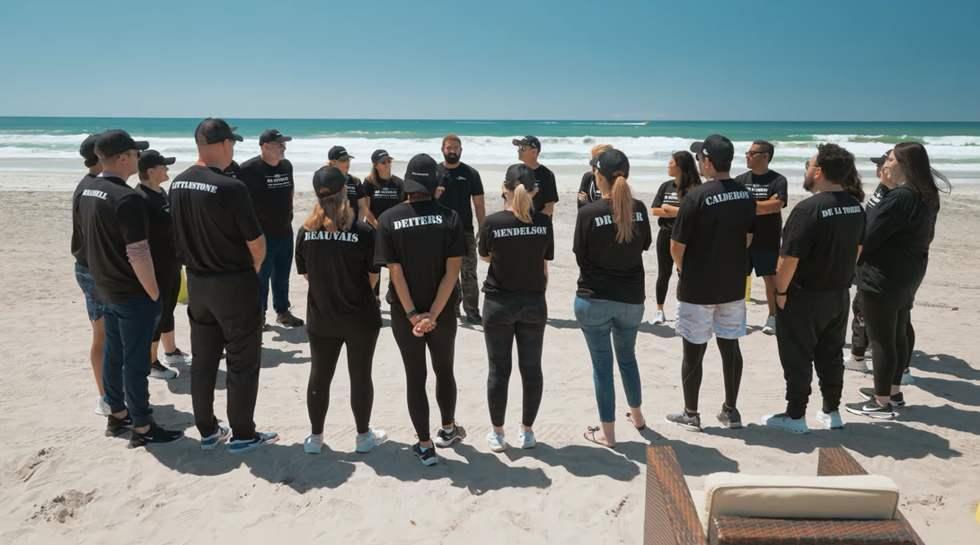
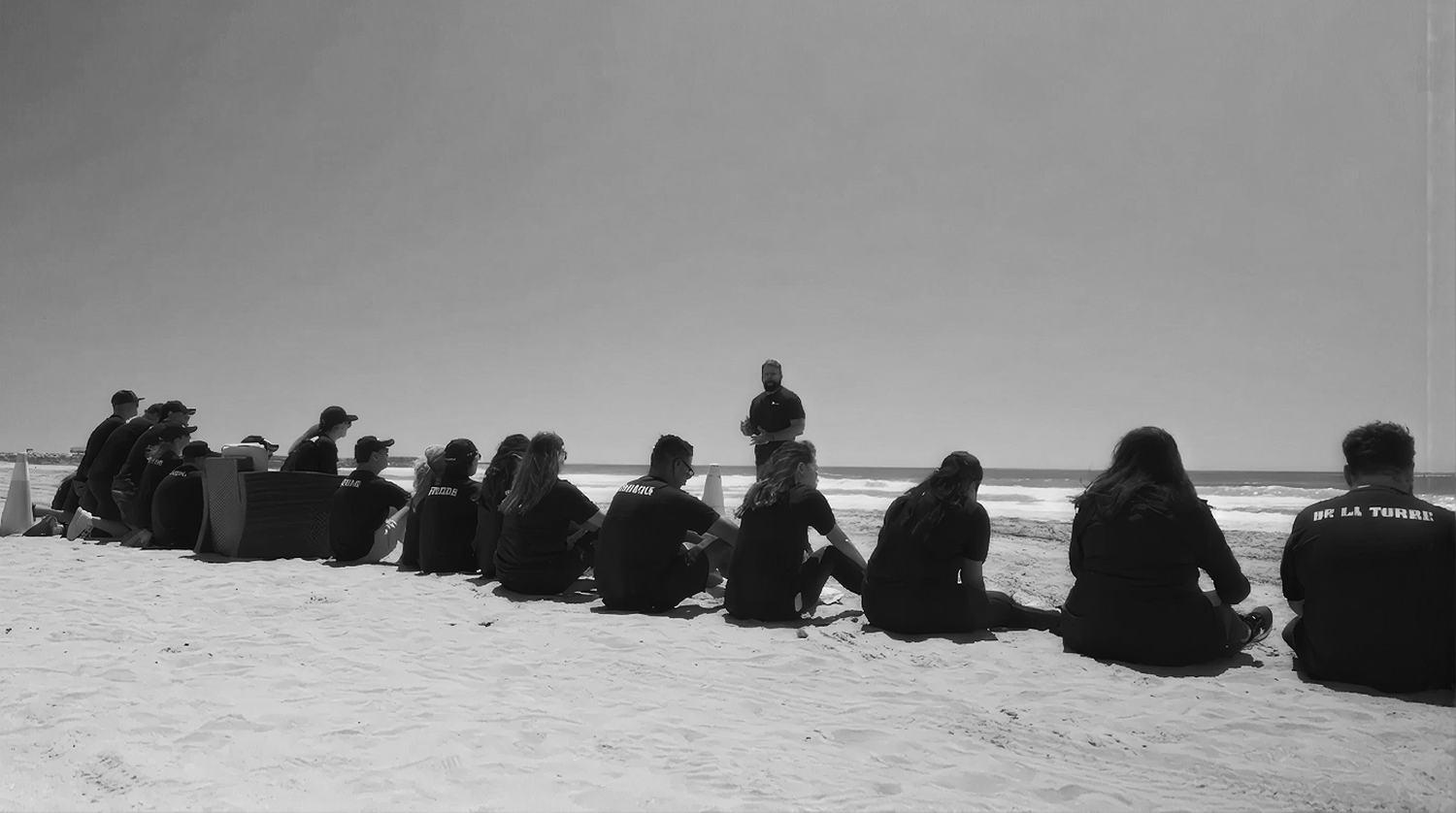
EXCP brings together beach team building, Camp Pendleton history, speaker sessions and hospitality in different package combinations. The appeal is the variety: time to listen, something to take part in and room to enjoy being together by the coast.
For a full-day experience, Semper Fi is listed as an eight-hour programme. Shorter options include Devil Dog, Leatherneck and Recruit. Use the package comparison to explore the differences, then confirm the programme, access arrangements and participation needs with the team.
The Fox Sports retreat story offers a client perspective. In its published testimonial, Fox Sports described the experience as:
“Everything was beyond expectations, from the location, to the history, to the team building, to the food.”
That is feedback about their visit, rather than a measured engagement result. Your own group's priorities should shape the day you book.

Make the day easy to say yes to
Send an invitation that tells people what to expect: where they are going, what they will be doing, how travel works and when they will be back. Explain clothing requirements and ways to discuss access or participation needs privately. Avoid surprises about physical activity or public speaking.
For shift-based teams, plan cover before announcing the event. For remote colleagues, check whether the trip is realistic before making an in-person day the only way to participate. Where someone cannot attend, arrange a separate opportunity to connect rather than expecting them to watch a room full of people through a laptop.
Keep the budget grounded in the complete day, including travel and any extra arrangements. Our corporate retreat cost guide helps you work through those categories. The company offsite planning guide covers the wider preparation.
What happens after the team day matters too
A few days later, ask what people enjoyed, what made participation difficult and what they would choose next time. Give them a private way to answer. Share photos only with the appropriate permission, and follow up on any commitment made during the day.
After a few weeks, revisit the small change the team agreed to try. Did it happen? Was it useful? If you already run an engagement survey, continue tracking it over time, alongside conversations with employees. Attendance and positive event feedback tell you about the event; they do not, on their own, establish a lasting change in engagement.
You do not need another big event immediately. A colleague-led learning session, a thoughtful thank-you or a lunch with a different team can keep the connection going.
Questions about employee engagement activities
What are some low-cost employee engagement activities?
Peer learning, specific thank-you notes, small-group conversations and a short team improvement session can use resources you already have. Allow time within the working day and account for materials, food or cover where needed.
What works for people who dislike team-building games?
Offer a range of ways to participate. A conversation over lunch, a speaker discussion or a practical learning session may feel more comfortable than a competitive game. Ask beforehand and make the alternatives part of the plan.
How is engagement different from employee appreciation?
Appreciation focuses on recognising people's contributions. Engagement is broader and includes whether people feel heard, involved and connected to their work. Recognition can be part of an engagement plan, alongside learning, feedback and everyday management.
Can one team day improve employee engagement?
It can create opportunities to connect and start useful conversations. Lasting improvement also depends on what happens at work afterwards, including how managers respond to feedback and whether agreed changes happen.
Give your team something to look forward to
Tell the EXCP team who you are bringing, the time you have and what you want people to enjoy together. Those details are a useful starting point for choosing an experience that feels right for your group.
Written by
Rene Diaz
President
Four packages
Bring your
team here.
Half a day to a full day, from a history session and lunch to both venues, beach team building and a reception on the deck.